Bihar higher education reforms: New University Act, research grants on the table
Synopsis
Bihar is drafting an entirely new university law — benchmarked against 15 states — while simultaneously launching three research funding schemes, mandating digital governance across all state universities by end-2026, and centralising faculty recruitment for 211 new degree colleges. It is one of the most comprehensive state-level higher education overhauls in recent years.
Key Takeaways
Bihar is drafting a new University Act, informed by a review of laws in 15 states , to create a simpler and more transparent regulatory framework.
Three new research funding schemes — Chancellor's Postdoctoral Fellowship , Chief Minister's Research Grant Scheme , and Chief Minister's Research Scholarship Scheme — were approved in principle.
All state universities must implement all 26 modules of the Samarth digital platform by 31 December 2026 .
A centralised recruitment process will cover contractual Assistant Professors across 211 new government degree colleges.
Syllabi for 43 postgraduate subjects are expected to be approved by the first week of July under NEP 2020 alignment.
Routine staff transfers will be restricted to June each year; exceptions require prior Chancellor approval.
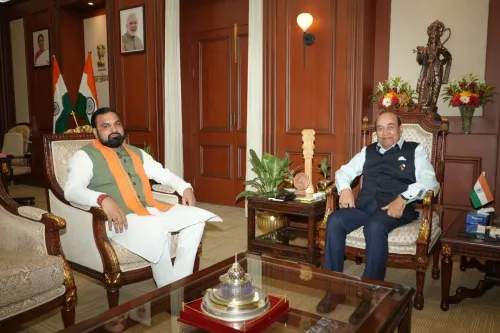
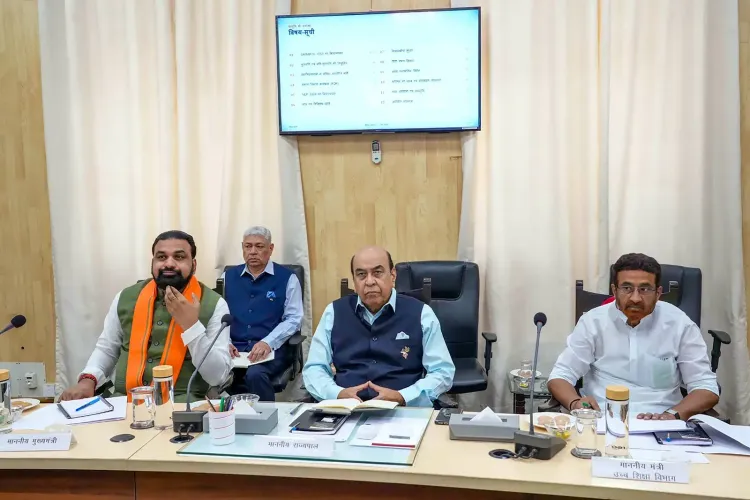
Bihar is set for a sweeping overhaul of its higher education system after a high-level meeting at Lok Bhawan in Patna on 27 June 2025 laid out an ambitious reform agenda spanning legislation, research funding, digital governance, and faculty development. The meeting was chaired by Governor-cum-Chancellor Syed Ata Hasnain and attended by Chief Minister Samrat Choudhary and Higher Education Minister Sanjay Singh.
New University Act Under Consideration
The most consequential proposal to emerge from the meeting is the drafting of an entirely new university law for Bihar. Officials stated that the proposed legislation has been shaped by a review of university acts across 15 states, with the aim of building a simpler, more transparent, and contemporary regulatory framework. The new law is expected to incorporate best practices from central universities and leading state institutions.
This marks a significant departure from the existing legislative architecture, which critics have long argued is outdated and ill-suited to the demands of modern higher education.
Research and Innovation Push
To foster a stronger research culture, the meeting reached consensus on three new funding initiatives: the Chancellor's Postdoctoral Fellowship, the Chief Minister's Research Grant Scheme, and the Chief Minister's Research Scholarship Scheme. These programmes are designed to provide structured financial support to scholars and researchers at Bihar's state universities, where research output has historically lagged behind national peers.
Digital Governance: Samarth Platform Deadline Set
Governor Hasnain directed all state universities to implement all 26 modules of the Samarth digital platform by 31 December 2026. Admissions are already being processed through the portal, but the remaining modules — covering academic management, employee services, finance and accounts, and administrative functions — are yet to be fully activated. The directive signals an intent to bring end-to-end digital governance to institutions that have long relied on manual processes.
The implementation of other digital initiatives, including INFLIBNET, APAAR, and the National Academic Depository, is also being monitored on a regular basis, according to officials.
Faculty, Recruitment, and NEP 2020 Alignment
A centralised recruitment process is being adopted for contractual Assistant Professors across 211 newly established government degree colleges, with the stated objective of ensuring merit-based selection. Separately, the government plans to make faculty development mandatory, requiring every higher educational institution to organise at least one Faculty Development Programme annually.
Teacher training centres at Patna and Muzaffarpur universities, established under the Madan Mohan Malaviya Teacher Training Scheme, are also being strengthened. On curriculum reform, officials noted that syllabi for 43 postgraduate subjects are expected to receive approval by the first week of July, in alignment with the National Education Policy (NEP) 2020.
Administrative Discipline and a Chancellor's Library
The meeting also addressed administrative order: routine teacher and university staff transfers will henceforth be confined to the month of June, with transfers outside this window requiring exceptional circumstances and prior approval from the Chancellor. A dedicated Chancellor's Library — providing access to research materials, academic resources, and reference collections for researchers and teachers — was also proposed.
Senior officials present included Additional Chief Secretary Deepak Kumar Singh, Principal Secretary to the Chief Minister Deepak Kumar, Secretary Lokesh Kumar Singh, Director of Higher Education Prof. N. K. Agrawal, and officials from the Raj Bhavan Secretariat. Governor Hasnain observed that coordinated implementation of these measures would significantly strengthen transparency, accountability, and student-centric administration across Bihar's universities.
Point of View
Research funding, digital infrastructure, and administrative discipline in a single sitting. That breadth is also its risk: ambitious multi-front reform packages in Indian state higher education have a mixed record of follow-through. The decision to benchmark the new University Act against 15 states is a sound starting point, but the real test will be whether the legislation addresses faculty autonomy and accountability mechanisms, not just administrative tidiness. The Samarth deadline of December 2026 is achievable, but only if universities receive ring-fenced IT budgets — something the announcement does not yet confirm. Bihar's higher education system has long been under-resourced relative to its student population; these proposals, if implemented with fidelity, could shift that trajectory meaningfully.
NationPress
25 Sept 2026
Frequently Asked Questions
What is the new University Act proposed for Bihar?
Bihar is proposing to draft an entirely new university law to replace existing legislation, drawing on a review of university acts from 15 states. The aim is to create a simpler, more transparent, and contemporary regulatory framework for higher education institutions in the state.
What are the new research funding schemes announced for Bihar universities?
Three schemes were approved in principle: the Chancellor's Postdoctoral Fellowship, the Chief Minister's Research Grant Scheme, and the Chief Minister's Research Scholarship Scheme. These are designed to provide structured financial support to scholars and researchers at Bihar's state universities.
What is the Samarth platform and why is it significant for Bihar?
Samarth is a digital governance platform that covers admissions, academic management, employee services, finance, and administration. Governor Syed Ata Hasnain has directed all Bihar state universities to implement all 26 modules of the platform by 31 December 2026, aiming to bring end-to-end digital governance to institutions that have largely relied on manual processes.
How will faculty recruitment change in Bihar's new degree colleges?
A centralised recruitment process is being adopted for contractual Assistant Professors across 211 newly established government degree colleges, with the stated goal of ensuring merit-based selection and improving academic standards.
When will Bihar universities align their syllabi with NEP 2020?
Officials stated that syllabi for 43 postgraduate subjects are expected to receive approval by the first week of July, marking a significant step in aligning Bihar's university curriculum with the National Education Policy 2020.