BJP calls Revanth Reddy's 'second-grade citizens' remark anti-India
Synopsis
Telangana CM Revanth Reddy's 'second-grade citizens' remark at The Hindu Huddle has exploded into a full-scale political row, with the BJP invoking Jinnah comparisons and demanding Rahul Gandhi act. The episode lays bare the deepening north-south fault line over delimitation — and puts the Congress high command in an awkward spot.
Key Takeaways
Revanth Reddy said southern states do not want to live as 'second-grade citizens in Delhi' at The Hindu Huddle in Bengaluru on Saturday.
BJP spokesperson Shehzad Poonawalla compared Revanth Reddy to Jinnah and called the remark 'anti-India' and 'unconstitutional'.
BJP demanded Rahul Gandhi publicly state what action he would take against the Telangana Chief Minister.
BJP spokesperson Pradeep Bhandari posted on X that the remarks insulted President Droupadi Murmu , who represents the entire nation.
Revanth Reddy had accused the BJP of using women's reservation as a cover to push a delimitation formula that disadvantages southern states.
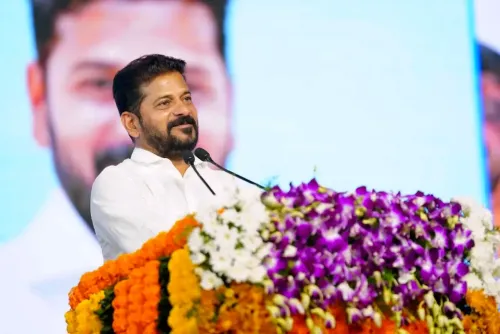
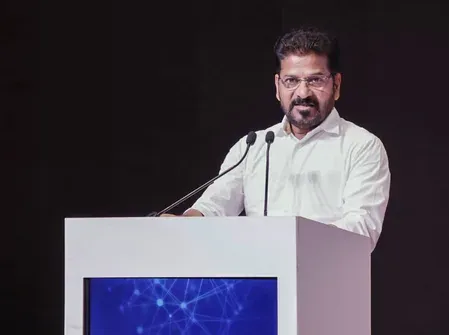
Telangana Chief Minister A. Revanth Reddy's assertion that people from southern states do not wish to live as second-class citizens in Delhi has triggered a fierce political counter-offensive from the Bharatiya Janata Party (BJP), which labelled the statement 'unconstitutional' and 'anti-India' on 7 June. The remarks, made at The Hindu Huddle in Bengaluru, have sharpened the ongoing north-south political fault line ahead of the delimitation debate.
What Revanth Reddy Said
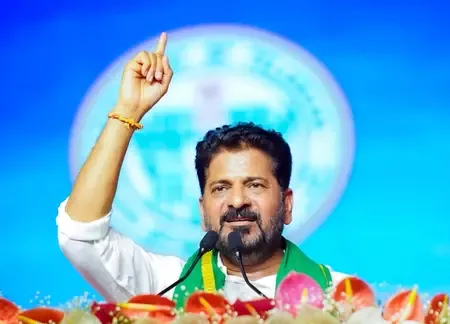
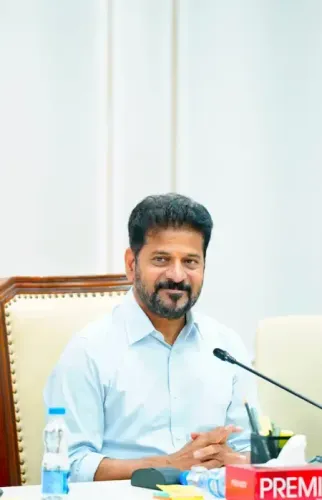
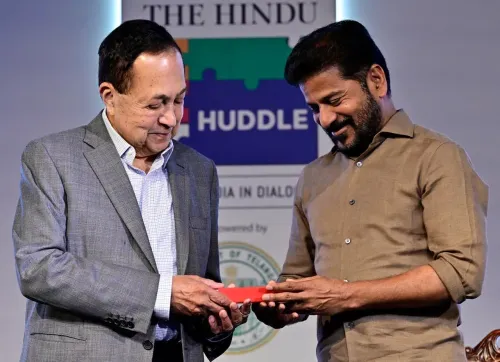
Speaking during a conversation with The Hindu Group Director N. Ram on Saturday, Revanth Reddy questioned why the Prime Minister and President of India consistently come from northern states. 'Why Prime Minister of India from north India, President of India from north India. Because we don't have the strength to show our political strength. So, we do not want to live like second-grade citizens in Delhi, paying taxes and saluting Delhi,' he said. The Chief Minister also argued that southern states would not accept an imbalance in political power distribution, and accused the BJP of attempting to widen this gap through the delimitation process while using women's reservation as a distraction.
BJP's Sharp Rebuttal
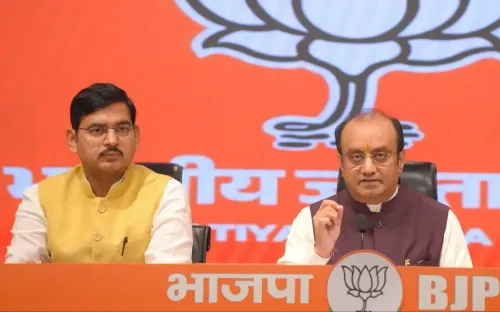
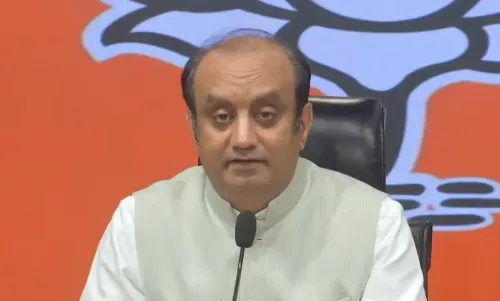
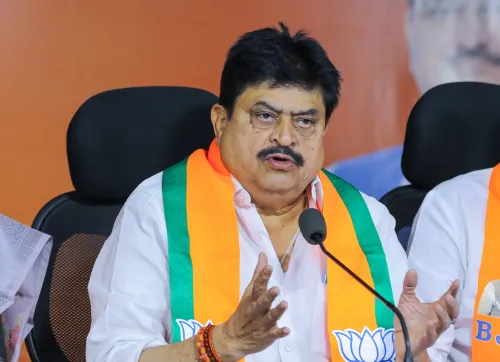
BJP national spokesperson Shehzad Poonawalla issued a video statement comparing Revanth Reddy to Muhammad Ali Jinnah, accusing him of pushing a separatist narrative. 'He wants India to be partitioned and broken up. This is the same party which did Bharat Jodo Yatra, and now it is doing Bharat Todo rhetoric. It shows they are Samvidhan Virodhi (anti-Constitution) and they are Bharat Virodhi (anti-India). They want tukde tukde of Bharat,' Poonawalla said. He also demanded that Leader of the Opposition in the Lok Sabha Rahul Gandhi publicly state what action he would take against the Telangana Chief Minister.
Poonawalla further contested the factual premise of Revanth Reddy's remarks, noting that Prime Minister Narendra Modi hails from Gujarat in western India, while President Droupadi Murmu — whom he described as India's first tribal President — is from Odisha in the east, not from the north.
Second BJP Voice Joins In
BJP national spokesperson Pradeep Bhandari posted on X that Revanth Reddy's remarks amounted to an insult to the President of India, who represents the entire country. Bhandari also cited Finance Minister Nirmala Sitharaman and Vice President C.P. Radhakrishnan as examples of southern representation in the Union government, arguing that the Modi administration ensures equitable geographic representation across constitutional offices.
Broader Political Context
The BJP linked the episode to what it described as a pattern of divisive rhetoric within the Indian National Congress (Congress). Poonawalla referenced D.K. Suresh — brother of Karnataka Deputy Chief Minister D.K. Shivkumar — as another Congress leader who had previously used similar language, and also cited rhetoric from the Dravida Munnetra Kazhagam (DMK) directed at North Indians. This is not the first time the north-south political divide has surfaced publicly; the delimitation exercise, which could redraw parliamentary seat allocations based on population, has repeatedly strained Centre-state relations with southern governments arguing they are being penalised for better population control.
What Comes Next
The BJP has placed the political onus squarely on Rahul Gandhi and the Congress high command to respond. With the delimitation debate set to intensify and the women's reservation Bill implementation still contested, the north-south political narrative is unlikely to recede. How the Congress leadership navigates the tension between its southern chief ministers and its national unity positioning will be closely watched in the weeks ahead.
Point of View
But they reflect a genuine and growing anxiety in southern states about losing parliamentary weight in a post-delimitation India — an anxiety the BJP has not seriously addressed. Poonawalla's Jinnah comparison is a well-worn deflection that sidesteps the structural question: if population-based delimitation rewards states that grew faster demographically, what is the compensatory mechanism for states that invested in family planning? The Congress high command faces its own bind — disciplining a southern chief minister risks alienating a key electoral base, while silence hands the BJP a unity narrative. The real story here is not a spokesperson's soundbite but an unresolved constitutional tension that will only sharpen as the delimitation clock ticks.
NationPress
24 Oct 2026
Frequently Asked Questions
What did Telangana CM Revanth Reddy say about second-grade citizens?
Revanth Reddy said that southern states do not want to live as 'second-grade citizens in Delhi, paying taxes and saluting Delhi,' questioning why the Prime Minister and President consistently come from northern India. He made the remarks at The Hindu Huddle in Bengaluru during a conversation with The Hindu Group Director N. Ram.
Why did the BJP call Revanth Reddy's statement anti-India?
The BJP argued that Revanth Reddy's remarks implied a desire to separate southern India from the north, which it termed unconstitutional and anti-India. Spokesperson Shehzad Poonawalla compared him to Jinnah and accused the Congress of pursuing a 'tukde tukde' agenda.
What did BJP's Pradeep Bhandari post on X about the controversy?
Bhandari posted that Revanth Reddy's comments amounted to an insult to President Droupadi Murmu, who represents the entire country. He also cited Finance Minister Nirmala Sitharaman and Vice President C.P. Radhakrishnan as evidence of southern representation in the Modi government.
What is the connection between this row and the delimitation debate?
Revanth Reddy alleged that the BJP is using the delimitation process to widen the political power gap between northern and southern states, and accused it of deploying women's reservation as a distraction from the core issue. Southern states have long feared that population-based delimitation will reduce their parliamentary seats relative to faster-growing northern states.
What has the BJP demanded from Rahul Gandhi over this controversy?
BJP spokesperson Shehzad Poonawalla demanded that Rahul Gandhi, as Leader of the Opposition in the Lok Sabha, publicly spell out what action he would take against Revanth Reddy for the remarks. The BJP also linked the episode to similar statements previously made by Congress leader D.K. Suresh.