Did BJP MP Accuse Congress of Engineering the 1969 Companies Act Donation Ban and its Reversal in 1985?

Synopsis
In a bold statement, BJP MP Nishikant Dubey alleges that the Congress party engineered the 1969 Companies Act amendments to ban donations, only to reverse this in 1985 for black money facilitation. This revelation sheds light on the intricate connections between politics and corporate funding, raising questions about corruption in Indian politics.
Key Takeaways
Nishikant Dubey alleges Congress manipulated the 1969 Companies Act .
The 1969 Act banned corporate political donations.
In 1985 , the law was amended to allow donations again.
Political funding increasingly moved underground after 1969.
The issue highlights the complex relationship between politics and business .
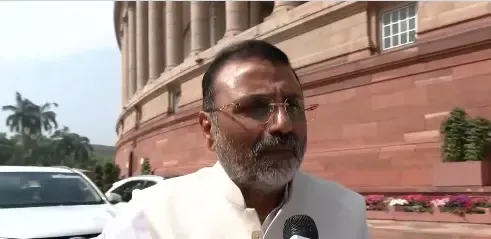
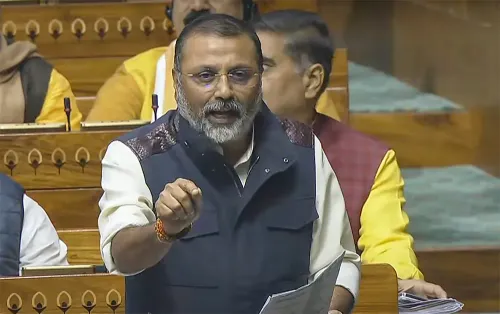
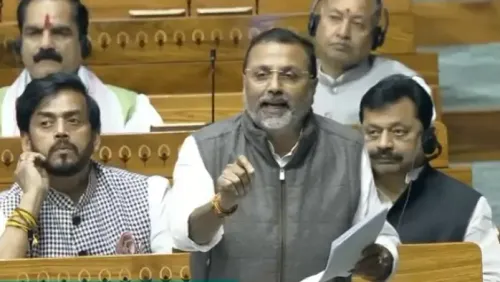
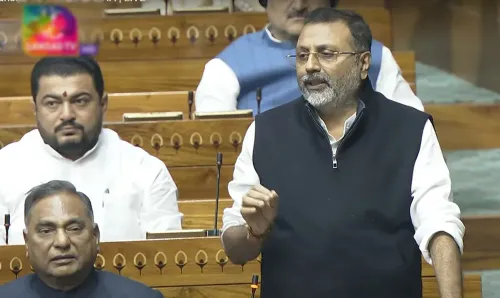
New Delhi, Jan 3 (NationPress) BJP MP Nishikant Dubey on Saturday accused the Congress party of manipulating the amendments made to the Companies Act in 1969 to prohibit cheque-based donations following the exposure in Parliament of corporate funding from 1960 to 1969 that primarily benefited the party in return for favours. He claimed that in 1985, the party reversed this amendment to allow both traceable and unaccounted money to flow freely.
Sharing images of both Bills on X, Dubey stated, "Congress Party and Corruption in Donations. When it was revealed in Parliament that between 1960 and 1969, all business contributions were directed solely to the Congress party for favours, the law was rushed through amendments in 1969 to promote cash transactions, effectively shutting down cheque donations.
"Then, after a span of 16 years, in 1985, the legislation was altered once more to reinstate cheque donations and facilitate black money operations. History itself is Chunar Fort," he added.
The attached documents include scans of the 1969 Act that prohibited corporate political donations under Section 293A, a transcript from a 1985 parliamentary debate discussing the repeal of the ban, and the 1985 Act that allowed donations up to 5 percent of average net profits with disclosure mandates.
Prior to 1969, companies were permitted to contribute to political parties, and during the 1960s, a significant portion of corporate donations was directed towards the Congress party, which held political supremacy.
Discussions in Parliament and public scrutiny revealed the quid pro quo relationships between business entities and the ruling party under the licence-permit system.
As a reaction, the Companies (Amendment) Act, 1969, introduced Section 293A, which imposed a complete ban on corporate political donations, purportedly to reduce corruption and the influence of businesses in politics.
Nonetheless, the ban failed to stop illicit funding in elections. Instead, political financing shifted underground, with parties and businesses relying on unaccounted cash and indirect methods.
Election expenditures continued to escalate during the 1970s and early 1980s, revealing the inadequacies of an outright ban without robust enforcement or transparency measures.
In 1985, the Rajiv Gandhi administration amended the law again, permitting companies to contribute up to 5 percent of their average net profits, provided there was board approval and proper disclosure in financial accounts.
Point of View
I observe that the allegations made by BJP MP Nishikant Dubey highlight a significant historical controversy regarding political funding in India. While these claims raise pertinent questions about past legislative actions, it is essential to approach them with a critical lens, ensuring that the discourse remains factual and transparent.
NationPress
29 Sept 2026
Frequently Asked Questions
What did BJP MP Nishikant Dubey accuse the Congress party of?
Nishikant Dubey accused the Congress party of engineering the 1969 Companies Act amendments to ban cheque-based donations and later reversing this ban in 1985 to facilitate black money.
What was the purpose of the 1969 Companies Act?
The 1969 Companies Act aimed to prohibit corporate political donations to curb corruption and reduce the influence of businesses in politics.
How did the political funding landscape change after 1969?
After 1969, political funding moved underground as companies and parties increasingly relied on unaccounted cash and indirect channels for financing.
What changes were made in the 1985 amendment to the Companies Act?
The 1985 amendment allowed companies to donate up to 5 percent of their average net profits to political parties, provided there was board approval and disclosure in accounts.
What were the implications of the 1969 ban on donations?
The ban did not stop money from entering elections; it merely shifted political funding to clandestine operations, revealing the limitations of such prohibitive measures.