BJP's Darshana Jardosh Accuses Opposition of Undermining Women's Reservation Bill
Synopsis
Darshana Jardosh from BJP criticizes opposition parties for mocking the Women's Reservation Bill, claiming it undermines women's political representation and empowerment. She emphasizes the bill's significance in enhancing women's roles in governance.
Key Takeaways
Darshana Jardosh criticizes opposition parties for mocking the Women's Reservation Bill.
The bill aims to reserve one-third of seats for women in legislative bodies.
Opposition parties raise concerns about OBC and minority women provisions.
The legislation is seen as a significant step towards gender equality in politics.
The bill's passage remains blocked amid political disputes.
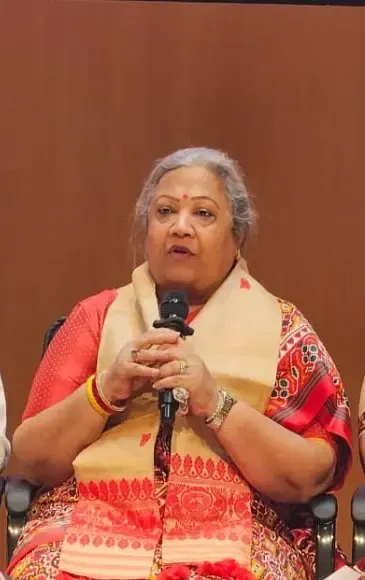
Guwahati, April 19 (NationPress) Darshana Jardosh, a prominent leader of the Bharatiya Janata Party (BJP) and Election Co-Incharge for Assam, vehemently condemned opposition parties for their actions regarding the Women's Reservation Bill, claiming they are obstructing a critical reform intended to elevate women's political representation.
Addressing the media, Jardosh stated that during the discussion of the Nari Shakti Vandan Amendment Bill, prominent parties including Congress, Samajwadi Party, Trinamool Congress, and DMK demonstrated a disrespectful opposition.
“We firmly oppose the mockery made by these opposition parties regarding this bill. This is not only a slight to the legislation but also an affront to women across the nation,” she asserted.
Jardosh further criticized the opposition for displaying a lack of commitment towards empowering women, emphasizing that the bill signifies a vital advancement towards increasing women's involvement in legislative affairs.
These comments were made in light of the special session of Parliament that commenced on April 16, wherein the Union government aimed to advance the Women's Reservation Bill.
However, the session ended without the passage of the legislation due to significant resistance and objections from Congress and various other opposition factions, resulting in a political stalemate.
The proposed law aims to allocate one-third of seats in the Lok Sabha and state legislative assemblies for women, fulfilling a long-standing demand that has faced numerous failed attempts in the past.
The Centre has characterized the bill as a landmark initiative designed to rectify the historical gender disparities in political representation.
Conversely, opposition parties have argued that the bill requires additional examination, particularly concerning provisions for sub-quotas for Other Backward Classes (OBCs) and minority women.
They have also raised concerns regarding the timing and implementation strategies proposed by the Union government.
Jardosh contended that such objections serve merely as a pretext for delaying the bill, insisting that a genuine political will is essential to ensure women receive their rightful representation.
She reaffirmed the BJP's commitment to women-led development and pledged to persist in advocating for the bill's approval, accusing opposition parties of hindering a transformative reform for political gain.
Point of View
As articulated by Darshana Jardosh, underscores the tension between the ruling party and the opposition, raising questions about the commitment to women's empowerment in legislative processes.
NationPress
19 Sept 2026
Frequently Asked Questions
What is the Women's Reservation Bill?
The Women's Reservation Bill aims to reserve one-third of the seats in the Lok Sabha and state legislative assemblies for women, addressing historical gender imbalances in political representation.
Why did Darshana Jardosh criticize the opposition?
Jardosh criticized the opposition for mocking the Women's Reservation Bill, claiming that such actions disrespect the legislation and women across India.
What are the key concerns raised by opposition parties?
Opposition parties have raised concerns regarding the need for further deliberation on provisions related to sub-quotas for Other Backward Classes (OBCs) and minority women.
What impact does the bill aim to achieve?
The bill aims to significantly increase women's participation in legislative bodies, promoting gender equality in political representation.
What is the current status of the Women's Reservation Bill?
The bill was discussed in a special session of Parliament but failed to pass due to strong opposition, leading to a political deadlock.