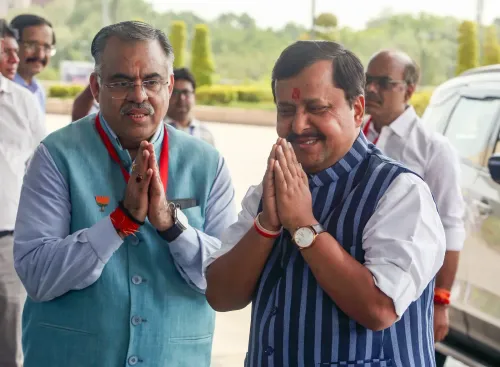
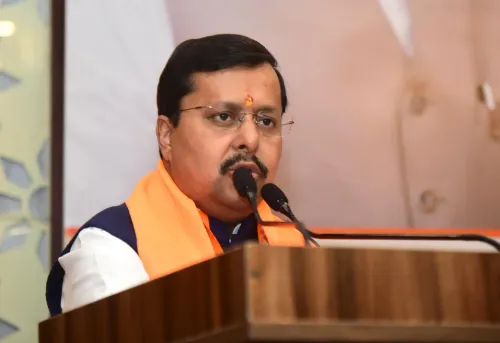
BJP chief Nitin Nabin vows to revive Punjab's industrial glory in Ludhiana
Synopsis
BJP National President Nitin Nabin travelled to Ludhiana — Punjab's industrial heartland — to promise a revival, but the real story was what industrialists told him: ₹2 lakh crore lost to GST fraud, industries fleeing to Bihar, and a bicycle sector producing one-tenth of China's output. The meeting doubles as a political signal ahead of Punjab's next electoral cycle.
Key Takeaways
BJP National President Nitin Nabin met industrialists in Ludhiana on 22 June , pledging to restore Punjab's industrial and commercial standing.
Nabin alleged the Punjab state government is not cooperating with the Centre , citing this as a key barrier to industrial growth.
Industrialists from Mandi Gobindgarh claimed bogus GST billing in iron recycling causes exchequer losses of nearly ₹2 lakh crore .
India produces only 3 crore bicycles annually against China's 30 crore , according to bicycle industry representatives.
Rice millers demanded Basmati export subsidies, citing rising costs linked to the US-Iran war and petrol prices.
Industrialists called for a 'double-engine' BJP government in Punjab to unlock access to central schemes.
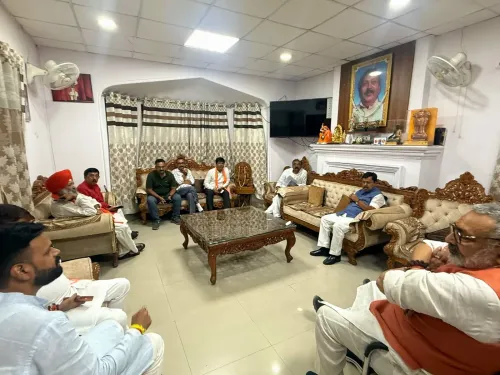
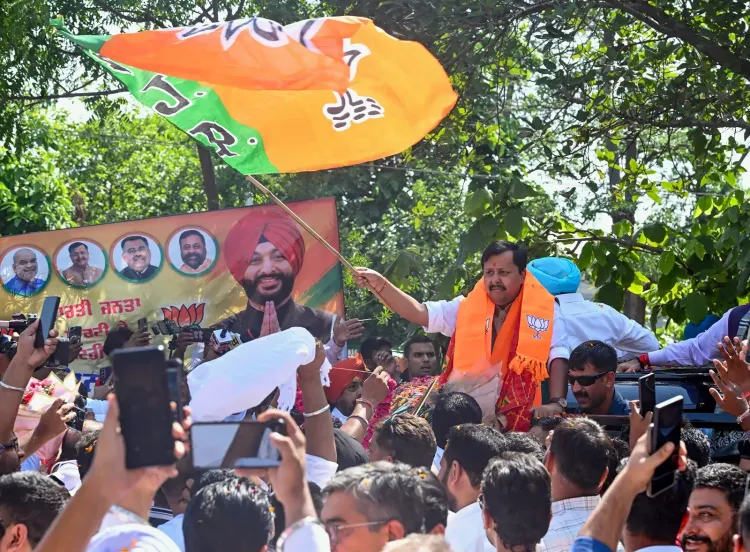
Bharatiya Janata Party (BJP) National President Nitin Nabin on Monday, 22 June pledged to restore Punjab's industrial and commercial standing, telling industrialists in Ludhiana that the party would create a favourable environment for investment and industrial growth — at all costs. The assurance came during a meeting with industry representatives from across several sectors, where wide-ranging concerns over governance, law and order, and policy gaps were raised.
Nabin's Pitch to Punjab Industry
Addressing the gathering, Nabin said that while every sector faces distinct challenges, government policy, intent, and decisive leadership are critical to resolving them. He alleged that the Punjab state government is not extending adequate cooperation to the Centre, and held this up as a key obstacle to the state's industrial revival.
'Punjab's industrial heritage has been strong, and if it is not the same today, it is a matter of concern. The Central government and the BJP will ensure accountability for this,' he said.
Nabin also stressed that dialogue is essential for development, but cautioned that progress stalls when governments approach such conversations with a negative mindset.
COVID-Era Migration: A Warning from Bihar
Nabin drew on his tenure as a minister in Bihar during the coronavirus pandemic, recalling that he witnessed industries relocating from Punjab to Bihar during that period. He attributed the exodus to Punjab's lack of a supportive industrial environment and system. 'Until there is a sound industrial policy in the state, industry cannot progress. Proper law and order and good governance are also essential,' he noted.
This comes amid longstanding concerns that Punjab's industrial base — once among the most robust in northern India — has been hollowed out by migration to states offering better infrastructure and policy incentives.
Industry Concerns: GST Fraud, Bicycle Gap, Export Costs
Industrialists at the meeting raised a range of sector-specific grievances. Representatives from Mandi Gobindgarh flagged that bogus Goods and Services Tax (GST) billing in the iron recycling sector causes losses of nearly ₹2 lakh crore to the exchequer annually, according to their estimates.
The bicycle industry pointed out a stark production gap: while China manufactures 30 crore bicycles annually, India produces only 3 crore, underlining the need for fresh national planning. The agro-combine sector raised concerns over reduced certification time limits, while rice millers cited rising costs linked to the US-Iran war and petrol prices, demanding export subsidies for Basmati.
The nut-bolt industry described high licence fees as unfair and called for reductions. Across sectors, industrialists emphasised that forming a 'double-engine' government — with the BJP in power both at the Centre and in Punjab — is essential for the state to access central schemes that are currently out of reach.
The Political Subtext
Nabin's visit to Ludhiana — Punjab's industrial capital — carries clear electoral undertones. The BJP has been seeking to consolidate its position in a state governed by the Aam Aadmi Party (AAP), and the outreach to industrialists signals an attempt to build a business-community constituency ahead of future electoral contests. Notably, the concerns raised — extortion, organised crime, deteriorating governance — mirror the BJP's broader political narrative against the AAP administration.
What Comes Next
No specific policy announcements or timelines were disclosed at the meeting. The BJP is expected to formalise its industrial outreach in Punjab through structured consultations. Whether the Centre moves to extend targeted industrial incentives to the state — bypassing or pressuring the state government — will be closely watched by industry stakeholders.
Point of View
And courting industrialists — a traditionally influential constituency — is a calculated move. The grievances aired, from GST fraud to industry migration, are real and documented, but the BJP's own record on Punjab's industrial decline predates the AAP government. The 'double-engine' framing conveniently sidesteps that history. More importantly, no concrete policy commitments emerged from the meeting — only assurances. For Punjab's industry, the gap between political promises and on-ground delivery has been wide for over a decade, regardless of which party held power.
NationPress
21 Sept 2026
Frequently Asked Questions
What did BJP National President Nitin Nabin promise Punjab industrialists?
Nabin pledged to restore Punjab's industrial and commercial standing, promising a favourable environment for investment and industrial growth. He alleged the state government is not cooperating with the Centre and said the BJP would ensure accountability.
Why did industries migrate from Punjab to Bihar during COVID-19?
According to Nabin, who was a minister in Bihar at the time, industries relocated from Punjab to Bihar during the pandemic due to Punjab's lack of a supportive industrial environment, sound industrial policy, and adequate law and order.
What is the GST fraud concern raised by Mandi Gobindgarh industrialists?
Industrialists from Mandi Gobindgarh claimed that bogus GST billing in the iron recycling industry causes losses of nearly ₹2 lakh crore to the exchequer, according to their estimates presented at the meeting.
What is the 'double-engine' government demand from Punjab industrialists?
Punjab industrialists called for a BJP government at the state level — mirroring the party's presence at the Centre — arguing that such alignment would allow Punjab to access central industrial schemes it currently cannot benefit from under the AAP-led state government.
What concerns did the rice milling and bicycle industries raise?
Rice millers flagged rising costs tied to the US-Iran war and petrol prices, demanding Basmati export subsidies. The bicycle industry highlighted that India produces only 3 crore bicycles annually against China's 30 crore, calling for fresh national planning.