How Did Blurred Photos in France Help Rediscover Kashmir's Ancient Buddhist Heritage?
Synopsis
Prime Minister Modi reveals how a blurred photograph in France led to the rediscovery of an ancient Buddhist complex in Baramulla, Kashmir. This compelling narrative highlights the rich cultural heritage and the significance of these findings, tracing back nearly 2,000 years.
Key Takeaways
Rediscovery of Buddhist Heritage: The ancient Buddhist complex in Baramulla highlights Kashmir's rich cultural legacy.
International Connection: A photograph from France played a crucial role in uncovering this history.
Archaeological Significance: The mounds were found to be remnants of a man-made structure, not natural formations.
Historical Timeline: The findings trace back nearly 2,000 years, enriching our understanding of the past.
Cultural Pride: The narrative emphasizes the importance of preserving and celebrating India's diverse heritage.
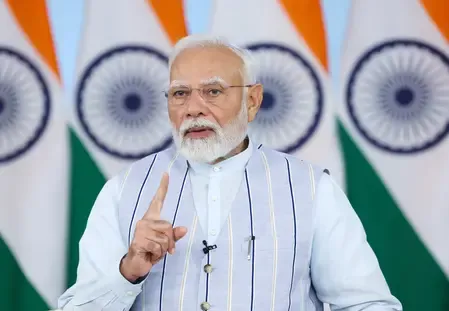
New Delhi, Dec 28 (NationPress) Prime Minister Narendra Modi shared a compelling narrative on Sunday that emphasizes the cultural and historical significance of Jammu and Kashmir. He highlighted the remarkable rediscovery of an ancient Buddhist complex in Baramulla, which came to light thanks to a blurred photograph kept in a museum in France.
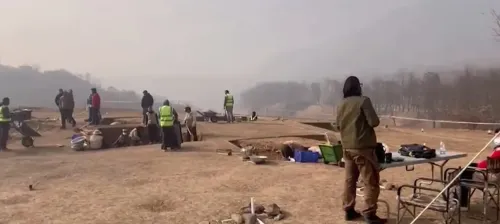
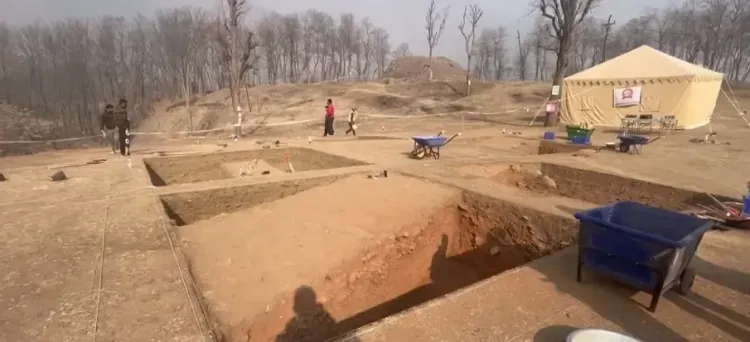
During the 129th episode of his monthly radio show 'Mann Ki Baat', the Prime Minister stated, "I want to recount a tale about the cultural and historical legacy of Jammu and Kashmir that will instill a sense of pride in you. In a location called Jehanpora in Baramulla, people had observed some tall mounds for years, but their significance remained unknown. Then, one day, an archaeologist took notice of them."
He elaborated that upon closer inspection, the mounds appeared distinctive.
"As he began to explore the region, these mounds seemed quite peculiar. Subsequently, a scientific investigation was initiated. Drones captured aerial photographs, and the terrain was meticulously mapped. Astonishing discoveries soon unfolded. It became evident that these mounds were not natural formations; they were remnants of a significant man-made structure. Meanwhile, another intriguing connection emerged," the Prime Minister remarked.
PM Modi further indicated that a vital link to the past was found thousands of kilometers away from India.
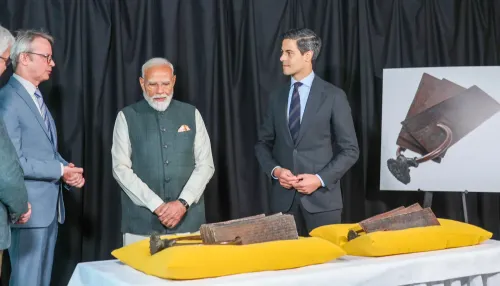
"An aged, blurred photograph was uncovered in the archives of a museum in France, depicting three Buddhist stupas from Baramulla. This moment marked a turning point, revealing Kashmir's illustrious history to us," he expressed.
Emphasizing the historical importance of the discovery, the Prime Minister pointed out that these findings trace Kashmir’s rich heritage back nearly two millennia.
"This history extends back approximately 2,000 years. This Buddhist complex located in Jehanpora, Kashmir, serves as a reminder of the region's past and its rich identity," he added.
Point of View
Illustrating the importance of historical discoveries in understanding our identity as a nation. It resonates with the ongoing efforts to revive and celebrate the diverse cultural legacies across India.
NationPress
11 Oct 2026
Frequently Asked Questions
What was discovered in Baramulla?
An ancient Buddhist complex was rediscovered in Baramulla, Kashmir, thanks to a blurred photograph found in France.
How did a photograph in France help in this discovery?
The photograph depicted three Buddhist stupas that provided crucial insights into the historical significance of the mounds in Baramulla.
What is the historical significance of this discovery?
The findings trace back Kashmir's heritage nearly 2,000 years, highlighting its rich cultural identity.
Who shared this story?
The story was shared by Prime Minister Narendra Modi during his monthly radio programme 'Mann Ki Baat'.
Where is Jehanpora located?
Jehanpora is located in Baramulla, which is part of Jammu and Kashmir.