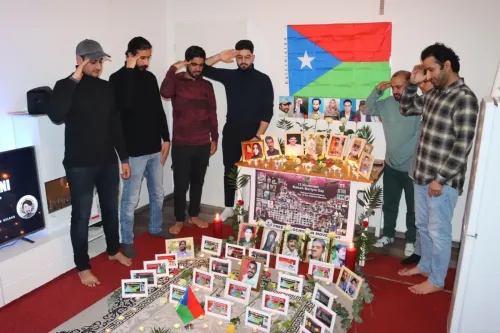
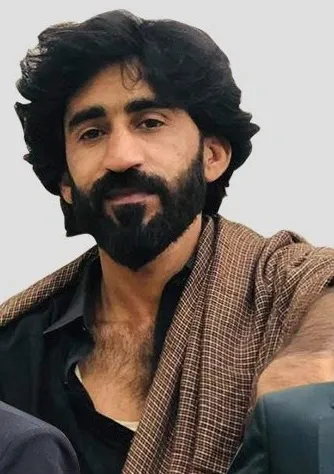
BNM Chairperson Appeals to Global Community Regarding the 'Illegal' Detention of Human Rights Lawyers in Pakistan?
Synopsis
In a compelling open letter, BNM Chairperson Naseem Baloch highlights the alarming unlawful arrests of human rights lawyers in Pakistan. He underscores the systematic oppression faced by dissenters, urging global action to uphold fundamental rights in the face of increasing state repression. Will the international community respond to this call for justice?
Key Takeaways
Naseem Baloch's letter highlights the unlawful arrests of human rights lawyers in Pakistan.
Human rights violations in Pakistan are systematic, particularly in Balochistan.
Imaan and Hadi's activism challenges state repression and advocates for victims.
The international community's silence contributes to ongoing injustices.
The need for global awareness and action is paramount.
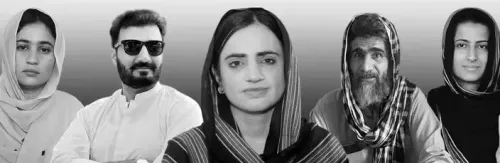
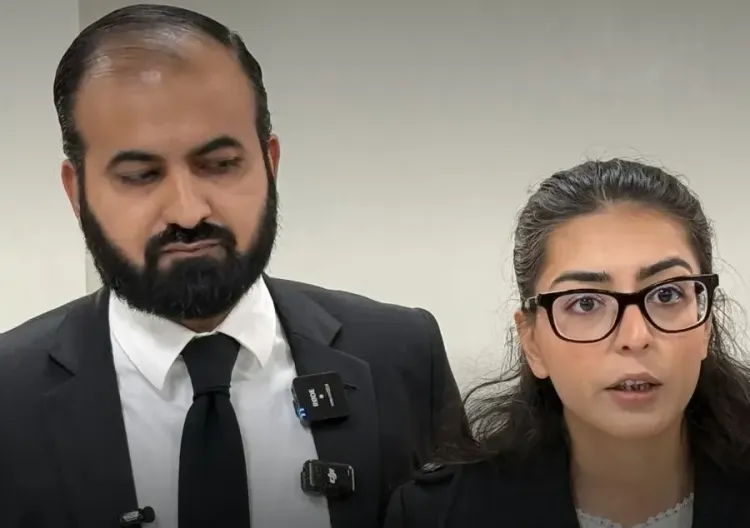
Quetta, Jan 30 (NationPress) Chairman of the Baloch National Movement (BNM), Naseem Baloch, has addressed an open letter to the global community concerning the recent 'illegal' detention of Pakistani human rights attorneys Imaan Zainab Mazari-Hazir and Hadi Ali Chatta. He characterized this as an assault on truth, the legal profession, and all individuals who dare to voice dissent against state crimes in Pakistan.
This letter follows a report that a Pakistani court sentenced Imaan and her husband, Hadi, to a combined total of 17 years in prison on various charges linked to social media activities.
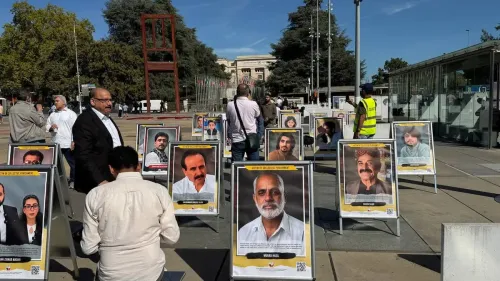
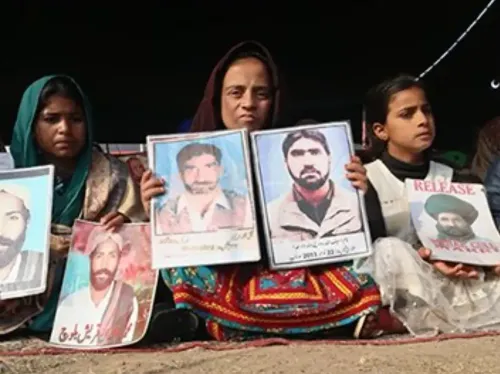
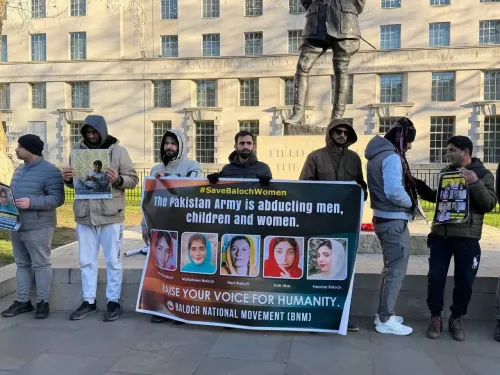
Naseem articulated, 'Pakistan persists as a colonizer and occupier of Balochistan, where enforced disappearances, extrajudicial killings, arbitrary arrests, and torture have become normalized. Thousands of Baloch men, women, and children have been taken by Pakistani security forces, many never returning, while others are discovered as mutilated corpses. In this environment of fear, silence is enforced through violence.'
Naseem emphasized that Imaan, a dedicated human rights lawyer, chose to speak out and became one of the few voices consistently advocating for the victims of enforced disappearances—especially within marginalized ethnic groups in Pakistan, including the Baloch and Pashtun.
'She challenged the impunity of Pakistan’s military and intelligence agencies, questioned unlawful detentions, and stood alongside families who have waited years, sometimes decades, for answers regarding their missing loved ones. For this, she is now facing punishment,'
he stated.
In a similar vein, the BNM Chairperson noted that Hadi's only 'offense' was his commitment to uphold the law and speak out against the crimes committed by Pakistani authorities.
'He defended fundamental rights in a system where legality is subordinate to military command. His arrest unveils a grim reality—lawyers are no longer safe in Pakistan if they refuse to acquiesce to state oppression,'
Naseem remarked.
Naseem underscored the necessity of understanding this incident in its proper context, asserting that human rights violations in Pakistan are not incidental but systematic, especially in 'occupied regions' such as Balochistan.
'The detainment of Imaan Mazari and Hadi Chatta is a continuation of the same policy that criminalizes dissent, stifles resistance, and silences the voices of victims,' he added.
Stressing that the silence of the international community equates to complicity, Naseem asserted, 'Pakistan is a signatory to international human rights treaties, yet it openly violates the rights to free expression, legal defense, and protection from arbitrary detention. Human rights defenders are imprisoned. Journalists are abducted. Lawyers are intimidated. Entire nations within Pakistan’s occupation are treated as subjugated populations.'
Point of View
It is imperative to highlight the ongoing struggles faced by human rights defenders in Pakistan. The arrest of Imaan Mazari and Hadi Chatta is not just an isolated event; it reflects a broader pattern of repression against those who challenge state authority. Our commitment remains steadfast in advocating for justice and amplifying the voices of the oppressed.
NationPress
16 Oct 2026
Frequently Asked Questions
What prompted Naseem Baloch to write the letter?
Naseem Baloch wrote the letter in response to the unlawful arrests of human rights lawyers Imaan Zainab Mazari-Hazir and Hadi Ali Chatta, which he views as a direct attack on truth and justice in Pakistan.
What are the charges against Imaan and Hadi?
Imaan and Hadi have reportedly been sentenced to a combined 17 years in prison on multiple charges related to their social media activity.
What does Naseem Baloch say about the state of human rights in Pakistan?
Naseem Baloch describes Pakistan as a colonizer and occupier of Balochistan, where systematic human rights violations, including enforced disappearances and extrajudicial killings, have become a norm.
How does the international community relate to these events?
Naseem Baloch asserts that the silence of the international community on these issues equates to complicity in the ongoing human rights violations in Pakistan.
What is the significance of Imaan and Hadi's work?
Imaan and Hadi are known for their advocacy for victims of enforced disappearances, standing up against the impunity of the military and intelligence agencies in Pakistan.