BSF hands over two Bangladeshi cops to BGB after Tripura border crossing
Synopsis
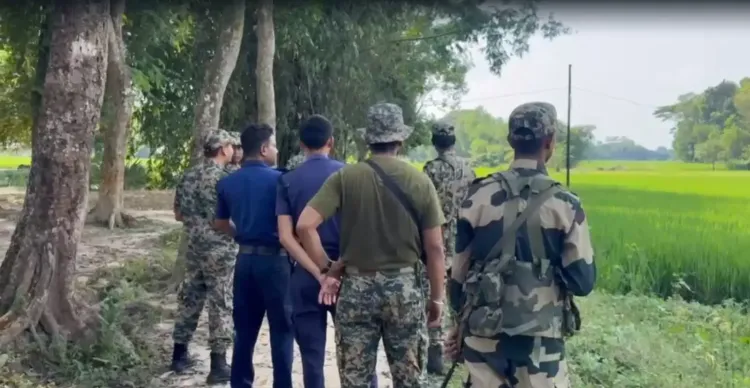
Two Bangladesh Police officers chasing a drug suspect inadvertently crossed into Tripura's Sepahijala district, were detained overnight by the BSF, and handed back to Bangladesh at a flag meeting on Friday — a rare incident involving uniformed foreign law enforcement on Indian soil, resolved swiftly through established border protocols.
Key Takeaways
ASI Imran Hossain and Constable Rohit Dewan of Bangladesh Police crossed into India's Ashabari border area, Sepahijala district, Tripura on Thursday night .
The crossing occurred during an anti-narcotics operation when Constable Dewan chased a suspected drug trafficker across the international boundary.
Both personnel were detained overnight at the Ashabari Border Outpost (BOP) by the BSF .
A BSF-BGB flag meeting near the zero line on Friday facilitated the formal handover to Bangladeshi authorities.
Tripura shares an 856 km border with Bangladesh; all but 50 km of the frontier is fenced.
Two Bangladesh Police personnel who inadvertently crossed into Indian territory near the Ashabari border area in Tripura's Sepahijala district on Thursday night were handed back to Bangladeshi authorities on Friday following a flag meeting between the Border Security Force (BSF) and Border Guard Bangladesh (BGB), officials said. The incident unfolded during an anti-narcotics operation along the international boundary.
How the Border Crossing Happened
The two personnel were identified as Assistant Sub-Inspector (ASI) Imran Hossain and Constable Rohit Dewan, reportedly posted at a police station in Bangladesh's Comilla district. According to officials, the duo were conducting an anti-narcotics operation close to the international border when Constable Dewan chased a suspected drug trafficker and inadvertently entered Indian territory. He was reportedly detained by local residents before being handed over to the BSF. ASI Hossain was subsequently detained after he crossed into India in an attempt to retrieve his colleague.
Overnight Detention and Flag Meeting
Both personnel were taken into BSF custody and reportedly questioned overnight at the Ashabari Border Outpost (BOP). Following communication between the border-guarding forces and other concerned authorities of the two countries, a flag meeting was arranged on Friday to facilitate their return. The meeting was reportedly held near the zero line of the international border, with BSF personnel and representatives of the BGB, police, and intelligence agencies from both sides participating. Following deliberations, the two Bangladesh Police personnel were formally handed over to Bangladeshi authorities.
Notably, no detailed official statement fully confirming all circumstances of the incident or the terms of the handover was immediately available, according to reports.
The Sensitive Tripura-Bangladesh Border
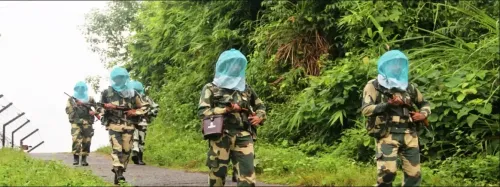
Tripura shares an 856 km border with Bangladesh and is surrounded on three sides by the neighbouring country, making it particularly vulnerable to cross-border migration, smuggling, and other trans-border crimes. Except for 50 km patches, most of the frontier has been fenced to prevent illegal crossings, contraband smuggling, and infiltration by inimical elements. This incident adds to a pattern of border-area complexities driven by anti-narcotics operations in the region.
Broader Context
India-Bangladesh border management has been under close scrutiny in recent months, with both sides maintaining active coordination mechanisms including regular flag meetings between the BSF and BGB. The inadvertent crossing by law enforcement personnel — rather than civilians or smugglers — underscores the porous and operationally complex nature of border segments that remain unfenced. The swift resolution through established diplomatic and military channels signals that bilateral border protocols are functional, even amid broader tensions in the region.
Point of View
Not civilians, were the ones who strayed underscores how fluid anti-narcotics operations can become in poorly demarcated zones. The absence of an immediate official statement from either side is routine caution, but transparency on how often such crossings occur would serve public trust. More broadly, incidents like this test the resilience of India-Bangladesh border cooperation at a time when the bilateral relationship is navigating a more complex political environment.
NationPress
16 Oct 2026
Frequently Asked Questions
Why did two Bangladesh Police officers enter Indian territory in Tripura?
The two officers — ASI Imran Hossain and Constable Rohit Dewan — inadvertently crossed into India's Ashabari border area in Sepahijala district while conducting an anti-narcotics operation on Thursday night. Constable Dewan reportedly chased a suspected drug trafficker across the international boundary, and ASI Hossain followed to retrieve him.
What happened after the Bangladesh Police personnel were detained by the BSF?
Both personnel were taken into BSF custody and reportedly questioned overnight at the Ashabari Border Outpost. On Friday, a flag meeting was held near the zero line of the international border, attended by BSF, BGB, police, and intelligence representatives from both sides, after which the officers were handed over to Bangladeshi authorities.
What is a BSF-BGB flag meeting?
A flag meeting is a formal diplomatic-military meeting held between the Border Security Force (BSF) of India and the Border Guard Bangladesh (BGB) at or near the international border to resolve incidents, disputes, or operational issues. It is the standard mechanism for handling cross-border incidents between the two countries.
How significant is the Tripura-Bangladesh border in terms of security?
Tripura shares an 856 km border with Bangladesh and is surrounded on three sides by the neighbouring country, making it highly sensitive to cross-border smuggling, illegal migration, and infiltration. All but 50 km of the frontier has been fenced, but unfenced stretches remain vulnerable to trans-border criminal activity.
Were the two Bangladeshi officers facing any charges in India?
No charges have been reported. According to officials, the crossing appeared to be inadvertent — a result of an active anti-narcotics operation — and the matter was resolved through a flag meeting rather than any legal or criminal process on the Indian side.