Mumbai-Ahmedabad Bullet Train: 5 portal beams launched over Ahmedabad-Vadodara line in 22 days
Synopsis
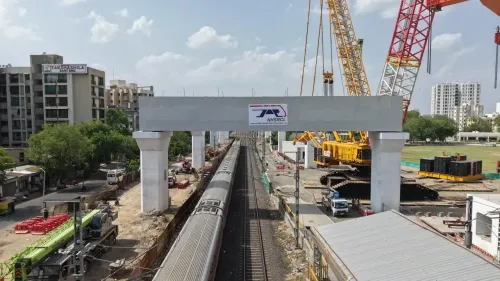
India's bullet train corridor just cleared one of its toughest engineering hurdles — five portal beams, each weighing up to 1,360 metric tonnes, were hoisted over live railway tracks at Maninagar, Ahmedabad, in just 22 days. A 2,200-tonne crawler crane was used over Indian railway tracks for the first time, compressing what once took nine hours per lift to under four.
Key Takeaways
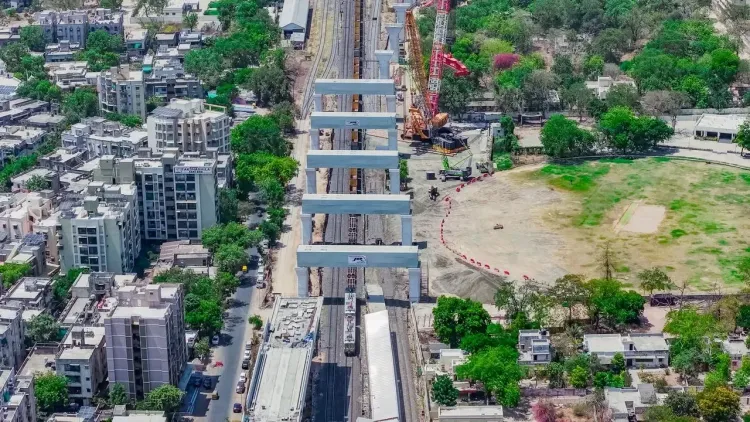
Five precast-prestressed portal beams were launched over the Ahmedabad-Vadodara railway line in Maninagar between April 8 and April 29, 2025 — completed in 22 days .
The heaviest beam, launched on April 8 , weighed approximately 1,360 metric tonnes , described as one of the heaviest lifts over an operational railway line in India.
Each installation took approximately 3.5 hours , down from earlier 9-hour traffic blocks .
A 2,200 metric tonne crawler crane was deployed over Indian railway tracks for the first time .
Each beam measures 34 metres in length with a 5.5 m × 4.5 m cross-section, spanning the Ahmedabad-Vadodara up, down, and third lines.
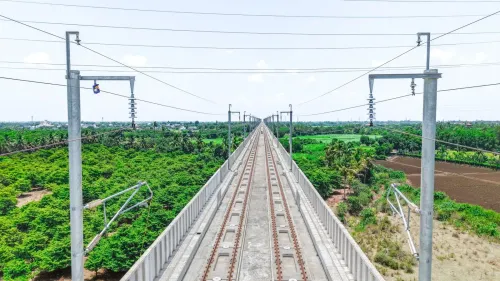
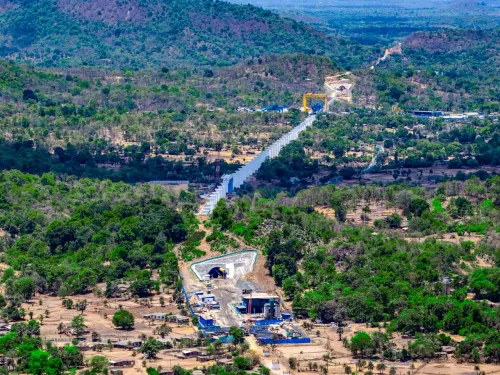
Five precast-prestressed heavy portal beams for the Mumbai-Ahmedabad Bullet Train project have been successfully launched over the Ahmedabad-Vadodara railway line in the Maninagar area of Ahmedabad, completing a critical phase of elevated corridor construction within just 22 days. The operation, carried out in coordination with Indian Railways, marks a significant structural milestone on one of India's most ambitious infrastructure projects.
Launch Timeline and Scale
The five beams were installed in a planned sequence on April 8, 13, 19, 24, and 29, with each installation completed in approximately three and a half hours — a notable improvement over earlier nine-hour traffic blocks. The first launch on April 8 involved the heaviest beam, weighing approximately 1,360 metric tonnes, which officials described as one of the heaviest lifts ever undertaken over operational railway lines in India. The remaining four beams ranged between 1,170 and 1,360 metric tonnes each, making the collective operation one of the most complex structural exercises on active railway infrastructure in the country.
Engineering Complexity at Maninagar
The Maninagar section presents a particularly demanding engineering environment. The high-speed rail alignment crosses existing tracks at an elevated level with a skewed geometry and severely limited working space. The span between piers ranges from approximately 30 to 34 metres, requiring a strong and rigid supporting system. Each portal beam measures 34 metres in length with a cross-section of 5.5 metres by 4.5 metres and was precast on site as an integrated unit before erection. The beams are designed to span multiple active railway lines, including the Ahmedabad-Vadodara up, down, and third lines, and are engineered to limit deflection and maintain alignment, ensuring uninterrupted train operations beneath the elevated corridor. Officials noted that the relatively large space between the two piers further demanded a strong and rigid supporting system such as portal beams.
Equipment and Safety Measures
A 2,200 metric tonne crawler crane served as the primary lifting equipment — deployed over Indian railway tracks for the first time. The operation was conducted despite significant challenges including restricted working space, live overhead electrification systems, and continuous train movements on active tracks below. Officials stated the project was executed with high precision, strict safety checks, and continuous monitoring. Every installation window was tightly coordinated with Indian Railways to avoid disruption to regular passenger and freight services.
Significance for the Bullet Train Project
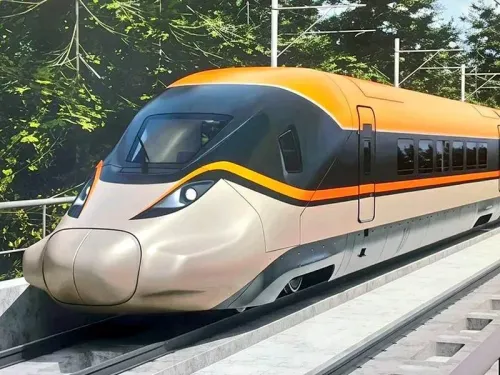
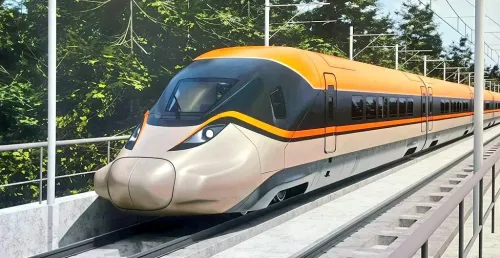
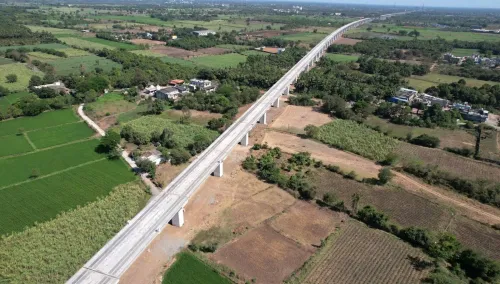
The successful completion of this phase underscores the scale of civil engineering involved in India's first high-speed rail corridor. The Mumbai-Ahmedabad Bullet Train project, being developed by the National High Speed Rail Corporation Limited (NHSRCL), spans approximately 508 kilometres and is designed to reduce travel time between the two cities to around three hours. The Maninagar beam launches represent one of the most technically demanding segments of the entire alignment, given the density of existing rail traffic and the precision required for elevated crossings. With this phase concluded, construction momentum on the Gujarat section is expected to accelerate in the coming months.
Point of View
Multi-constraint operation delivered ahead of the nine-hour-block benchmark. But the real test is pace: the Gujarat section has seen steady civil progress while land acquisition and approvals in Maharashtra remain the corridor's critical bottleneck. Engineering milestones matter, but they will not determine the project's delivery date — political and administrative will on the Maharashtra stretch will. Until that changes, construction records in Gujarat remain impressive footnotes to a project still racing against political and logistical headwinds.
NationPress
7 Oct 2026
Frequently Asked Questions
What are the portal beams launched for the Mumbai-Ahmedabad Bullet Train?
Portal beams are large precast-prestressed structural girders used to carry the elevated high-speed rail track over existing railway lines. Five such beams, each weighing between 1,170 and 1,360 metric tonnes and measuring 34 metres in length, were launched over the Ahmedabad-Vadodara railway line at Maninagar, Ahmedabad.
Why was the Maninagar section considered especially challenging?
The Maninagar section required the bullet train alignment to cross multiple active railway lines at an elevated level with skewed geometry and very limited working space. Ongoing train movements, live overhead electrification, and a large pier-to-pier span of 30 to 34 metres made precision engineering and tight coordination with Indian Railways essential.
What equipment was used for the portal beam launches?
A 2,200 metric tonne crawler crane was used as the primary lifting equipment, deployed over Indian railway tracks for the first time. Each beam was precast on site as an integrated unit before being hoisted into position.
How long did each beam installation take?
Each portal beam was installed in approximately three and a half hours, a significant improvement over the earlier nine-hour traffic blocks used for similar operations on the project.
What is the current status of the Mumbai-Ahmedabad Bullet Train project?
The Mumbai-Ahmedabad Bullet Train corridor spans approximately 508 kilometres. Civil construction on the Gujarat section, including the Maninagar beam launches, has been progressing steadily, though land acquisition in Maharashtra continues to be a key challenge for the overall project timeline.