Census Amendment Rules 2026: Teachers, govt staff now eligible as enumerators
Synopsis
India's Census — already years overdue — inched closer to launch as the Home Ministry notified the Census (Amendment) Rules, 2026, dramatically expanding who can serve as an enumerator. By opening the role to private school teachers, PSU employees, and state-nominated individuals, the Centre is building the largest possible fieldwork army for a count that will reset the data underpinning nearly every major welfare scheme in the country.
Key Takeaways
The Home Ministry notified the Census (Amendment) Rules, 2026 on 16 October 2026 , widening enumerator eligibility.
Teachers from aided and unaided private institutions , as well as government schools and local authority institutions, are now eligible.
PSU employees, bank staff, statutory body officials , and state-nominated individuals may also serve as enumerators.
The 2021 Census was postponed due to Covid-19 ; the upcoming count will be India's 16th overall and 8th since Independence .
The last Census in 2011 recorded India's population at 1.21 billion , literacy at over 74% , and a sex ratio of 940 .
The Union Home Ministry on Friday, 16 October 2026, notified the Census (Amendment) Rules, 2026, significantly widening the pool of individuals eligible to serve as enumerators for India's long-awaited national population count. The revised rules bring teachers from private and aided institutions, government officials, and even locally suitable individuals nominated by state administrations into the fold — a structural change aimed at ensuring smoother and more representative Census operations.
What the Amended Rules Allow
Under the updated framework, teachers from any government educational institution, local authority, aided or unaided private educational institution, society, or trust may now be appointed as enumerators. Previously, eligibility was more narrowly defined, limiting the operational flexibility of Census administrators.
The amendment also opens the door to clerks or officials of Central or State governments, local authorities, public sector undertakings (PSUs), statutory bodies, banks, companies, institutions, societies, and trusts. Crucially, any person whom the administration of a State or Union Territory considers suitable may now discharge the duties of an enumerator — giving regional authorities meaningful discretion in staffing the exercise.
Why Enumerators Matter
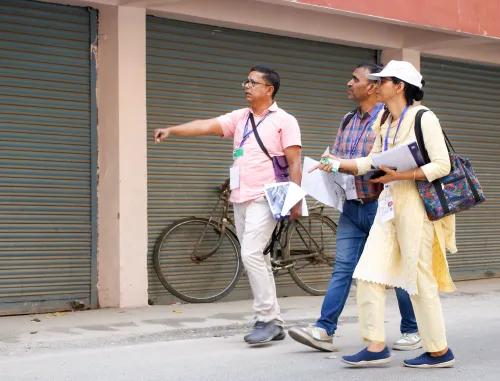
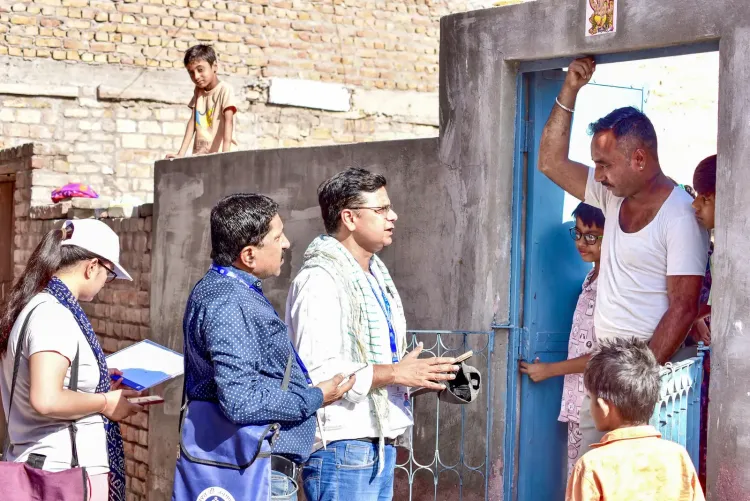
Enumerators form the backbone of India's Census machinery. They are responsible for visiting every household, recording demographic, social, and economic data, and ensuring that no individual is left uncounted. They serve as the primary bridge between citizens and the central census administration, and the quality of their work directly determines the reliability of data that drives welfare programme design, infrastructure planning, and resource allocation across all tiers of government.
Notably, a wider and more diverse enumerator pool is expected to address long-standing concerns about coverage gaps — particularly in remote, tribal, and linguistically diverse regions where local-language familiarity is critical.
Context: A Census Nearly Five Years Overdue
India conducts a national population census once every 10 years under the Census Act, 1948. The 2021 Census was postponed indefinitely due to the Covid-19 pandemic and has not yet been conducted. The upcoming exercise will be the 16th census in the overall national series and the eighth since Independence, continuing a tradition of enumeration that dates to 1872, with the first synchronous census held in 1881.
The last completed census, conducted in 2011, found India's population had reached 1.21 billion — an increase of over 181 million during the 2001–2011 decade, representing a growth rate of approximately 17.7%, slower than the previous decade. That exercise also recorded improvements in literacy, rising from 64.8% in 2001 to over 74% in 2011, and a seven-point improvement in the national sex ratio, from 933 in 2001 to 940 in 2011.
Why the Amendment Matters Now
With the Census already several years behind schedule, the Home Ministry's move to broaden enumerator eligibility signals that preparations for the actual fieldwork are advancing. A larger, more flexible talent pool could help compress the mobilisation timeline, particularly for a country whose population has grown considerably since 2011 — India is now the world's most populous nation, having surpassed China in recent years, according to United Nations data.
This comes amid growing pressure from policymakers, demographers, and welfare economists who argue that an outdated census base is distorting beneficiary counts for major schemes including food security, housing, and health insurance programmes. How quickly the Centre translates today's rule change into on-ground deployment will determine whether this amendment meaningfully accelerates the overdue count.
Point of View
And without a credible enumerator corps, no field operation can begin. What the notification does not answer is the more fundamental question: when does enumeration actually start? Every year of delay compounds the distortion in welfare programme data, with schemes calibrated to 2011 figures serving a population that is both larger and differently distributed. The Centre's silence on a start date, even as it refines eligibility rules, risks creating the impression of motion without momentum. The amendment is a necessary condition for resuming the Census — it is not, by itself, sufficient.
NationPress
16 Oct 2026
Frequently Asked Questions
What changes did the Census Amendment Rules 2026 introduce?
The Census (Amendment) Rules, 2026, notified on 16 October 2026, expand who can be appointed as an enumerator to include teachers from all categories of schools (government, aided, and unaided private), officials of Central and State governments, PSU and bank employees, and any person a State or Union Territory administration considers suitable.
Why has India's Census been delayed?
The 2021 Census was postponed due to the Covid-19 pandemic and has not been conducted since. India legally conducts its census once every 10 years under the Census Act, 1948, making the upcoming exercise roughly five years overdue.
What was recorded in India's last Census in 2011?
The 2011 Census found India's population at 1.21 billion, with a decade-on-decade growth of over 181 million (approximately 17.7%). Literacy improved from 64.8% in 2001 to over 74%, and the national sex ratio rose from 933 to 940.
Why does the enumerator expansion matter for the Census?
A wider enumerator pool gives state administrations greater flexibility to deploy locally suitable, linguistically proficient individuals — improving data quality and coverage, especially in remote or tribal areas. It is also essential to building the large fieldwork army needed to count a population that has grown significantly since 2011.
What is the Census of India and how often is it conducted?
The Census of India is a nationwide population enumeration exercise conducted every 10 years under the Census Act, 1948. The upcoming census will be the 16th in the national series and the eighth after Independence, continuing a tradition that dates to 1872, with the first synchronous census held in 1881.