China warns US of retaliation over forced labour and overcapacity tariff probes
Synopsis
Washington has launched simultaneous trade investigations against 76 economies — including China — over forced labour and overcapacity, and Beijing is not staying quiet. China has reserved the right to retaliate, cited a WTO ruling against US Section 301 tariffs, and counter-listed 10 US military-linked entities, even as both sides quietly work toward agricultural trade deals and a new Board of Trade. The contradiction between confrontation and negotiation defines where US-China relations stand today.
Key Takeaways
The US launched Section 301 investigations against 16 economies over overcapacity and separate probes against 60 economies over forced labour, with China targeted in both.
The Chinese Embassy lodged formal representations with Washington and warned of 'all necessary measures' to protect China's interests.
Beijing cited a WTO ruling that US Section 301 tariffs against China violate international trade rules.
China placed 10 US entities on its export control list, banning dual-use item exports, in direct response to US military-company designations.
Despite the confrontation, both sides agreed to form a Board of Trade and expand two-way agricultural trade under a reciprocal tariff reduction framework.
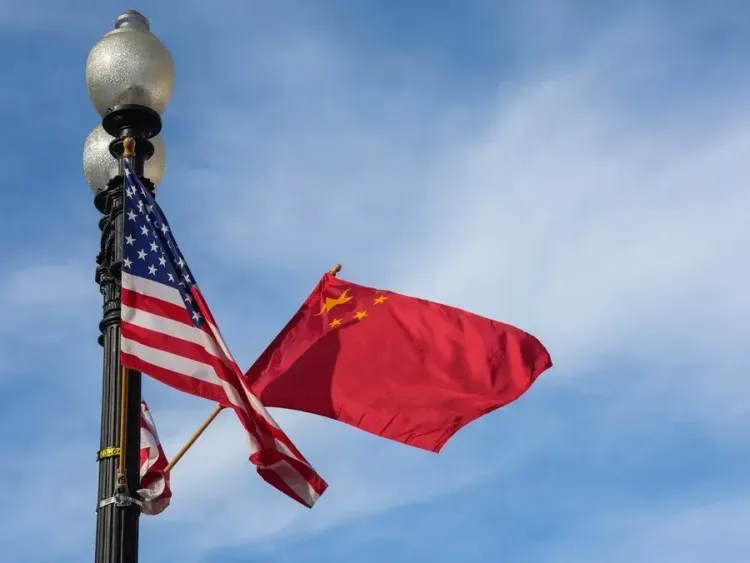
China has warned the United States of potential retaliatory measures after Washington launched sweeping trade investigations targeting 76 economies, including China, over allegations of forced labour use and industrial overcapacity, escalating tensions in an already fraught bilateral relationship.
What the US Investigations Cover
The US has opened Section 301 investigations against 16 economies, including China, citing alleged 'overcapacity' in key industries. Separately, Washington launched another probe targeting 60 economies, including China, over claims that those countries have not adequately banned imports of goods manufactured with forced labour.
Section 301 of the US Trade Act of 1974 empowers Washington to investigate foreign trade practices deemed unfair or discriminatory and to impose retaliatory trade restrictions. The mechanism was used extensively to levy tariffs on Chinese imports during President Donald Trump's first term in office.
Beijing's Formal Response
The Chinese Embassy said Beijing was 'strongly dissatisfied' with the US action and had lodged formal representations with Washington. It accused the US of abusing its domestic trade law and destabilising global supply chains.
'We will closely monitor the progress of the US investigation and reserve the right to take all necessary measures to firmly safeguard our legitimate rights and interests,' the Chinese Embassy said during a briefing for reporters on Friday.
Beijing further argued that the World Trade Organization (WTO) had already ruled that US Section 301 tariff measures against China violate WTO rules. 'By once again abusing the Section 301 process and placing domestic law above international rules, the US is making a serious mistake, severely undermining the security and stability of global industrial and supply chains and seriously disrupting the international economic and trade order,' the embassy said.
Export Controls and Counter-Listings
In a parallel move, China placed 10 US entities involved in military activities on its export control list, prohibiting the export of dual-use items to those entities. Beijing said the action was a direct response to Washington adding what it described as 'Chinese military companies' to its own restricted list, and was intended to safeguard national security and meet non-proliferation obligations.
China also pushed back against broader US restrictions on Chinese companies, accusing Washington of 'excessively expanding the concept of national security' and misusing state power to suppress Chinese enterprises.
Parallel Diplomatic Track
Notably, the warnings came even as Beijing and Washington continued diplomatic engagement aimed at stabilising their economic relationship. The two sides have agreed to establish a Board of Trade to discuss reciprocal tariff reductions and related issues.
Both governments also set a goal of expanding two-way agricultural trade and agreed in principle to include relevant agricultural products in a reciprocal tariff reduction framework. The Chinese Embassy said teams from both sides would remain in contact and encourage businesses to expand cooperation, with trade to be conducted 'independently in accordance with market principles.'
Broader Context
The US and China have remained locked in disputes over tariffs, technology controls, subsidies, and market access for years. As the world's two largest economies and major trading partners, their periodic confrontations have repeatedly unsettled global markets. This latest escalation follows a pattern of tit-for-tat trade actions that have intensified since 2018, and analysts warn that simultaneous investigations across 76 economies signal a broadening of Washington's trade enforcement posture well beyond its bilateral dispute with Beijing.
How the two sides navigate the newly formed Board of Trade — and whether agricultural trade concessions can hold amid the investigative pressure — will likely define the next phase of the world's most consequential economic relationship.
Point of View
And Washington has largely ignored those rulings. The real tension is that both countries are simultaneously escalating and negotiating — a posture that suits domestic politics on both sides but creates chronic uncertainty for global supply chains. The agricultural carve-out is the one concrete deliverable, and its survival under investigative pressure will be the early test of whether the Board of Trade has any real weight.
NationPress
10 Oct 2026
Frequently Asked Questions
What are the US trade investigations that prompted China's warning?
The US launched Section 301 investigations against 16 economies, including China, over alleged industrial overcapacity, and a separate probe against 60 economies, including China, over failure to ban imports made with forced labour. Together, the investigations target 76 economies and could lead to new US tariffs or trade restrictions.
What is Section 301 of the US Trade Act?
Section 301 of the US Trade Act of 1974 allows Washington to investigate foreign trade practices it considers unfair or discriminatory and to impose retaliatory trade measures, including tariffs. It was used extensively to levy tariffs on Chinese goods during President Donald Trump's first term.
Has the WTO ruled on US Section 301 tariffs against China?
Yes. According to the Chinese Embassy, a WTO panel has already ruled that US Section 301 tariff measures against China violate WTO rules. Washington has not complied with that ruling, a point Beijing is using to frame the new investigations as a repeat violation of international trade law.
What retaliatory steps has China taken so far?
China placed 10 US entities involved in military activities on its export control list, prohibiting exports of dual-use items to those entities. Beijing described the move as a direct response to the US designating Chinese firms as 'military companies' on its own restricted list.
Are the US and China still negotiating despite the dispute?
Yes. Both sides have agreed to establish a Board of Trade to discuss reciprocal tariff reductions and have set a goal of expanding two-way agricultural trade, agreeing in principle to include agricultural products in a tariff reduction framework. Teams from both governments are reportedly staying in contact.