U.S. Initiates Investigations into 60 Countries for Not Banning Forced Labor Imports
Synopsis
The U.S. Trade Representative has launched investigations into 60 economies, including major players like China and Japan, scrutinizing their efforts to ban imports tied to forced labor. This move signals a robust stance against international trade practices that exploit human rights.
Key Takeaways
The U.S. is investigating 60 economies for failing to ban imports made with forced labor.
The inquiry is initiated under Section 301 of the 1974 Trade Act .
Countries under scrutiny include China , Japan , India , and others.
USTR aims to promote fair competition for American workers.
The outcome may lead to new tariffs affecting international trade.
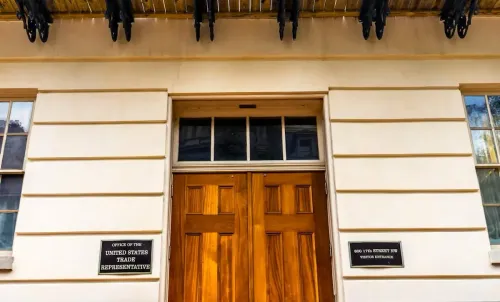
Washington, March 13 (NationPress) The U.S. Trade Representative's Office (USTR) has commenced investigations into 60 economies, including South Korea, China, and Japan, to assess whether their governments have adequately implemented measures to prohibit the importation of goods produced through forced labor.
This initiative was launched under Section 301 of the 1974 Trade Act, as the administration of U.S. President Donald Trump seeks to introduce new tariffs to replace the country-specific emergency tariffs that were recently invalidated by the Supreme Court, according to reports from Yonhap news agency.
The investigations aim to evaluate whether the actions, policies, and practices of these economies regarding their failure to enforce a ban on imports made with forced labor are considered "unreasonable" or "discriminatory," ultimately affecting U.S. commerce, the office stated.
The nations under scrutiny include South Korea, China, Japan, India, Indonesia, Britain, Australia, Canada, and Taiwan.
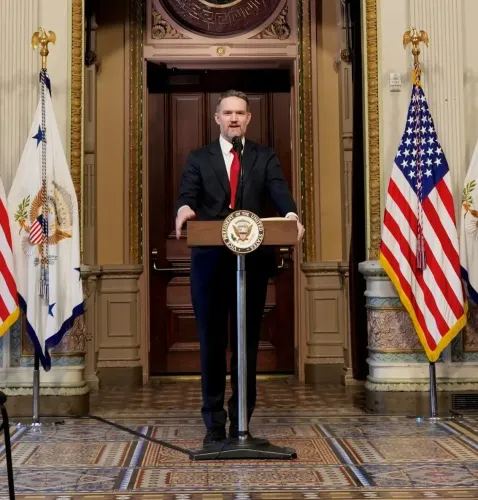
USTR Jamieson Greer remarked, "Despite the global consensus against forced labor, many governments have not effectively enforced bans on goods derived from forced labor entering their markets."
He further stated, "American workers and companies have long been compelled to compete with foreign producers who might benefit from an unfair cost advantage stemming from the issue of forced labor."
On the same day, the Trump administration initiated a trade inquiry into South Korea, China, Japan, and 13 other economies to investigate what Greer termed "unfair" trade practices related to "structural" excess capacity and production, which could lead to the imposition of tariffs.
This inquiry was also initiated under Section 301, which empowers the USTR to investigate unfair foreign trade practices on a country-by-country basis.
Point of View
This investigation reflects a critical pursuit of accountability in international trade practices. It emphasizes the importance of ethical standards in commerce, advocating for a fair playing field for American workers against unfair foreign competition.
NationPress
24 Sept 2026
Frequently Asked Questions
What prompted the U.S. to investigate these economies?
The U.S. aims to determine if these economies have adequately enforced bans on imports produced with forced labor, as part of a broader effort to uphold ethical trade practices.
Which countries are being investigated?
The investigation includes economies such as South Korea, China, Japan, India, Indonesia, Britain, Australia, Canada, and Taiwan.
What is Section 301 of the Trade Act?
Section 301 allows the USTR to investigate unfair foreign trade practices on a country-by-country basis, enabling the U.S. to take action against those practices.
What impact could this have on U.S. commerce?
If deemed unfair, these practices could lead to tariffs on imports, thereby affecting prices and availability of goods in the U.S. market.
What are the broader implications of this investigation?
This investigation signals a strong U.S. stance against forced labor in global supply chains and could encourage other nations to implement stricter regulations.