US Initiates Labor Investigations Targeting 60 Economies
Synopsis
The US has launched a significant investigation into 60 economies, including major players like China and India, to evaluate their enforcement of bans on forced labor imports and its impact on American workers.
Key Takeaways
The US is investigating 60 economies for forced labor practices.
Major economies included are China, India, and the EU.
Section 301(b) of the Trade Act allows these investigations.
Forced labor remains a significant issue in global supply chains.
US law has prohibited importing goods made with forced labor for nearly a century.
Washington, March 13 (NationPress) The United States has initiated investigations involving 60 economies, such as the European Union, India, Japan, and China, to assess if their inability to prohibit imports produced with forced labor unfairly disadvantages American workers and businesses.
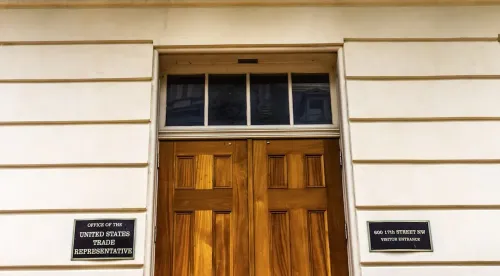
This extensive investigation was launched by the Office of the United States Trade Representative (USTR) on Thursday, leveraging Section 301(b) of the Trade Act of 1974. It specifically targets several of Washington's key trading partners.
The probe will analyze whether the actions, policies, and practices of these economies regarding their failure to impose and effectively enforce bans on goods produced with forced labor are “unreasonable or discriminatory and impose burdens on US commerce.”
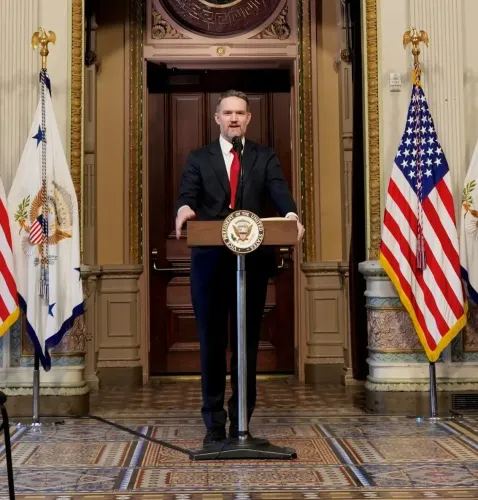
“Despite a global consensus against forced labor, many governments have not succeeded in implementing and enforcing measures that prevent goods made with forced labor from entering their markets,” stated US Trade Representative Ambassador Jamieson Greer.
“American workers and companies have long been compelled to compete with foreign manufacturers who may enjoy an unfair cost advantage due to the exploitation of forced labor,” Greer added.
The investigations aim to ascertain whether foreign governments have taken adequate measures to ban the importation of goods made with forced labor and how such failures impact US workers and businesses.
The countries and regions included in the investigation comprise India, China, the European Union, Japan, the United Kingdom, Bangladesh, Vietnam, Pakistan, Brazil, Mexico, and numerous other trading partners.
Under US law, Section 301 empowers Washington to act against foreign government practices deemed unjustifiable, unreasonable, or discriminatory that burden or restrict US commerce.
The USTR has the authority to initiate these investigations autonomously and evaluate whether the practices of foreign nations meet the legal criteria for potential trade actions.
As part of this process, the United States has sought consultations with the governments of the economies under scrutiny.
The inquiries will evaluate if the lack of effective bans on forced-labor imports permits companies to profit from unethical labor practices, thereby securing artificially low production costs that disrupt global competition.
Documents from the USTR indicate that forced labor remains entrenched in global supply chains, despite long-standing international accords prohibiting such practices. The agency noted that this exploitation can undermine legitimate producers and skew markets by enabling goods with lower labor costs to infiltrate international trade.
For nearly a century, US law has prohibited the importation of goods produced wholly or partially with forced labor, reflecting a commitment to humanitarian principles and the economic welfare of domestic industries.
International assessments suggest that the issue persists on a large scale. The International Labour Organization estimates that approximately 28 million people worldwide were subjected to forced labor as of 2021, yielding about $63.9 billion in annual profits within the global private sector.
Point of View
This investigation signifies the US's commitment to uphold fair labor practices and protect domestic industries from unfair competition. The implications of forced labor in global supply chains raise critical questions about ethical production and international trade standards.
NationPress
20 Sept 2026
Frequently Asked Questions
What prompted the US to investigate these economies?
The US aims to assess whether the failure of these economies to ban imports made with forced labor negatively impacts American workers and businesses.
Which countries are under investigation?
Countries under scrutiny include India, China, the European Union, Japan, and several others.
What is Section 301(b) of the Trade Act of 1974?
Section 301(b) allows the US to address foreign government practices deemed unreasonable or discriminatory that burden US commerce.
What are the potential outcomes of the investigations?
The investigations may lead to trade actions against countries that fail to enact and enforce bans on forced labor imports.
How many people are estimated to be in forced labor globally?
The International Labour Organization estimates that around 28 million people were in forced labor worldwide as of 2021.