Tiananmen Square 37th anniversary: China's digital clampdown targets symbols, emojis
Synopsis
China's June 4 censorship in 2025 didn't just block political speech — it suppressed candles, timestamps, fitness logs, and emojis. The 37th Tiananmen anniversary revealed a censorship apparatus now so finely tuned to symbolic association that ordinary digital acts of remembrance have become acts of risk, marking a qualitative shift in how the state controls collective memory.
Key Takeaways
China's digital platforms faced intensified censorship on 4 June 2025 , the 37th anniversary of the Tiananmen Square crackdown .
Censorship extended beyond political content to target symbols, numerals, candles, emojis, and timestamps associated with remembrance.
Users across multiple provinces reported account suspensions and temporary disabling of core social features.
Former platform staff corroborated accounts of algorithmic filtering operating at scale across platforms.
International rights organisations have flagged the episode as evidence of growing state control over collective memory through automated moderation tools.
China's censorship apparatus intensified its grip on digital platforms on 4 June 2025 — the 37th anniversary of the Tiananmen Square crackdown — moving well beyond explicit political content to suppress symbols, numerals, candles, images, and emojis that have become coded shorthand for remembrance and dissent, according to a report by PML Daily, a Ugandan-based media outlet. Accounts from users across multiple Chinese provinces, circulated screenshots, and interviews with former platform staff together document an unusually broad sweep of automated and manual censorship.
What Was Censored
According to the report, the clampdown targeted content that would ordinarily appear innocuous — timestamps, fitness logs, poetic references, and virtual candles among them. Algorithmic filters reportedly flagged seemingly unrelated words, numerals, and imagery, while core social features on major platforms were temporarily disabled. The pattern, as described by users and observers, points to an expanding, often indiscriminate surveillance and content-control apparatus whose effects extend beyond explicit political commentary to include ordinary words, numerals, and imagery.
Former platform workers corroborated user accounts, describing censorship tools operating at scale and tuned to symbolic as well as literal content. Notably, the enforcement appeared increasingly uniform across geographic and platform boundaries within China.
Why the Tiananmen Anniversary Remains So Sensitive
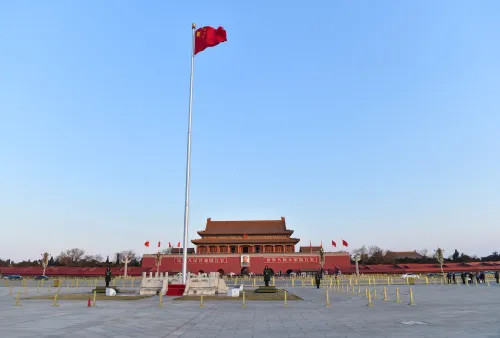
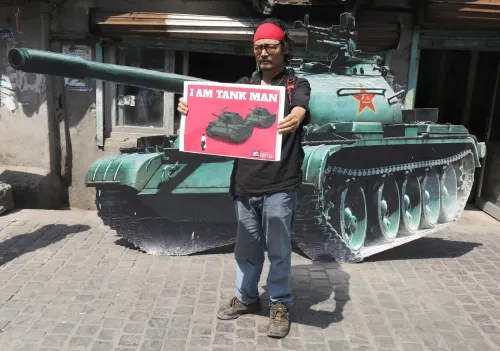
The 1989 Tiananmen Square crackdown — in which Chinese authorities deployed troops against pro-democracy demonstrators — remains one of the most tightly restricted topics in China's public sphere. Even decades on, open discussion of the events is effectively barred domestically. Rights organisations and international observers argue that technological tools have now amplified those restrictions, extending state control into formats and contexts that would have been unimaginable in earlier decades.
This comes amid a broader global debate about the role of automated moderation in politically sensitive contexts, with critics arguing that algorithmic censorship at this scale constitutes a structural suppression of collective memory rather than targeted content moderation.
Impact on Ordinary Users
For everyday internet users in China, the episode underscored the precariousness of routine online interaction. Accounts were suspended, social features disabled, and ordinary expressions of remembrance were treated as potential political threats. The report notes that the approach prioritises preemptive control rather than contextual evaluation — meaning users face risk not for what they explicitly said, but for what the system inferred they might mean.
'The effects are immediate and personal: accounts suspended, social features disabled, and everyday expressions of remembrance treated as potential political threats,' the report stated.
Broader Implications for Digital Rights
The episode has heightened concerns among international rights organisations about digital rights and freedom of expression. The report argues that digital governance in China is not merely a technological matter but a social one — decisions embedded in algorithms and enforced through platform policies can shape collective memory by constraining how and whether people can mark a date that remains deeply consequential.
Critics argue that the 2025 clampdown represents a qualitative escalation: where earlier censorship targeted keywords and names, the current apparatus reportedly suppresses symbolic and numerical associations, suggesting a deeper integration of behavioural surveillance into content moderation. The findings are expected to inform ongoing international discussions on platform accountability and cross-border digital rights standards.
Point of View
Designed to intercept intent before expression. What is less examined in mainstream coverage is the chilling effect this creates on non-political behaviour — fitness apps, poetry, timestamps — which normalises self-censorship far beyond the political class. The deeper question is whether international platforms operating in adjacent jurisdictions are importing similar suppression logic, and whether global digital rights frameworks have kept pace with this kind of symbolic, algorithmic control.
NationPress
3 Oct 2026
Frequently Asked Questions
What happened on the 37th anniversary of the Tiananmen Square crackdown?
On 4 June 2025, Chinese authorities intensified censorship across digital platforms to coincide with the 37th anniversary of the 1989 Tiananmen Square crackdown. Reports from multiple provinces, circulated screenshots, and accounts from former platform staff documented widespread suppression of content ranging from explicit political commentary to symbols, emojis, and numerals associated with the date.
Why does China censor content related to Tiananmen Square?
The 1989 Tiananmen Square crackdown — in which authorities deployed troops against pro-democracy demonstrators — remains one of the most politically sensitive topics in China. Open discussion of the event is effectively barred domestically, and the government has consistently suppressed commemorations to prevent organised dissent or public reckoning with the incident.
What kinds of content were reportedly censored on June 4, 2025?
According to the report, censorship extended well beyond explicit political content to include virtual candles, poetic references, timestamps, fitness logs, and emojis that have become coded shorthand for Tiananmen remembrance. Algorithmic filters reportedly flagged seemingly innocuous words and numerals, and core social features were temporarily disabled on major platforms.
Who is affected by China's digital censorship around the Tiananmen anniversary?
Ordinary internet users across China were directly affected, with accounts suspended and social features disabled. The broad, preemptive nature of the censorship means even users with no political intent risk abrupt interventions for routine online activity that the system flags as symbolic of dissent.
Why are international observers concerned about this censorship episode?
Rights organisations and digital freedom advocates argue the 2025 clampdown represents a qualitative escalation in state control over collective memory, using automated tools to suppress symbolic and associative content at scale. Concerns have been raised about the implications for digital rights, freedom of expression, and whether similar algorithmic logic could influence platform moderation in other jurisdictions.