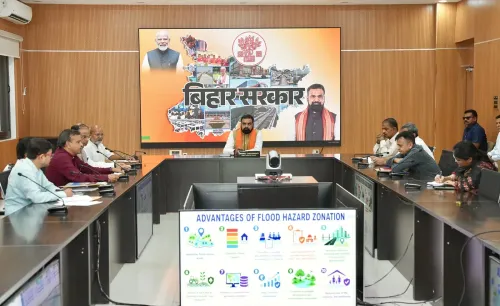
Shivraj Singh Chouhan in Bihar: 49.72 lakh hit by floods across 15 districts

Synopsis
Even in a year when Bihar's cumulative monsoon rainfall is 27% below normal, nearly 50 lakh people are flooded out — because the crisis isn't rainfall, it's Nepal's rivers and decades of silt buildup. Union Agriculture Minister Shivraj Singh Chouhan's two-day boots-on-ground tour signals the Centre is taking it seriously, but the long-term fix remains as elusive as ever.
Key Takeaways
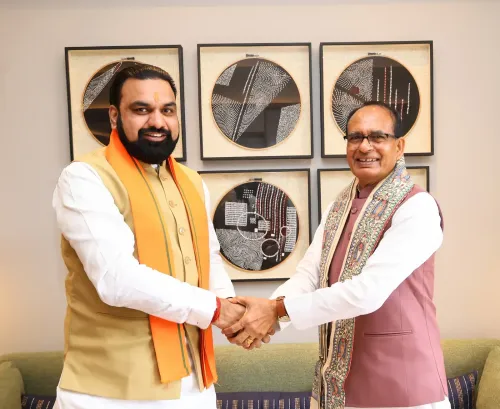
Union Agriculture Minister Shivraj Singh Chouhan arrived in Patna on 16 September 2026 for a two-day flood assessment visit alongside Bihar CM Samrat Choudhary .
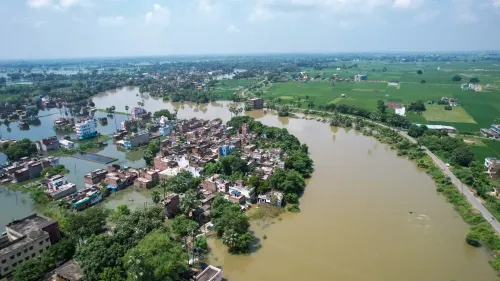
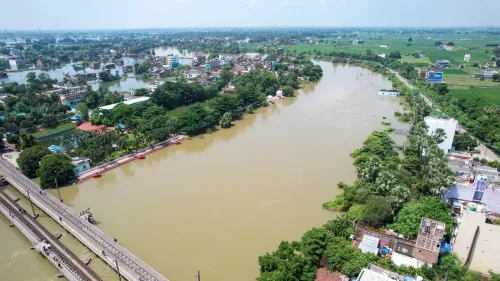
Floods have affected 49.72 lakh people and nearly 55,000 hectares of land across 15 districts and 575 gram panchayats .
Multiple rivers — including the Ganga, Kosi, Gandak, Burhi Gandak, Bagmati and Ghaghara — are flowing above the danger mark at several locations.
Despite cumulative rainfall being 27% below normal , flooding is attributed to cross-border river inflows from Nepal and silt accumulation.
Chouhan is scheduled to hold a high-level disaster management review in Patna on Thursday before departing for Kolkata at 12:40 pm .
Union Agriculture Minister Shivraj Singh Chouhan arrived in Patna on Wednesday, 16 September 2026, for a two-day assessment of Bihar's worsening flood situation, accompanied by Bihar Chief Minister Samrat Choudhary. The central team's visit covers affected districts where floods have displaced nearly 49.72 lakh people across 15 districts and submerged close to 55,000 hectares of agricultural land.
Ground Inspection and Survey Route
Chouhan flew into Patna Airport from Bhopal on a special flight and proceeded by road to Hajipur. He and Chief Minister Choudhary then travelled from the Hajipur Police Lines to Terasia Diyara in Raghopur block, surveying flood-affected areas using boats operated by the State Disaster Response Force (SDRF) and tractors, with several senior officials in attendance.
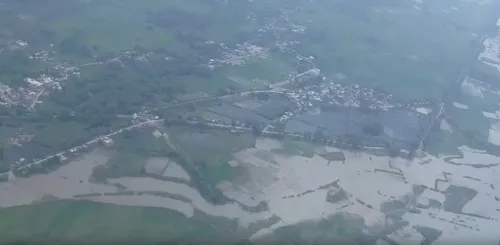
As part of the two-day itinerary, Chouhan is scheduled to conduct an aerial survey of flood-hit areas in Dighwara in Saran district and Maner in Patna district. He will then proceed to Munger and onwards to Bhagalpur, assessing conditions along the route, and is scheduled to spend Wednesday night at the State Guest House in Bhagalpur.
On Thursday, the minister will return to Patna for a high-level meeting to review disaster management measures and ongoing relief and rescue operations, before departing for Kolkata at 12:40 pm.
Scale of the Flood Crisis
According to the latest assessment, floods have affected 575 gram panchayats across 88 blocks in 15 districts — Patna, Bhojpur, Saran, Vaishali, Bhagalpur, Begusarai, Buxar, Samastipur, Munger, Katihar, Lakhisarai, Khagaria, Purnea, Madhepura and Arwal. The state government says relief and rescue operations are ongoing, and that efforts are continuing towards a long-term solution to Bihar's recurring flood problem.
Rivers Above Danger Mark
According to the Central Water Commission, multiple rivers are currently flowing above the danger level. The Gandak is above the mark at Dumaria Ghat, while the Kosi is above the mark at Baltara and Kursela. The Burhi Gandak is above the danger mark at Khagaria.
The Ganga is flowing above the danger mark at Digha, Gandhi Ghat and Hathidah in Patna, and also at Bhagalpur and Kahalgaon. The Punpun is above the mark at Sripalpur, the Bagmati at Benibad, and the Ghaghara at Darauli. River levels are expected to remain stable or recede at some locations; however, a rise was recorded in the Son River at the Indrapuri Barrage.
Rainfall Pattern and Cause of Flooding
Bihar has received 112.7 mm of rainfall so far in September, approximately 6% above normal for the period. However, cumulative rainfall from 1 June to 14 September remains 27% below normal. Despite the overall deficit, the current flooding has been attributed to water inflows from rivers originating in Nepal, compounded by silt accumulation in several rivers across the state.
The Bihar Weather Service Centre has forecast very light to moderate rainfall at several locations over the next two days, indicating conditions are unlikely to ease dramatically in the near term. Chouhan's visit signals the Centre's attention to a crisis that, notably, has occurred even in a below-normal monsoon year — underscoring how cross-border river flows and riverbed silting have become the primary flood drivers in Bihar.
Point of View
Because the state's flooding is no longer primarily a rainfall story — it is a Nepal-river and riverbed-siltation story. Ministerial tours generate visibility, but the hard policy questions — a bilateral water-management framework with Nepal, dredging programmes, and embankment reforms — rarely survive beyond the visit. Chouhan's itinerary covering Patna, Saran, Bhagalpur, and Munger in two days is operationally credible, but the test will be what the Centre commits at Thursday's high-level review and whether the relief reaches the 575 gram panchayats before the next river surge.
NationPress
16 Sept 2026
Frequently Asked Questions
Why is Union Minister Shivraj Singh Chouhan visiting Bihar?
Chouhan is on a two-day visit to Bihar starting 16 September 2026 to assess the flood situation and review relief and rescue operations across the affected districts. He is conducting ground-level and aerial surveys alongside Bihar Chief Minister Samrat Choudhary before chairing a high-level disaster management review meeting.
How many people have been affected by the Bihar floods in 2026?
According to the latest assessment, approximately 49.72 lakh people have been affected, with nearly 55,000 hectares of land inundated across 15 districts and 575 gram panchayats spread over 88 blocks.
Which rivers are above the danger mark in Bihar?
Multiple rivers are currently above the danger level, including the Gandak at Dumaria Ghat, the Kosi at Baltara and Kursela, the Burhi Gandak at Khagaria, the Ganga at Digha, Gandhi Ghat, Hathidah, Bhagalpur and Kahalgaon, and the Punpun, Bagmati and Ghaghara at their respective monitoring points, according to the Central Water Commission.
What is causing Bihar's floods if rainfall is below normal?
Despite cumulative monsoon rainfall from 1 June to 14 September being 27% below normal, the flooding has been attributed to water flowing into Bihar from rivers originating in Nepal, along with silt accumulation in several rivers across the state. September rainfall is, however, running about 6% above normal.
Which districts in Bihar are worst affected by the 2026 floods?
The 15 affected districts are Patna, Bhojpur, Saran, Vaishali, Bhagalpur, Begusarai, Buxar, Samastipur, Munger, Katihar, Lakhisarai, Khagaria, Purnea, Madhepura, and Arwal, collectively covering 575 gram panchayats across 88 blocks.