Is the Indo-US Trade Deal Under Fire? Opposition's Concerns Premature?
Synopsis
As the Indo-US trade deal gains attention, concerns raised by critics may be premature. With key figures like Trump and Modi involved, the future of this trade agreement remains uncertain. Experts encourage patience and await further details before jumping to conclusions.
Key Takeaways
Trump and Modi's dialogue is pivotal .
Criticism may be premature without full details.
Trade dynamics with Russia complicate matters .
Tariff adjustments present opportunities for Indian exporters.
Timing is crucial in the impact of trade agreements.
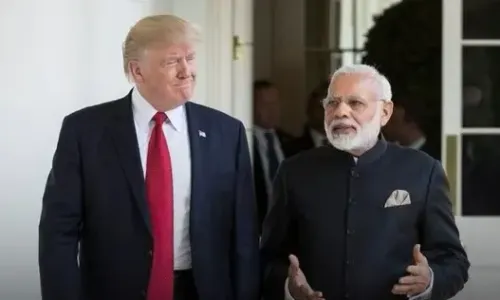
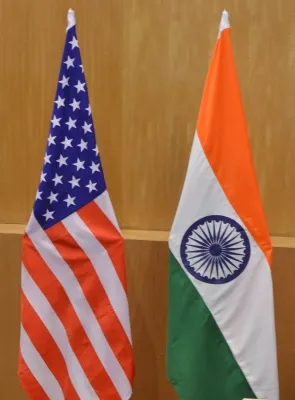
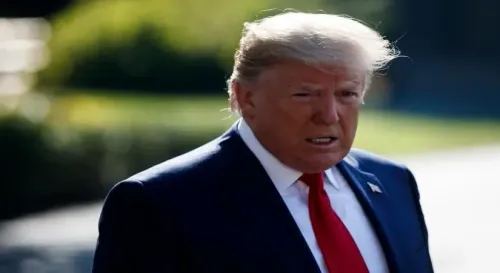
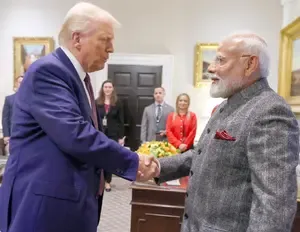
New Delhi, Feb 3 (NationPress) Since US President Donald Trump shared a message about his phone call with one of his "greatest friends," Prime Minister Narendra Modi of India, and their agreement on a trade deal, criticism has emerged.
Criticism is not new; it previously arose over trade agreements with the United Kingdom and the European Union. Future deals, such as one with New Zealand, will likely face similar scrutiny.
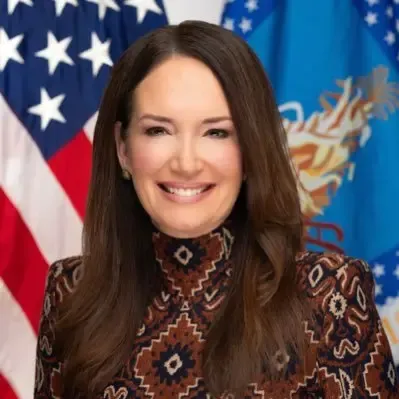
The current uproar regarding President Trump and US Secretary of Agriculture Brooke Rollins is largely based on speculation rather than concrete details. Criticism over an unknown content is akin to causing a stir over an unwritten novel.
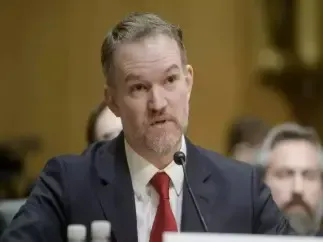
As Evan A. Feigenbaum, an expert on Asian relations, advised, it’s prudent to remain calm and await further developments. Feigenbaum, who is the Vice President for studies at the Carnegie Endowment for International Peace, possesses extensive knowledge regarding how Washington interacts with the region.
“In light of the U.S.-India deal ... everyone ought to take a breath and relax,” he remarked.
In a time when trade represents conflict and tariffs are the chosen weapon, the United States reducing duties from a “reciprocal” 25% to a punitive 18% for purchasing Russian oil is noteworthy.
Feigenbaum highlighted that “18% is a manageable rate for India. If American tariffs are a reality, then maintaining relative advantages over competitors is crucial. This lower tariff compared to ASEAN nations, most of which are at 19% and Vietnam at 20%, is beneficial for Indian exporters.”
Critics have claimed that the White House is essentially instructing India on its oil purchasing decisions to satisfy its domestic needs. India’s energy partnerships with Russia have reportedly hindered Washington's attempts to isolate Moscow.
In his post about the conversation with Modi, Trump stated, “He agreed to reduce purchases of Russian oil and to significantly increase imports from the United States and possibly Venezuela.”
Interestingly, Trump criticized the European Union for “funding” the conflict in Ukraine by sourcing energy from Russia. The EU decided to cut Russian gas imports by late 2027.
By then, Moscow may reach an agreement with Ukraine or NATO. Additionally, EU countries might still face legal challenges. This situation is again about anticipation.
Summarizing the points raised by Feigenbaum, he noted, “Eighth, the devil is in the details. I doubt that the Indian government will explicitly commit to any agreements regarding Russian oil. Prove me wrong.”
Furthermore, he mentioned that US goods exports to India in 2024 reached USD 41.5 billion, with services valued at USD 41.8 billion, a significant increase, though he remarked that a 500% increase from $83 billion to $500 billion seems quite ambitious.
Secretary Brooke Rollins has stated that the “New US-India deal will facilitate greater exports of American agricultural products to India’s vast market, boosting prices and infusing money into rural America,” echoing sentiments from other nations entering trade agreements.
The European Union has announced that both parties will exclude the most sensitive agricultural products from liberalization. The agreement seeks to balance market access with the safeguarding of vulnerable sectors.
Ultimately, the real effects of such agreements hinge on timing. Until the government reveals specific details – which should occur soon – any forecasts may be premature.
Point of View
It's crucial to approach the situation with a balanced perspective. While the criticisms surrounding the Indo-US trade deal are present, it is essential to wait for the government's official disclosures. The dynamics of trade with influential nations like the US and India warrant careful consideration, aligning with our national interests.
NationPress
29 Sept 2026
Frequently Asked Questions
What is the current status of the Indo-US trade deal?
The Indo-US trade deal is still in discussions, with significant details yet to be revealed. Both parties are expected to share more information soon.
Who are the key figures involved in the trade deal?
The key figures include US President Donald Trump and Indian Prime Minister Narendra Modi, both playing crucial roles in the negotiations.
What are the concerns raised by critics?
Critics are concerned about potential limitations imposed by the US on India's oil purchasing choices and the overall implications of the trade deal.
What impact could this deal have on Indian exporters?
The trade deal may provide a competitive edge to Indian exporters, especially with lower tariff rates compared to ASEAN nations.
What is the significance of timing in trade agreements?
The timing of trade agreements is vital as it influences market access and the effectiveness of the deal's provisions.