Rajiv Gandhi's Historic Gift: Panchayati Raj Turns 32, Congress Recalls Legacy
Synopsis
On National Panchayati Raj Day, Congress reminded India that the 73rd Amendment — which created 32 lakh elected representatives including 15 lakh women — was blocked by the BJP in 1989 before Rajiv Gandhi finally enacted it in 1993. A pointed political legacy claim with sharp contemporary relevance.
Key Takeaways
The 73rd Constitutional Amendment , enacted on April 24, 1993 , created India's three-tier Panchayati Raj system under Articles 243-A to 243-O .
Rajiv Gandhi's government first introduced the bill as the 64th Amendment in 1989 , but it was blocked in the Rajya Sabha by BJP opposition .
India today has approximately 32 lakh elected panchayat representatives , of whom nearly 15 lakh are women , thanks to the one-third reservation mandate.
The UPA government under Dr.
Manmohan Singh established the Ministry of Panchayati Raj in May 2004 and launched MGNREGA in February 2006 .
India has 2.6 lakh gram panchayats , over 6,700 intermediate panchayats , and 673 zilla parishads functioning across the country.
Congress MP Jairam Ramesh argued that reviving and strengthening panchayats is more urgent than expanding Lok Sabha seat strength — a pointed reference to current political debates.
New Delhi, April 25, 2025: On National Panchayati Raj Day, the Indian National Congress paid tribute to the transformative legacy of former Prime Ministers Rajiv Gandhi and Dr. Manmohan Singh, crediting them with laying the constitutional and institutional foundations of grassroots democracy across India. The party highlighted how the 73rd Constitutional Amendment, which came into force on April 24, 1993, fundamentally reshaped village-level governance by creating a three-tier Panchayati Raj system enshrined in the Constitution.
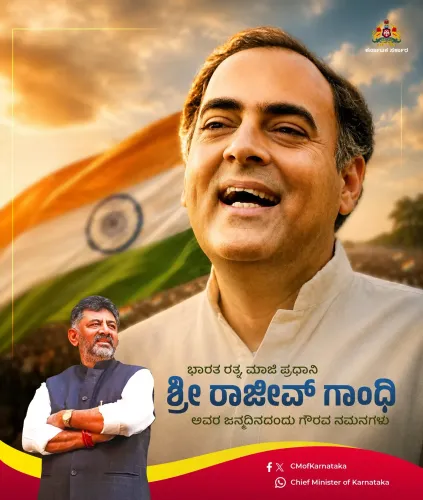
Rajiv Gandhi and the 73rd Amendment: A Constitutional Revolution
Congress MP and party Communications In-charge Jairam Ramesh described the 73rd Amendment as a "truly transformational initiative" that was driven entirely by Rajiv Gandhi's personal insistence and persistence. Speaking via a post on X (formerly Twitter), Ramesh attributed the landmark reform directly to Gandhi's vision for empowering India's villages.
"It was he who ensured that one-third of elected seats in Panchayati Raj institutions would be reserved for women, including those from Scheduled Caste and Scheduled Tribe communities," Ramesh stated. This reservation policy, embedded in the amendment, has since become a model for political inclusion at the grassroots level.
Notably, the amendment was originally introduced as the 64th Constitutional Amendment Bill in mid-1989 under Rajiv Gandhi's government. While it passed in the Lok Sabha, it failed in the Rajya Sabha due to opposition from the BJP — a fact Ramesh pointedly underscored, drawing a sharp contrast with the BJP's current governance posture.
Scale of Panchayati Raj Today: Numbers That Tell the Story
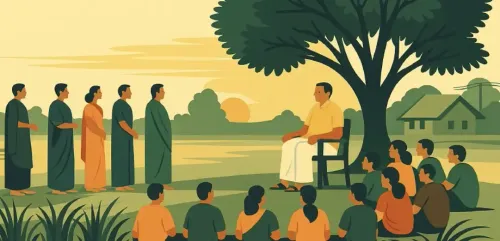
Thanks to the constitutional framework established by the 73rd Amendment, India today has approximately 2.6 lakh gram panchayats, over 6,700 intermediate panchayats, and 673 zilla parishads functioning across the country. These institutions collectively represent one of the world's largest experiments in decentralised democracy.
Of the nearly 32 lakh elected representatives in Panchayati Raj institutions today, approximately 15 lakh are women — a direct consequence of the one-third reservation mandate introduced by the Rajiv Gandhi government. Several states have since gone further, reserving 50 percent of seats for women.
The amendment introduced the detailed Articles 243-A to 243-O in the Constitution, vastly expanding the powers and responsibilities of panchayats and making them the foundational pillars of India's democratic polity.
Manmohan Singh's Contribution: MGNREGA and the Panchayati Raj Ministry
Ramesh also highlighted the institutional contributions of former Prime Minister Dr. Manmohan Singh, noting that it was the UPA government that created the dedicated Ministry of Panchayati Raj in May 2004 — giving the sector its own administrative identity at the Union level for the first time.
The Mahatma Gandhi National Rural Employment Guarantee Act (MGNREGA), launched in February 2006, further cemented the role of gram panchayats by giving them a central role in planning and executing rural employment schemes. According to government data, MGNREGA has provided livelihood support to hundreds of millions of rural households over the past two decades.
This dual legacy — constitutional empowerment under Rajiv Gandhi and institutional strengthening under Manmohan Singh — forms the backbone of what Congress is positioning as its defining contribution to rural India.
Veiled Political Message: Women's Quota and Lok Sabha Expansion
In what observers read as a pointed political jab, Ramesh made a veiled reference to the recent controversy surrounding the Women's Reservation Bill and the government's plans to expand the strength of the Lok Sabha. "The further revival of panchayats (and nagarpalikas that form Articles 243-P to 243-ZG) is far more urgent than simply increasing the strength of the Lok Sabha," he wrote.
This comment carries significant weight given that the delimitation exercise currently underway could expand Lok Sabha seats — a move critics argue benefits the ruling party disproportionately — while meaningful devolution of power to local bodies remains incomplete in many states.
The contrast is stark: while India boasts 32 lakh panchayat representatives on paper, several states have delayed panchayat elections for years, and funds devolution to local bodies remains inconsistent, according to multiple Finance Commission reports.
Why This Matters: Grassroots Democracy Under the Spotlight
The National Panchayati Raj Day serves as an annual reminder of how much — and how little — has changed since 1993. While the constitutional architecture is robust, implementation gaps persist. The 15th Finance Commission noted that tied grants and bureaucratic bottlenecks continue to limit the functional autonomy of gram panchayats.
As India heads toward a series of state elections and eventually the 2029 general elections, the question of genuine power devolution to local bodies is likely to become a more prominent political battleground. Congress's decision to invoke this legacy on Panchayati Raj Day signals a broader strategy to reclaim its identity as the architect of India's grassroots democratic institutions.
Going forward, all eyes will be on whether the Union government accelerates the pending OBC reservation in panchayats and whether stalled panchayat elections in states like Rajasthan, Uttar Pradesh, and others are held on schedule — tests that will define the real health of India's village democracy in 2025 and beyond.
Point of View
The party is drawing a direct line between past obstruction and present governance gaps in local body empowerment. The irony is hard to miss: India has 32 lakh panchayat representatives on paper, yet multiple BJP-ruled states have delayed panchayat elections for years, and Finance Commission data consistently flags poor funds devolution to local bodies. Ramesh's dig about Lok Sabha expansion being less urgent than panchayat revival is a surgically crafted contrast — positioning Congress as the party of decentralisation against what it frames as a centralising BJP. As the 2029 election cycle begins to take shape, the battle over who truly empowered rural India will be a defining narrative.
NationPress
26 Sept 2026
Frequently Asked Questions
What is National Panchayati Raj Day and why is it celebrated on April 24?
National Panchayati Raj Day is observed on April 24 every year to commemorate the enactment of the 73rd Constitutional Amendment Act, which came into force on April 24, 1993. This amendment formally established the three-tier Panchayati Raj system in India, empowering village-level governance institutions constitutionally.
What was Rajiv Gandhi's role in creating Panchayati Raj institutions?
Rajiv Gandhi is credited with championing the constitutional amendment that created India's Panchayati Raj system, including mandating one-third reservation for women in elected seats. His government first introduced the bill as the 64th Amendment in 1989, but it was blocked in the Rajya Sabha; it was finally enacted as the 73rd Amendment in 1993.
How many elected representatives are there in India's Panchayati Raj institutions?
India currently has approximately 32 lakh elected representatives across its Panchayati Raj institutions, of whom around 15 lakh are women. These representatives govern roughly 2.6 lakh gram panchayats, over 6,700 intermediate panchayats, and 673 zilla parishads.
What did Dr. Manmohan Singh do for Panchayati Raj in India?
Dr. Manmohan Singh's UPA government created the dedicated Ministry of Panchayati Raj in May 2004, giving the sector a standalone administrative identity at the Union level. His government also launched MGNREGA in February 2006, which gave gram panchayats a central role in planning and executing rural employment programmes.
Why did Congress criticise BJP on Panchayati Raj Day 2025?
Congress leader Jairam Ramesh pointed out that the BJP had opposed the original Panchayati Raj amendment bill in the Rajya Sabha in 1989, delaying its passage. He also made a veiled reference suggesting that strengthening panchayats and local bodies is more urgent than the government's proposed expansion of Lok Sabha seats.