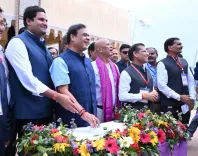
National Panchayati Raj Day 2024: MoS Baghel to Launch Celebrations on April 24
Synopsis
India marks 33 years of the 73rd Constitutional Amendment on April 24 as MoS S.P. Singh Baghel leads National Panchayati Raj Day celebrations at Vigyan Bhawan. With the release of the PAI-2.0 report and rural heritage publications, the day spotlights grassroots democracy — even as critics flag uneven devolution of powers to Panchayats across states.
Key Takeaways
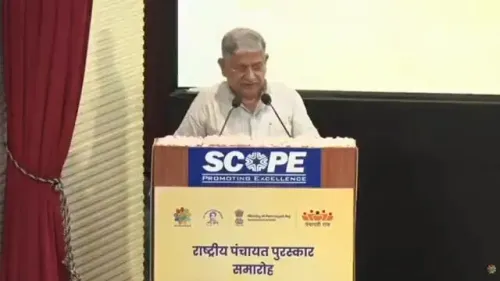
Singh Baghel will inaugurate National Panchayati Raj Day (NPRD) celebrations on April 24, 2025 at Vigyan Bhawan, New Delhi .
This year marks 33 years since the 73rd Constitutional Amendment Act granted constitutional status to Panchayati Raj Institutions across India.
The Panchayat Advancement Index (PAI)-2.0 Report and three illustrated books under 'Meri Panchayat Meri Dharohar' will be released at the event.
Gram Sabha meetings will be held across villages at the State, District, Block, and Gram Panchayat levels as part of nationwide NPRD celebrations.
Under the SVAMITVA Scheme , 2.25 crore property cards have been distributed to rural citizens, with 65 lakh cards distributed in a single day in January 2025 covering 50,000+ villages .
The three rural heritage publications to be released cover Tripura, Tirupati , and Uttarkashi under the Panchayat Dharohar Initiative .
New Delhi, April 24 — Union Minister of State for Panchayati Raj S. P. Singh Baghel will formally inaugurate the National Panchayati Raj Day (NPRD) celebrations on Friday, April 24, at Vigyan Bhawan, New Delhi, conveying Prime Minister Narendra Modi's message to Panchayat functionaries and local body representatives across the country. The occasion marks 33 years since the enactment of the landmark 73rd Constitutional Amendment Act, which granted constitutional status to Panchayati Raj Institutions (PRIs) throughout India.
Significance of National Panchayati Raj Day
Observed every year on April 24, National Panchayati Raj Day commemorates the historic passage of the 73rd Constitutional Amendment Act of 1992 — a defining moment in India's democratic evolution that gave legal recognition and constitutional legitimacy to grassroots governance institutions. This year's edition is particularly significant as it completes 33 years of that transformative milestone.
The day serves as a national platform to acknowledge the role of the three-tier Panchayati Raj system — comprising Gram Panchayats, Block Panchayats, and District Panchayats — in driving India's progress toward the vision of Viksit Bharat (Developed India). Experts and policy analysts note that empowered Panchayats are central to last-mile delivery of government schemes in rural India.
Key Events at Vigyan Bhawan
At the central event in Vigyan Bhawan, MoS Baghel will preside over the release of the Panchayat Advancement Index (PAI)-2.0 Report, a data-driven tool that evaluates the developmental performance of Gram Panchayats across multiple parameters. This index is widely regarded as a critical accountability mechanism for rural governance.
Three books under the theme 'Meri Panchayat Meri Dharohar' (My Panchayat, My Heritage) will also be launched. Published under the Ministry of Panchayati Raj's 'Panchayat Dharohar Initiative', the illustrated publications focus on preserving and celebrating India's rural cultural heritage. The three titles are: a Monograph on Rural Heritage of Tripura, a Monograph on Rural Heritage of Tirupati, and 'Uttarkashi: Saumya Kashi: The Soul of Himalayan Heritage'.
Nationwide Grassroots Participation
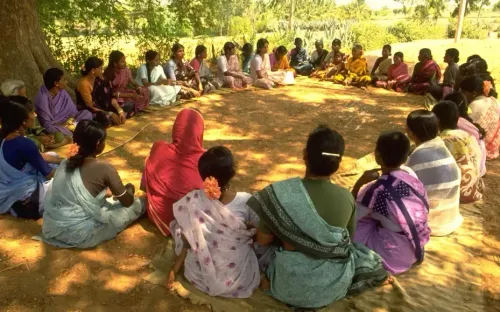
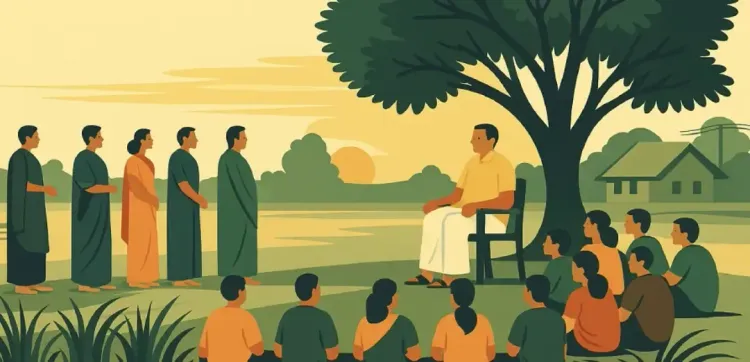
The Ministry of Panchayati Raj has planned celebrations at State, District, Block, and Gram Panchayat levels across the country. A key highlight at the village level will be the convening of Gram Sabha meetings — a constitutional mechanism that enables direct participatory democracy — reinforcing the foundational spirit of self-governance at the grassroots.
This nationwide mobilisation is not merely ceremonial. It represents a structured effort to deepen civic awareness among rural populations about their rights, entitlements, and the schemes available to them through local governance bodies. Analysts note that active Gram Sabhas are directly correlated with better implementation of welfare schemes.
SVAMITVA Scheme: A Landmark Achievement
The celebrations also provide an opportunity to highlight recent milestones in rural empowerment. In January 2025, PM Modi oversaw the distribution of property cards under the SVAMITVA (Survey of Villages and Mapping with Improvised Technology in Village Areas) Scheme, providing legal ownership documents to 65 lakh rural citizens in a single day — a record in rural property rights history.
The distribution covered more than 50,000 villages across 10 States and 2 Union Territories, bringing the cumulative total of property cards distributed under the SVAMITVA Scheme to 2.25 crore. The event was attended by Union Ministers, Chief Ministers, Governors, Lieutenant Governors, and representatives from 237 Districts, reflecting the scheme's pan-India scale.
Notably, the SVAMITVA Scheme — launched in 2020 — addresses a long-standing issue in rural India: the absence of formal land ownership records for residential properties in villages, which historically left millions of rural households unable to access bank credit or legally resolve property disputes.
Broader Policy Implications
This year's NPRD comes at a time when the central government is intensifying its focus on rural governance as a vehicle for achieving Sustainable Development Goals (SDGs) at the local level. The PAI-2.0 report, to be released on Friday, is expected to provide granular data on how individual Gram Panchayats are performing across themes such as poverty alleviation, health, education, water sanitation, and infrastructure.
Critics and policy watchers, however, point out that while institutional frameworks have strengthened, the financial and administrative autonomy of Panchayats remains uneven across states — with several states yet to fully devolve the 29 subjects listed in the 11th Schedule of the Constitution to local bodies. This structural gap continues to limit the effectiveness of grassroots governance in practice.
As India moves toward its centenary of independence in 2047, the government's push to strengthen Panchayati Raj institutions is being positioned as a cornerstone of the Viksit Bharat roadmap — with Friday's celebrations expected to set the tone for a renewed national conversation on rural self-governance.
Point of View
Three decades on, the reality is that most Panchayats still lack genuine financial autonomy and administrative control over the 29 subjects constitutionally assigned to them — a gap that no index or ceremony can paper over. The SVAMITVA Scheme's property card distribution is a genuine achievement in formalising rural land rights, but the harder work of devolving real power to village bodies is where successive governments have fallen short. India cannot claim to be building a Viksit Bharat from the bottom up while Gram Panchayats remain dependent on state governments for funds, functionaries, and functions.
NationPress
20 Sept 2026
Frequently Asked Questions
When is National Panchayati Raj Day celebrated and why?
National Panchayati Raj Day is celebrated every year on April 24 to commemorate the enactment of the 73rd Constitutional Amendment Act, which came into force on that date in 1993. The amendment gave constitutional recognition and legal status to Panchayati Raj Institutions across India.
What events are planned for National Panchayati Raj Day 2025?
MoS S.P. Singh Baghel will lead celebrations at Vigyan Bhawan in New Delhi on April 24, 2025, where the Panchayat Advancement Index (PAI)-2.0 report and three books on rural heritage under the 'Meri Panchayat Meri Dharohar' initiative will be released. Gram Sabha meetings will also be held across villages nationwide.
What is the Panchayat Advancement Index (PAI)?
The Panchayat Advancement Index (PAI) is a performance evaluation tool developed by the Ministry of Panchayati Raj to assess how Gram Panchayats are progressing across key development themes including health, education, water, sanitation, and poverty reduction. PAI-2.0 is the updated version being released on NPRD 2025.
What is the SVAMITVA Scheme and what has it achieved?
SVAMITVA (Survey of Villages and Mapping with Improvised Technology in Village Areas) is a central government scheme that provides legal property ownership documents to rural households. As of January 2025, a total of 2.25 crore property cards have been distributed, covering over 50,000 villages across 10 states and 2 Union Territories.
What is the significance of the 73rd Constitutional Amendment for Panchayati Raj?
The 73rd Constitutional Amendment Act of 1992, which came into force on April 24, 1993, gave constitutional status to Panchayati Raj Institutions and mandated the creation of a three-tier governance structure at the village, block, and district levels. It also reserved seats for women, SCs, and STs in Panchayat bodies, democratising rural governance.