National Panchayati Raj Day 2025: MoS Baghel Launches 33rd Anniversary Celebrations

Synopsis
India marks 33 years of the 73rd Constitutional Amendment on National Panchayati Raj Day 2025, with MoS S.P. Singh Baghel launching the PAI-2.0 report and three rural heritage books at Vigyan Bhawan — as the SVAMITVA scheme crosses 2.25 crore property cards distributed nationwide.
Key Takeaways
Singh Baghel launched National Panchayati Raj Day (NPRD) 2025 celebrations at Vigyan Bhawan, New Delhi on April 24, 2025 .
NPRD 2025 marks 33 years since the 73rd Constitutional Amendment Act gave constitutional status to Panchayati Raj Institutions across India.
The Panchayat Advancement Index (PAI-2.0) Report was released, serving as a key performance benchmarking tool for Panchayats nationwide.
Three books under the 'Meri Panchayat Meri Dharohar' initiative were unveiled, covering rural heritage of Tripura, Tirupati, and Uttarkashi .
The SVAMITVA scheme has distributed 2.25 crore property cards to rural citizens, including 65 lakh in a single day in January 2025 across 50,000+ villages in 10 States and 2 Union Territories .
Gram Panchayats across India are holding Gram Sabha meetings on NPRD 2025, reinforcing grassroots participatory democracy.
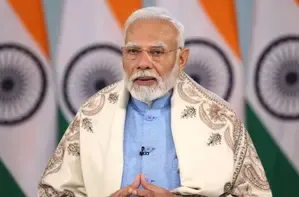
New Delhi, April 24, 2025 — Union Minister of State for Panchayati Raj S. P. Singh Baghel officially launched the National Panchayati Raj Day (NPRD) 2025 celebrations on Friday at Vigyan Bhawan, New Delhi, marking 33 years since the enactment of the landmark 73rd Constitutional Amendment Act. The minister conveyed Prime Minister Narendra Modi's message to Panchayat functionaries and local body representatives across the country, reaffirming the government's commitment to grassroots democracy.
Significance of National Panchayati Raj Day
Observed every year on April 24, the National Panchayati Raj Day commemorates the historic passage of the 73rd Constitutional Amendment Act in 1992, which granted constitutional status and legal recognition to Panchayati Raj Institutions (PRIs) across India. This legislative milestone fundamentally transformed the architecture of Indian democracy by institutionalising a three-tier Panchayati Raj system — from the Gram Panchayat at the village level to the Zila Parishad at the district level.
The 2025 edition holds particular significance as it marks three-and-a-half decades of decentralised governance in India — a journey that has seen Panchayats evolve from advisory bodies to engines of rural development, welfare delivery, and participatory democracy.
Key Releases at Vigyan Bhawan Event
The Vigyan Bhawan ceremony featured the release of the Panchayat Advancement Index (PAI)-2.0 Report, a critical benchmarking tool that evaluates the performance of Panchayats across multiple development parameters. The PAI framework is designed to identify high-performing Panchayats and flag those requiring targeted intervention — making it a powerful data-driven governance instrument.
Additionally, three illustrated publications under the Ministry's 'Panchayat Dharohar Initiative' — part of the broader 'Meri Panchayat Meri Dharohar' programme — were unveiled. These include:
- A Monograph on Rural Heritage of Tripura
- A Monograph on Rural Heritage of Tirupati
- 'Uttarkashi: Saumya Kashi: The Soul of Himalayan Heritage'
These publications aim to document and preserve the rich cultural and historical legacy of India's rural communities, embedding heritage conservation within the Panchayati Raj framework.
Nationwide Celebrations Across All Tiers
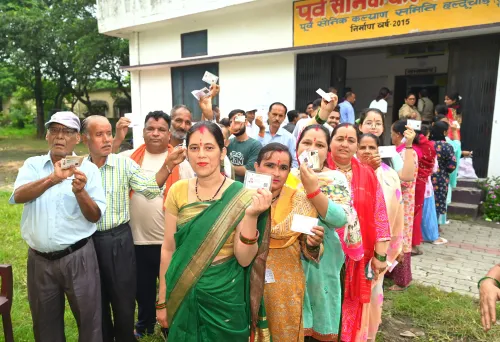
The Ministry of Panchayati Raj has planned celebrations with significant scale, spanning State, District, Block, and Gram Panchayat levels across the country. At the grassroots, Gram Panchayats are holding Gram Sabha meetings — reinforcing the principle of participatory democracy where citizens directly engage with their elected representatives on local development priorities.
This nationwide mobilisation reflects the government's broader agenda of positioning Panchayati Raj institutions as frontline delivery mechanisms for schemes under Viksit Bharat — India's vision of becoming a developed nation by 2047.
SVAMITVA Scheme: Landmark Achievement in Rural Land Rights
The celebrations also spotlight the progress of the SVAMITVA (Survey of Villages and Mapping with Improvised Technology in Village Areas) Scheme. In a landmark event in January 2025, PM Modi presided over the distribution of property cards to 65 lakh rural citizens in a single day — one of the largest single-day property rights exercises in the world.
The distribution covered more than 50,000 villages across 10 States and 2 Union Territories, bringing the cumulative total of property cards distributed under SVAMITVA to 2.25 crore. The event saw participation from Union Ministers, Chief Ministers, Governors, Lieutenant Governors, and representatives from 237 Districts.
Critics and governance analysts have noted that while SVAMITVA's scale is impressive, the real test lies in how effectively these property documents translate into credit access, dispute resolution, and economic empowerment for rural households — outcomes that will be tracked through frameworks like the PAI-2.0.
Broader Implications for Rural Governance
The NPRD 2025 arrives at a pivotal moment. India's rural economy — home to nearly 65% of the population — faces mounting challenges including agricultural distress, migration pressures, and uneven infrastructure access. Strengthening Panchayati Raj institutions is seen as a structural solution to these systemic issues, as empowered local governments can tailor solutions to hyperlocal needs.
Notably, the PAI-2.0 framework and the Panchayat Dharohar Initiative together signal a dual approach: performance accountability on one hand, and cultural rootedness on the other — suggesting the Ministry is pursuing both modernisation and identity-preservation in its rural governance strategy.
As India approaches the 2047 Viksit Bharat target, the role of Panchayati Raj institutions in delivering the last mile of development will only grow more critical. The next major milestone to watch will be the full rollout of PAI-2.0 rankings and how they influence fund allocation to Panchayats in the coming fiscal year.
Point of View
But the real question is whether institutional empowerment is keeping pace with political optics. The SVAMITVA scheme's 2.25 crore property cards are a genuine achievement — yet land ownership documents alone don't guarantee credit access or dispute-free titles without a robust legal ecosystem beneath them. The release of PAI-2.0 is a step toward accountability, but its credibility will depend on whether low-performing Panchayats face real consequences or merely symbolic rankings. As India races toward Viksit Bharat 2047, the gap between Panchayat empowerment on paper and on the ground remains the defining challenge of decentralised governance.
NationPress
20 Sept 2026
Frequently Asked Questions
What is National Panchayati Raj Day and why is it celebrated on April 24?
National Panchayati Raj Day is observed every year on April 24 to commemorate the enactment of the 73rd Constitutional Amendment Act, which gave constitutional recognition to Panchayati Raj Institutions across India. The amendment came into force on April 24, 1993, institutionalising the three-tier Panchayati Raj system.
What is the Panchayat Advancement Index (PAI-2.0)?
The Panchayat Advancement Index (PAI-2.0) is a performance benchmarking framework released by the Ministry of Panchayati Raj to evaluate and rank Panchayats across multiple development indicators. It is designed to identify high-performing Panchayats and guide targeted interventions for underperforming ones.
What is the SVAMITVA scheme and how many property cards have been distributed?
SVAMITVA (Survey of Villages and Mapping with Improvised Technology in Village Areas) is a central government scheme that provides rural households with legal property ownership documents. As of 2025, a total of 2.25 crore property cards have been distributed, including 65 lakh distributed in a single day in January 2025.
What books were released on National Panchayati Raj Day 2025?
Three illustrated publications under the 'Meri Panchayat Meri Dharohar' initiative were released: a Monograph on Rural Heritage of Tripura, a Monograph on Rural Heritage of Tirupati, and 'Uttarkashi: Saumya Kashi: The Soul of Himalayan Heritage'. These are part of the Ministry's Panchayat Dharohar Initiative.
How is National Panchayati Raj Day 2025 being celebrated across India?
The Ministry of Panchayati Raj is holding celebrations at State, District, Block, and Gram Panchayat levels nationwide. Gram Panchayats are conducting Gram Sabha meetings to reaffirm participatory democracy, while the central event was held at Vigyan Bhawan in New Delhi.