Does Congress' Claim to Honor Nehru Over Ambedkar Hold Water?
Synopsis
The political struggle around B.R. Ambedkar's legacy intensifies as Congress defends Jawaharlal Nehru amidst accusations of neglect towards Ambedkar. This article explores the contradictions in Congress' narrative and the BJP's positioning as the true custodian of Ambedkar's vision.
Key Takeaways
Ambedkar's Legacy: Central to the debate on social justice in India.
BJP: Divergent narratives on historical figures.
Political Ownership: Struggle for legitimacy in contemporary politics.
Public Sentiment: Resonance of Ambedkar's vision among Dalits.
Historical Context: Importance of understanding past actions in present-day politics.
New Delhi, Dec 7 (NationPress) The ongoing political struggle surrounding the legacy of B.R. Ambedkar, the creator of India’s Constitution and a prominent Dalit leader, has escalated in recent times. Central to this conflict is the Congress party’s attempt to maintain the revered image of Jawaharlal Nehru, juxtaposed against the Bharatiya Janata Party’s (BJP) efforts to highlight Congress’ historical neglect and, at times, antagonism towards Ambedkar.
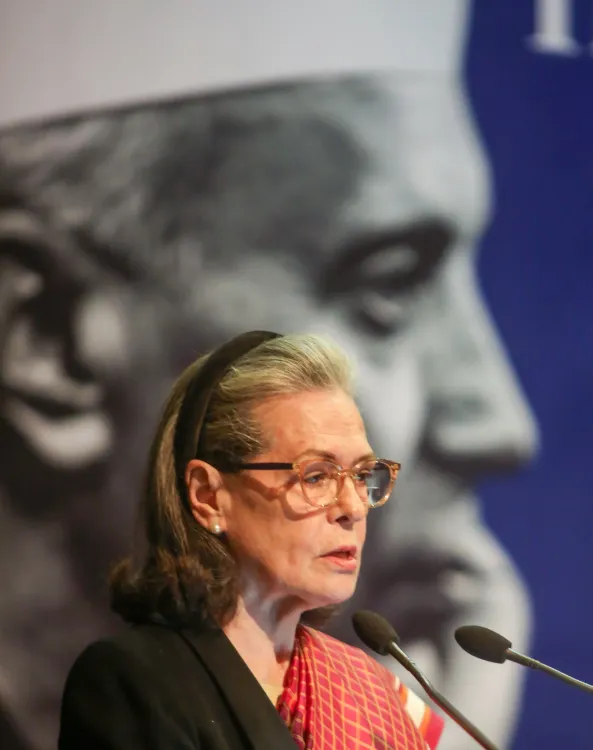
This issue transcends mere historical debate; it represents a contest for political ownership of Ambedkar’s legacy. Sonia Gandhi’s recent statements during the launch of The Nehru Centre India reflect Congress’ defensive stance. In an extensive post, she voiced concerns over what she termed “systematic attempts” to undermine Nehru, accusing the current administration of trying to obliterate his contributions and dismantle the nation’s foundations.
She maintained that Nehru’s contributions should be perceived within their historical context and cautioned against intentional misrepresentations of his legacy. Her remarks were evidently directed at the BJP, which frequently critiques Nehru’s policies concerning Kashmir, China, and economic strategies. However, while Congress ardently defends Nehru, its history regarding Ambedkar tells a contrasting tale.
The BJP capitalizes on this inconsistency, citing instances where Ambedkar was overlooked, undermined, or outright disrespected during Congress-led administrations.
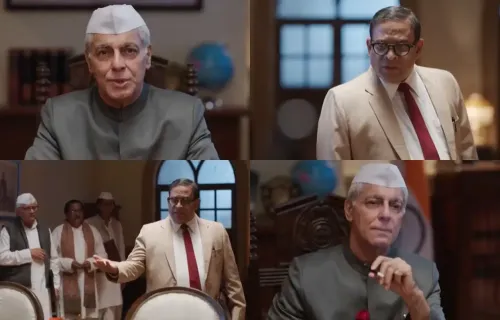
Union Minister Dharmendra Pradhan last year resurrected a particularly troubling example: the NCERT Class 11 textbook published during UPA-2 in 2012, which included a cartoon portraying Nehru whipping Ambedkar. This depiction incited outrage, leading BJP leaders to decry it as a blatant insult to Ambedkar’s dignity. Kapil Sibal, then Minister of Human Resource Development, was compelled to apologize in Parliament, acknowledging the offensive nature of the illustration and mandating its retraction.
The uproar did not conclude there. Amit Malviya, in charge of BJP's National Information and Technology Department, raised a question on his X handle on December 19, 2024: “Kapil Sibal, amidst protests from the BJP, announced its withdrawal in Parliament, stating that NCERT materials are developed by a committee. He specifically identified Yogendra Yadav as the 'Chief Advisor' of the committee. This is the same Yogendra Yadav who was part of Sonia Gandhi’s NAC, participated in Rahul Gandhi’s Bharat Jodo Yatra, actively campaigned for Congress in Haryana, and delivered the infamous 'आंधी सुनामी' speech in Rahul Gandhi’s presence. Why does Congress tolerate Ambedkar and Dalit-hating figures like Yogendra Yadav among them? Or is it that they serve Congress’s agenda of marginalizing Dalits?”
Yogendra Yadav, the chief advisor to the NCERT committee responsible for the controversial textbook, is closely linked to Congress, having been part of Sonia Gandhi’s National Advisory Council and Rahul Gandhi’s political initiatives, as Malviya pointed out.
The BJP has justifiably questioned why Congress continues to associate with individuals who have shown insensitivity towards Ambedkar and Dalit issues. Is this a mere oversight, or indicative of a more extensive pattern of marginalization? This situation exemplifies Congress’ selective memory. While it venerates Nehru to sustain its dynastic narrative, it has historically sidelined Ambedkar, whose ideals of social justice and constitutional democracy resonate deeply with Dalits and the broader Indian populace.
Ambedkar’s disagreements with Nehru and Congress are well documented—ranging from his resignation as Law Minister over the Hindu Code Bill to his criticisms of Congress’ inadequate responses to caste oppression. Historically, Ambedkar has been celebrated more by grassroots Dalit movements than by the Congress establishment, which has consistently spotlighted Nehru and the Gandhi family.
The BJP has strategically positioned itself as the guardian of Ambedkar’s legacy, honoring his contributions through memorials, scholarships, and public commemorations. Prime Minister Narendra Modi has frequently invoked Ambedkar’s vision of equality and dignity, framing it as integral to the BJP’s agenda for social empowerment.
By exposing Congress’ past offenses and negligence, the BJP aims to contrast its own embrace of Ambedkar with Congress’ dynastic fixation.
The struggle over Ambedkar’s legacy is not just symbolic; it signifies more profound ideological conflicts. Congress’ narrative is entrenched in Nehruvian elitism, emphasizing secularism and centralized planning, often overlooking caste realities. Conversely, the BJP seeks to incorporate Ambedkar’s vision into its comprehensive narrative of social justice, national unity, and empowerment for marginalized communities. This ideological rift elucidates why Sonia Gandhi’s defense of Nehru falls flat for many Dalits, who remember Congress’ history of sidelining Ambedkar.
Furthermore, the BJP’s critique resonates with lived experiences. Dalits have long felt alienated from the upper-caste-dominated leadership of Congress, while Ambedkar himself was often perceived as an outsider within the Congress fold. The cartoon controversy is part of a recurring theme of disregard.
By reminding the Congress party of its past actions, the BJP reinforces its claim to Ambedkar’s legacy and positions itself as the party that genuinely respects his vision.
The stakes are significant. Ambedkar’s legacy is not merely historical; it pertains to current politics, identity, and empowerment. For Dalits and marginalized communities, Ambedkar epitomizes dignity, equality, and resistance against oppression. Whichever party claims his legacy gains moral authority and political leverage.
Congress’ efforts to defend Nehru while ignoring its treatment of Ambedkar reveal its contradictions. The BJP, by emphasizing Ambedkar and criticizing Congress’ record, aims to reshape the narrative and align itself with the aspirations of Dalits.
Ultimately, the contention over Ambedkar represents a battle for the soul of India. While Congress clings to Nehru to uphold its dynastic legitimacy, its neglect of Ambedkar undermines its moral standing. The BJP, through its embrace of Ambedkar and critiques of Congress’ history, positions itself as the true custodian of his vision. For Dalits and marginalized communities, the choice is stark: between a party that once published cartoons mocking their leader and a party that seeks to honor him as the cornerstone of India’s democratic journey.
Point of View
It is crucial to recognize that the ongoing discourse around Ambedkar and Nehru reflects deeper societal dynamics. While the Congress seeks to uphold its legacy through Nehru, the BJP's emphasis on Ambedkar aligns with the aspirations of marginalized communities. This dialogue is essential for a more inclusive narrative in Indian politics.
NationPress
30 Sept 2026