CPI(M) brands Kannur rebels 'Mir Jafar' and 'Brutus' after stronghold losses
Synopsis
The CPI(M) is reaching for historical analogies — Mir Jafar and Brutus — to describe two rebel MLAs who helped the party lose Kannur seats it long considered unassailable. But with a Kozhikode state committee meeting looming, the real question is whether the party will turn its scrutiny inward or keep firing at individuals.
Key Takeaways
CPI(M) lost two traditional strongholds in Kannur, Kerala in the recent Assembly elections, with rebel leaders playing a key role in the defeats.
Kunhikrishnan (Payyannur) was likened to Mir Jafar ; former CPI(M) leader and MLA T.K.
Govindan (Taliparamba) was branded 'Brutus' by Kannur district secretary K.K.
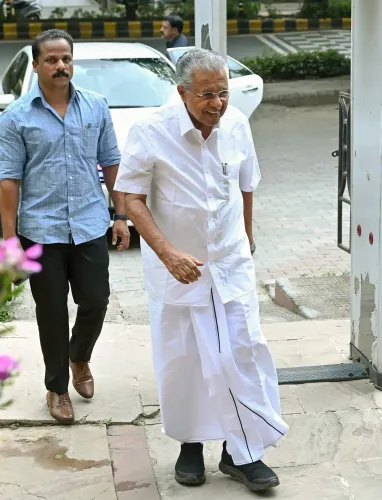
Kerala CM Pinarayi Vijayan made his first public appearance after the electoral defeat at a weekend meeting on 31 August , directly criticising Kunhikrishnan.
The party's Central Committee review cited organisational shortcomings and candidate selection flaws, but public rhetoric has focused on individual rebels.
Political commentator Prof.
Karassery noted the party is not examining its own record of decline in West Bengal and Tripura .
An extended state committee meeting in Kozhikode in September , with General Secretary M.A.
Baby expected to attend, is seen as a key test of the party's direction.
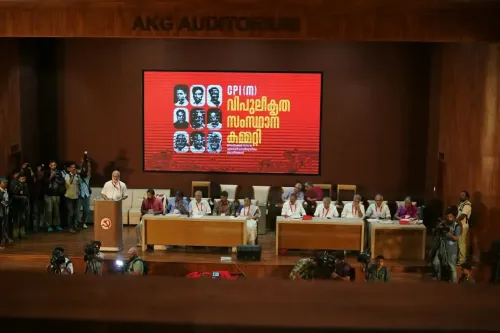
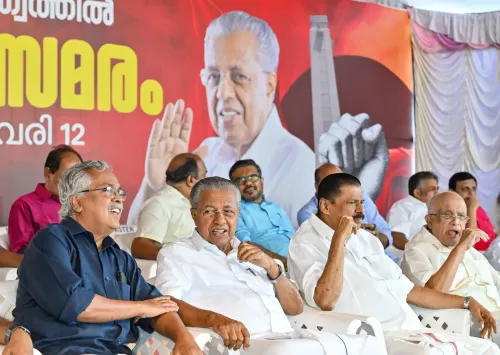
The Communist Party of India (Marxist) has escalated its rhetoric against two rebel leaders in Kannur, Kerala, invoking historical traitors to describe the men it holds responsible for the party's shock loss of two long-held Assembly constituencies. The attacks followed a series of high-profile political meetings over the weekend of 31 August, marking the party's first public reckoning with its Assembly election debacle.
The Rhetoric: Mir Jafar and Brutus
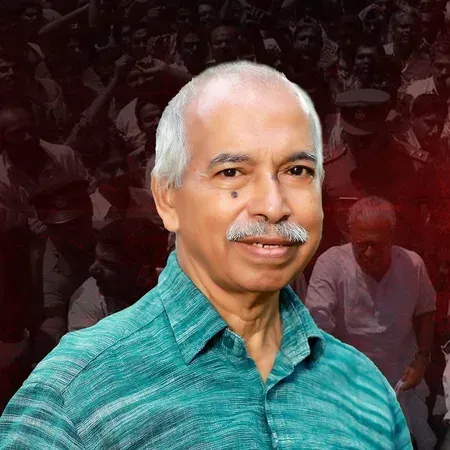
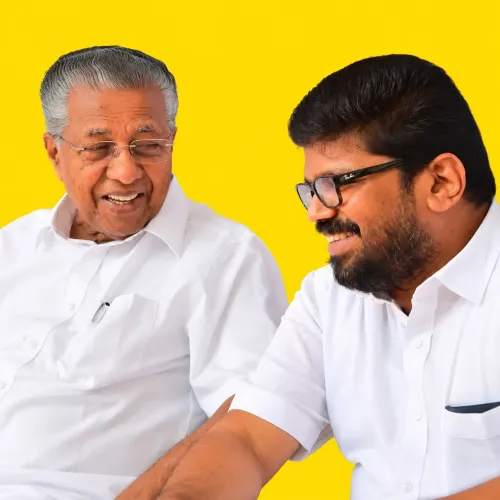
In Payyannur, rebel-turned-MLA V. Kunhikrishnan has been compared to Mir Jafar — the Bengal nawab whose collusion with the British is widely seen as the turning point that cost India its sovereignty in 1757. In Taliparamba, former CPI(M) leader and now MLA T.K. Govindan has been labelled the 'Brutus of Taliparamba', a reference to the Roman senator whose betrayal brought down Julius Caesar. The 'Brutus' tag was applied by Kannur district secretary K.K. Ragesh at a Sunday meeting, a day after Kerala Chief Minister and senior CPI(M) leader Pinarayi Vijayan publicly accused Kunhikrishnan of working against the party's interests.
Vijayan's First Public Appearance After the Defeat
The weekend meetings were significant because they marked Vijayan's first public appearance following the CPI(M)'s unexpected electoral setback. At the initial gathering, Vijayan stopped short of naming Govindan but made clear that internal rebellion had cost the party dearly. The following day, with Ragesh sharpening the attack on Govindan, the party's messaging moved from veiled criticism to open condemnation.
Central Committee Review and Internal Debate
The party's Central Committee, in its post-election review, acknowledged organisational shortcomings and flaws in candidate selection. However, the public targeting of the two rebel MLAs has reignited debate within political circles over whether the CPI(M) is scapegoating individuals rather than confronting deeper structural weaknesses. Critics argue that the historical analogies, while rhetorically powerful, risk distracting from a more substantive self-examination.
What Political Analysts Are Saying
Political commentator Prof. M.N. Karassery offered a pointed observation. 'While the CPI(M) is calling Kunhikrishnan a Mir Jaffar and Govindan a Brutus, it is surprising that the party is not examining its own history in West Bengal and Tripura,' Karassery said. His remarks carry wider resonance: the CPI(M) governed both states for decades before losing power amid organisational erosion, voter alienation, and shifting political realities — a trajectory that Kannur's results may now be echoing.
The Kozhikode Meeting and What Comes Next
Attention is now focused on an extended state committee meeting scheduled in Kozhikode in September, expected to be critical for both the Kerala unit and the party nationally. General Secretary M.A. Baby and other Politburo leaders are expected to attend. The gathering will be closely watched for signs of whether the CPI(M) intends to move beyond identifying individual scapegoats and address the broader structural reasons behind its declining influence across India. In Kannur, the central question remains whether Kunhikrishnan and Govindan are symptoms of betrayal or indicators of a far deeper organisational crisis.
Point of View
But it also reveals the CPI(M)'s discomfort with structural self-examination. The party lost West Bengal after 34 years and Tripura after 25 — not because of individual traitors, but because of organisational calcification and voter alienation. Kannur was supposed to be different, a fortress. That it is no longer impregnable suggests the rebel MLAs are symptoms, not causes. The Kozhikode meeting will reveal whether the party's leadership has the political courage to say so publicly — or whether it will settle for historical analogies as a substitute for accountability.
NationPress
15 Oct 2026
Frequently Asked Questions
Why is CPI(M) calling its Kannur rebels 'Mir Jafar' and 'Brutus'?
The CPI(M) is using these historical references to describe two rebel leaders it holds responsible for its loss of two Kannur Assembly seats. V. Kunhikrishnan of Payyannur has been compared to Mir Jafar — a figure synonymous with betrayal in Indian history — while T.K. Govindan of Taliparamba has been called the 'Brutus of Taliparamba', after Julius Caesar's betrayer. The party believes both men worked against its interests during the elections.
Which seats did CPI(M) lose in Kannur?
The CPI(M) lost the Payyannur and Taliparamba constituencies in Kannur, both considered traditional strongholds of the party. The wins went to rebel candidates V. Kunhikrishnan and T.K. Govindan respectively, who contested against the party's official nominees.
What did Pinarayi Vijayan say at the post-defeat meeting?
Kerala Chief Minister Pinarayi Vijayan, in his first public appearance after the electoral setback, accused V. Kunhikrishnan of working against the party's interests rather than strengthening it. A day later, Vijayan also criticised T.K. Govindan, while Kannur district secretary K.K. Ragesh intensified the attack by calling Govindan the 'Brutus of Taliparamba'.
What is the significance of the CPI(M) Kozhikode state committee meeting?
The extended state committee meeting in Kozhikode, scheduled for September, is seen as a crucial moment for the CPI(M)'s Kerala unit and the party nationally. General Secretary M.A. Baby and other Politburo leaders are expected to attend. It is widely seen as a test of whether the party will move beyond blaming individuals and address deeper structural reasons for its declining electoral footprint.
How does the Kannur loss fit into CPI(M)'s broader national decline?
Political commentator Prof. M.N. Karassery has noted that the CPI(M) lost power in West Bengal and Tripura — states it governed for decades — due to organisational erosion and voter alienation, yet the party has not publicly examined those precedents in the context of Kannur. The Kannur losses suggest that even the party's most reliable organisational bastions are no longer immune to internal dissent and electoral challenge.