CPI-M rebels win Taliparamba, Payyannur; MLAs blame Pinarayi, Govindan
Synopsis
The CPI-M's worst Kerala assembly result in decades has a new, uncomfortable face: two of its own former loyalists now sit in the legislature as rebel MLAs, holding Pinarayi Vijayan and M.V. Govindan personally responsible for the collapse — and alleging the party's own machinery sabotaged their campaigns while they were winning.
Key Takeaways
Taliparamba MLA T.K.
Govindan and Payyannur MLA V.
Kunhikrishnan won as independents after being pushed out of the CPI-M .
The CPI-M was reduced to 35 seats in the 140-member Kerala Assembly , falling far short of a third consecutive term.
Both MLAs held Pinarayi Vijayan and state Secretary M.V.
Govindan directly responsible for the electoral collapse at a press conference on 11 June in Kannur .
Govindan alleged district committees had opposed the state-imposed candidate choices in both seats, but were overruled.
Kunhikrishnan claimed the party's campaign machinery actively obstructed his campaign, including destroying his election materials.
The Congress extended support to both rebel candidates, turning an internal CPI-M dispute into a broader electoral challenge for the Left.
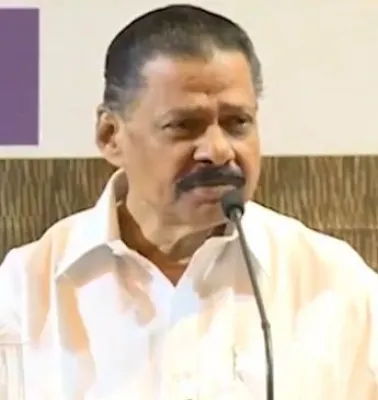
Two former Communist Party of India (Marxist) loyalists-turned-independent legislators have launched a pointed attack on the party's top brass, holding former Chief Minister Pinarayi Vijayan and state Secretary M.V. Govindan directly responsible for the CPI-M's stunning losses in Taliparamba and Payyannur — constituencies long considered impregnable Left bastions — in the Kerala Assembly elections. The two rebel MLAs, speaking at the Kannur Press Club on Thursday, 11 June, argued that the party leadership was concealing the true causes of its worst electoral performance in years.
How the Rebellion Unfolded
Taliparamba MLA T.K. Govindan and Payyannur MLA V. Kunhikrishnan were once considered among the CPI-M's most dependable organisational soldiers in Kannur. Their break with the party came after sustained disagreements with the Vijayan-Govindan leadership over what they described as wrong decisions and a refusal to acknowledge internal failures. After their attempts to push back were met with expulsion, both chose to contest the Assembly elections as independent candidates.
The Indian National Congress (Congress) subsequently extended support to their campaigns — transforming what had begun as an internal party revolt into a significant electoral challenge for the Left Democratic Front (LDF). Both candidates not only prevailed but did so with decisive margins, sending shockwaves through a party that had been targeting a rare third consecutive term in office. Instead, the CPI-M was reduced to 35 seats in the 140-member Kerala Assembly.
What the Rebel MLAs Said
At the press conference, T.K. Govindan directly challenged the official post-election narrative put forward by M.V. Govindan, saying it did not reflect ground reality. He alleged that the state leadership had imposed candidates on both constituencies over the explicit objections of the respective district committees — and that those objections were simply overruled.
'The responsibility lies with Pinarayi Vijayan and M.V. Govindan. Saying the district committees were responsible is a betrayal,' T.K. Govindan said. He also dismissed the party's ongoing election review as a 'correction drama' — a performative exercise that bypassed actual feedback from grassroots workers.
Kunhikrishnan went further, alleging that the party's own campaign machinery had actively worked against him. He claimed that posters and campaign materials bearing his name were destroyed and that attempts to open an election office in his constituency were obstructed by party functionaries.
Why Taliparamba and Payyannur Matter
The two seats carry outsized symbolic weight within the CPI-M. Historically, Taliparamba and Payyannur were constituencies where the Left could count on comfortable victories — the kind of seats that formed the bedrock of the party's numerical strength in the Kerala Assembly. Their loss to rebel candidates backed by the Congress signals that disaffection has penetrated the party's core support base, not merely its periphery.
This is not an isolated instance of post-election recrimination. The broader Kannur setback — the party's home district — has added urgency to questions about whether the Vijayan-era model of centralised leadership has begun to erode the CPI-M's organisational depth.
What Comes Next for the CPI-M
The party leadership has not yet issued a detailed public response to the specific charges levelled by the two MLAs. The internal review process, already under scrutiny, will face mounting pressure to address the candidate-imposition allegations directly. For the CPI-M, the twin defeats in Kannur raise an uncomfortable question that the leadership can no longer defer: whether the party's traditional base is quietly but decisively slipping away.
Point of View
Rather than examine state-level candidate imposition, suggests the leadership is prioritising internal insulation over honest diagnosis. What makes this moment structurally different from routine post-election dissent is that the rebels won — their victories give the critique democratic legitimacy that the party cannot easily dismiss. If the Vijayan-Govindan leadership cannot address candidate-imposition grievances credibly, the CPI-M risks further erosion in Kannur, the one district it has historically treated as organisationally unassailable.
NationPress
27 Oct 2026
Frequently Asked Questions
Why did T.K. Govindan and V. Kunhikrishnan leave the CPI-M?
Both leaders fell out with the Vijayan-Govindan leadership over what they described as wrong decisions and a refusal to acknowledge internal failures. After their attempts to raise objections were ignored, they were pushed out of the party and chose to contest the Kerala Assembly elections as independent candidates.
How did the CPI-M perform in the Kerala Assembly elections?
The CPI-M was reduced to 35 seats in the 140-member Kerala Assembly, well short of the majority needed for a third consecutive term in government. The losses in traditional strongholds such as Taliparamba and Payyannur were among the most symbolically damaging results.
What specific allegations did the rebel MLAs make against the party leadership?
T.K. Govindan alleged that the state leadership imposed candidates on Taliparamba and Payyannur over the explicit objections of district committees, and that the post-election review was a 'correction drama' rather than a genuine exercise. Kunhikrishnan alleged that party functionaries destroyed his campaign materials and obstructed his election office.
What role did the Congress play in the rebel MLAs' victories?
The Congress extended support to both T.K. Govindan and V. Kunhikrishnan after they decided to contest as independents. This backing helped convert what had started as an internal CPI-M rebellion into a significant electoral challenge for the Left, contributing to their decisive wins.
What do the Taliparamba and Payyannur defeats mean for the CPI-M?
The two seats had long been regarded as safe Left bastions in Kannur, the party's organisational heartland. Their loss to rebel candidates signals that discontent has reached the CPI-M's core support base, raising questions about whether centralised leadership decisions on candidate selection are undermining grassroots loyalty.