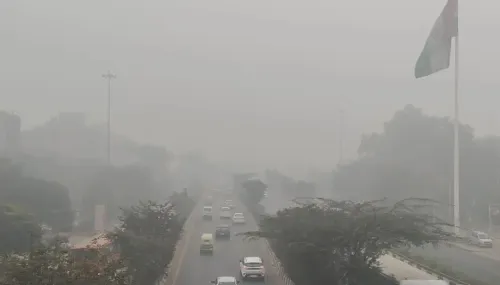
Delhi air quality remains poor at 228; IMD forecasts fog

Synopsis
Delhi’s overall AQI stood at 228 on Wednesday morning, while DTU recorded 331. The IMD has forecast morning fog, and Stage II pollution-control measures remain in force across Delhi-NCR.
Key Takeaways
Delhi recorded an overall AQI of 228 at 6 am on 25 November , according to the Delhi government’s environment department.
Delhi Technological University recorded 331 , while Anand Vihar registered 327 .
The IMD forecast mist and shallow fog across the region on 25 and 26 November .
Delhi’s average AQI was 200 at 8 am on Tuesday, according to CPCB data, with PM2.5 the prominent pollutant.
The CAQM continues to enforce GRAP Stage II across Delhi-NCR .
CAQM Member Secretary Tarun Kumar Pithode reviewed winter pollution controls and District Action Plans 2027 .
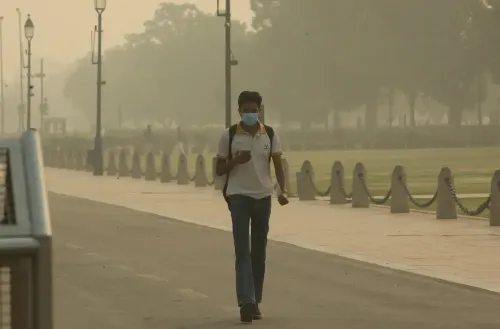
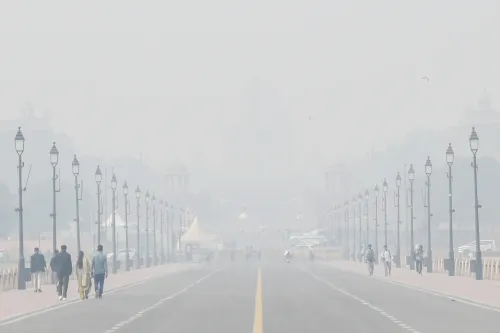
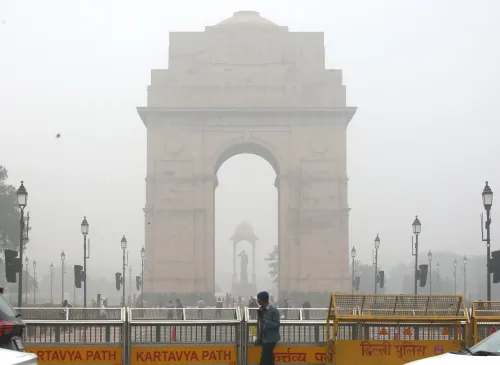
Delhi air quality remained in the poor category on Wednesday, 25 November, with the overall Air Quality Index (AQI) at 228 at 6 am, according to the Delhi government’s Department of Environment. The India Meteorological Department (IMD) forecast mist or shallow fog during the morning hours, with mainly clear skies and no rain over the next few days.
Readings varied across the capital: Delhi Technological University (DTU) recorded an AQI of 331, the highest among the stations listed in the report, while Anand Vihar registered 327. The source did not specify the year of the readings or forecast.
Monitoring stations record higher pollution levels
After DTU and Anand Vihar, North Campus recorded an AQI of 314. IGNOU-Maidan Garhi and Burari Crossing each recorded 304, while Ashok Vihar registered 224.
The station-level figures show that pollution levels differed substantially within Delhi, even as the overall morning index stood at 228. The overall reading and individual station readings provide different views of air quality across the city.
Fog and temperature forecast for Delhi-NCR
The IMD forecast mist and shallow fog at many places across the region on 25 and 26 November. Moderate fog was likely at isolated places on 25 November and at a few places on 26 November during the morning.
Fog could become more widespread towards the end of the five-day forecast period, potentially affecting morning visibility across Delhi-NCR. Daytime temperatures were expected to range from 24 to 26 degrees Celsius, with minimum temperatures between 8 and 11 degrees Celsius.
Tuesday’s readings and prominent pollutant
On Tuesday, the average AQI in Delhi stood at 200 at 8 am, according to real-time data from the Central Pollution Control Board (CPCB). The CPCB data identified PM2.5 as the prominent pollutant.
That morning, Sirifort recorded 333, followed by IGNOU-Maidan Garhi at 330, North Campus at 322 and Talkatora Garden at 319. The readings were 311 at CRRI Mathura Road, 305 at Burari Crossing, 302 at Commonwealth Sports Complex and 300 at IIT-Delhi.
Tuesday’s 8 am figure and Wednesday’s 6 am figure were reported at different times and by different authorities. They nevertheless show the reported citywide readings alongside higher figures at several monitoring stations.
Pollution controls remain in force
The Commission for Air Quality Management (CAQM) continues to enforce Stage II of the Graded Response Action Plan (GRAP) across Delhi-NCR. Measures include intensified mechanised road sweeping, dust suppression, water sprinkling and stricter enforcement of dust-control rules at construction sites.
In a separate review, CAQM Member Secretary Tarun Kumar Pithode discussed winter pollution controls and District Action Plans 2027 with Deputy Commissioners and District Magistrates across Delhi-NCR and adjoining areas. Designated officers were assigned responsibility for stipulated emission-reduction targets.
In a post on X, the CAQM said the meeting emphasised implementing the district plans to reduce pollution. The coming days will bring further monitoring of air quality and morning visibility as the forecast period progresses.
Point of View
Making local data essential for public awareness. Pollution-control measures matter most when authorities can demonstrate that they are enforced consistently across districts. The public should be able to track progress against the emission-reduction targets assigned to designated officers.
NationPress
25 Nov 2026
Frequently Asked Questions
What was Delhi’s AQI on 25 November?
Delhi’s overall AQI was 228 at 6 am on 25 November, according to the Delhi government’s Department of Environment. The source did not specify the year.
Which Delhi monitoring stations recorded the highest AQI?
Delhi Technological University recorded 331, the highest among the stations listed in the report. Anand Vihar followed at 327 and North Campus at 314.
What is the fog forecast for Delhi-NCR?
The IMD forecast mist and shallow fog at many places across the region on 25 and 26 November. Moderate fog was likely at isolated places on the first day and at a few places on the second.
What pollution controls are in force in Delhi-NCR?
GRAP Stage II remains in force across Delhi-NCR. Its measures include intensified mechanised road sweeping, water sprinkling, dust suppression and enforcement of construction-site dust rules.
What was Delhi’s AQI on the previous day?
Delhi’s average AQI was 200 at 8 am on Tuesday, according to CPCB real-time data. PM2.5 was the prominent pollutant.