Delhi air quality: Sirifort AQI hits 333 as city average is 200
Synopsis
Sirifort recorded an AQI of 333 as Delhi's average stood at 200. Separate estimates for the previous day attributed 0.8% of the capital's daily mean PM2.5 to stubble burning, while transport within Delhi accounted for 21.5%.
Key Takeaways
Delhi's average AQI was 200 at 8 am on 24 November , according to CPCB data.
Sirifort recorded an AQI of 333 , while IGNOU-Maidan Garhi registered 330 .
For 23 November , the IITM warning system attributed 0.8% of Delhi's daily mean PM2.5 to stubble burning.
Transport within Delhi accounted for an estimated 21.5% of daily mean PM2.5 on 23 November .
CAQM continues to enforce GRAP Stage II across Delhi-NCR .
Tarun Kumar Pithode reviewed winter pollution controls and District Action Plans 2027 with district officials.
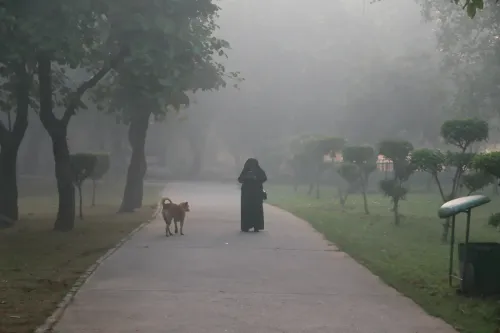
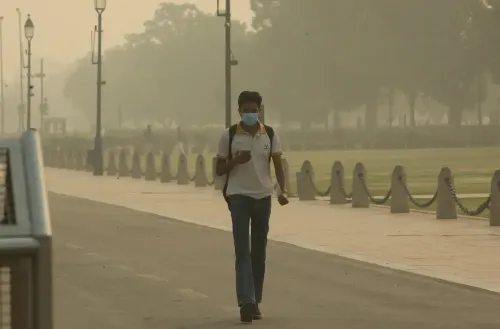
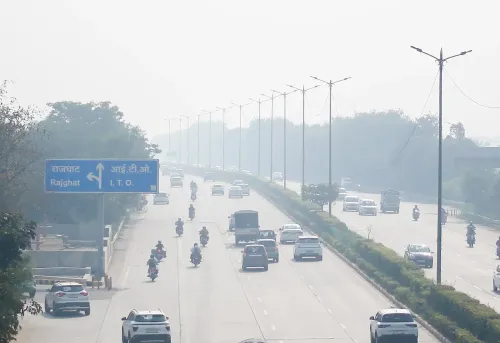
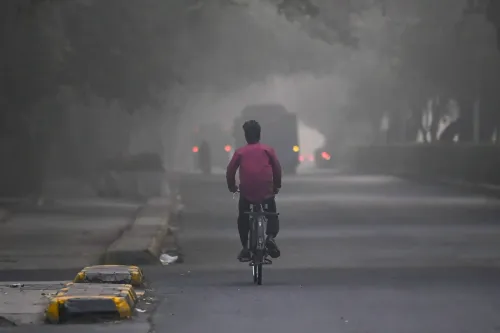
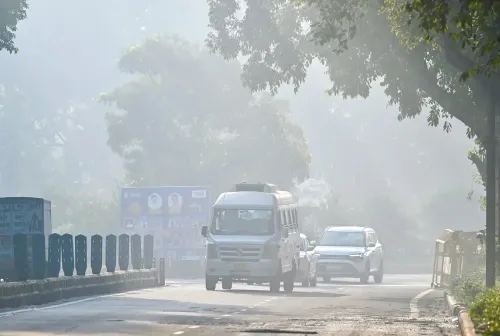
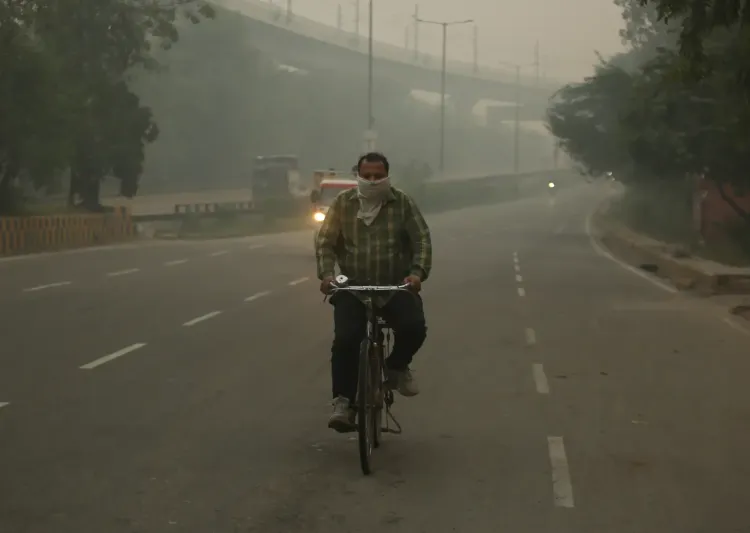
Delhi air quality remained a concern on 24 November, with the city's average Air Quality Index (AQI) at 200 at 8 am IST, according to real-time data from the Central Pollution Control Board (CPCB). Several monitoring stations recorded readings above 300, with Sirifort at 333 and IGNOU-Maidan Garhi at 330.
PM2.5, fine particulate matter, remained the prominent pollutant. The readings showed substantial variation across the national capital even as region-wide pollution controls remained in force.
Delhi monitoring stations report varied readings
Among the stations with the highest readings, North Campus registered 322, Talkatora Garden 319, CRRI Mathura Road 311, Burari Crossing 305 and Commonwealth Sports Complex 302. The reading at IIT-Delhi was 300.
Other readings included JNU at 284, Mundka at 282, Aya Nagar at 280 and Chhawla at 260. DTU and Bawana each recorded 258, while Shadipur and Nehru Nagar each recorded 256.
NIH Narela registered 250, followed by Burari at 248, Vivek Vihar at 245, Ghummanhera at 238, Maidan Garhi at 230 and Uttam Nagar at 227. These station-level readings provide a more localised picture than the city average.
Source estimates show varied pollution contributions
Biomass burning has been a recurring point of discussion in connection with Delhi's PM2.5 pollution. Estimates displayed on the Indian Institute of Tropical Meteorology's (IITM) Air Quality Early Warning System, however, identify several sources contributing to the daily mean concentration.
For 23 November, the system attributed 0.8% of Delhi's daily mean PM2.5 concentration to stubble burning. The largest share, 32%, was assigned to the 'Others' category, followed by transport emissions within Delhi at 21.5%.
The estimates also attributed 10.2% to sources in neighbouring Jhajjar and 6.1% to those in Rohtak. The figures relate to the daily mean for 23 November, whereas the city AQI reading was reported at 8 am on 24 November.
GRAP Stage II measures remain in force
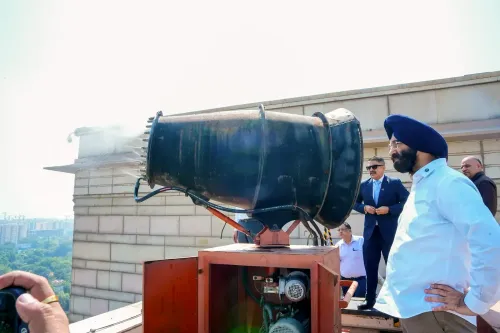
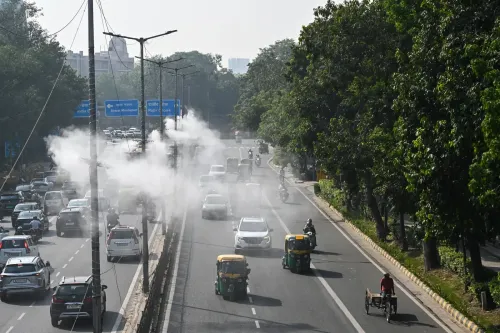
The Commission for Air Quality Management (CAQM) continues to keep Stage II of the Graded Response Action Plan (GRAP) in force across Delhi-NCR. Measures include intensified mechanised road sweeping, dust suppression, water sprinkling and stricter enforcement of dust-control norms at construction sites.
The plan also includes steps to discourage private vehicle use. Its measures span road dust, construction activity and transport, affecting agencies responsible for enforcement as well as people travelling across the region.
District plans and enforcement under review
In a separate review, CAQM Member Secretary Tarun Kumar Pithode met deputy commissioners and district magistrates from Delhi-NCR and adjoining areas to assess winter pollution-control measures and District Action Plans 2027. Designated officers have been assigned direct responsibility for meeting stipulated emission-reduction targets.
In a post on X, the CAQM said the meeting emphasised implementing the district plans to reduce pollution. The commission had also begun assessing and ranking Delhi and neighbouring states on their implementation of air-pollution controls.
Its 2026 report card, covering progress through October, highlighted gaps in industrial inspections, waste management, public transport and pollution-monitoring infrastructure. The district plans and enforcement measures will remain central to the commission's continuing pollution-control efforts.
Frequently Asked Questions
What was Delhi's AQI on 24 November?
Delhi's average AQI was 200 at 8 am, according to real-time CPCB data. Sirifort recorded 333 and IGNOU-Maidan Garhi registered 330.
Which pollutant was prominent in Delhi's air?
PM2.5 was the prominent pollutant in Delhi's air. It consists of fine particulate matter.
How much did stubble burning contribute to Delhi's PM2.5?
Stubble burning accounted for an estimated 0.8% of Delhi's daily mean PM2.5 on 23 November, according to the IITM warning system. The estimate is for the previous day, not the 8 am AQI reading on 24 November.
What GRAP restrictions are in force in Delhi-NCR?
GRAP Stage II remains in force across Delhi-NCR. Measures include intensified road sweeping, water sprinkling, construction dust controls and steps to discourage private vehicle use.
What pollution-control measures are being reviewed?
CAQM has reviewed winter pollution controls and District Action Plans 2027 with district officials. Designated officers have been assigned responsibility for stipulated emission-reduction targets.