Delhi Assembly Speaker Vijender Gupta Takes Charge After Security Breach
Synopsis
In the aftermath of a critical security breach at the Delhi Assembly, Speaker Vijender Gupta emphasizes the need for enhanced measures, including hydraulic road blockers and a unified command structure. This incident raises significant concerns regarding the safety protocols in place.
Key Takeaways
Immediate review of security protocols following a breach.
Installation of hydraulic road blockers for enhanced protection.
Creation of a unified security command structure.
Call for a minimum of two trained personnel at each gate.
Emphasis on the need for rapid response measures.
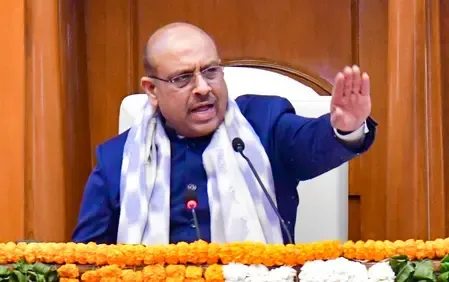
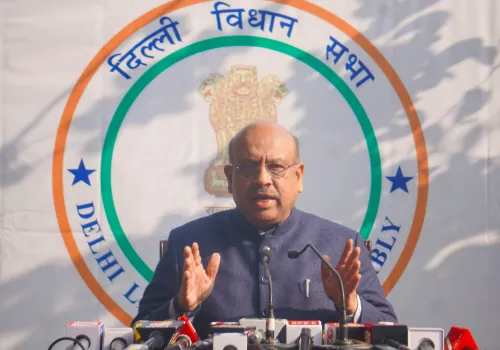
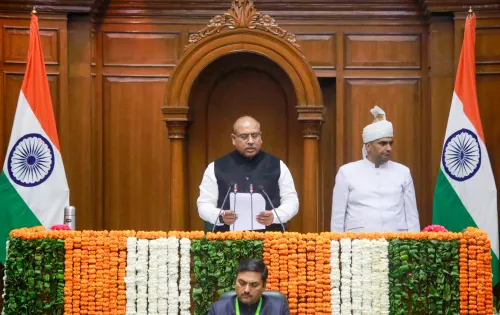
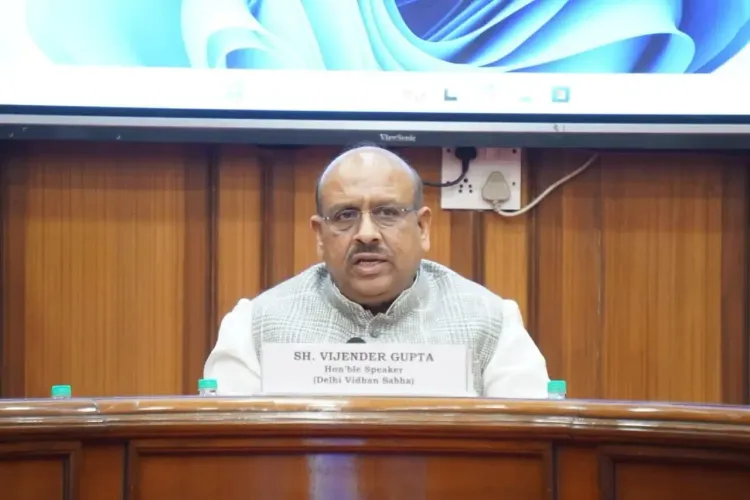
New Delhi, April 7 (NationPress) Following a significant security breach at the Delhi Assembly complex, Speaker Vijender Gupta convened a review of the security protocols on Tuesday. He proposed the installation of hydraulic road blockers and urged the establishment of a cohesive security command structure, as reported by an official.
“The safety of the Delhi Legislative Assembly must be uncompromising and vigilant. It should be based on clarity of command and seamless coordination at all levels,” Gupta emphasized during a high-level review meeting.
Expressing deep concern over the breach within the Assembly grounds, Gupta acknowledged that the incident, which transpired rapidly and compromised the movement of designated officials—including that of the Speaker’s vehicle—necessitates immediate and decisive enhancements to security measures.
This security review meeting coincided with a Delhi court's decision to place Sarabjit Singh, the individual who crashed his vehicle into the Assembly gates, into police custody for eight days.
Gupta instructed the implementation of urgent actions, including the installation of hydraulic road blockers at all entry points, reinforcement of access control measures, and the development of a more agile on-site security mechanism.
The meeting included the participation of Navin Kumar Choudhary, Additional Chief Secretary of the Public Works Department, along with senior officials from the Delhi Police and the Additional Secretary of Home Affairs.
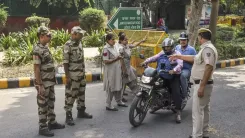
The sequence of events regarding the security breach, where an SUV breached the high-security boundary gates of the Assembly complex, was thoroughly reviewed in the meeting.
Gupta strongly asserted that no vehicle should be allowed entry without appropriate security clearance and verification, under any circumstances.
To improve response times within the premises, Gupta mandated the deployment of a dedicated mobile patrol vehicle, capable of swift movement and immediate intervention to intercept unauthorized access.
Furthermore, Gupta called for enhancements to the physical infrastructure at access points, insisting that gate systems must be robust enough to deter any forceful entry attempts. In this regard, he directed that suitable reinforcement measures accompany the installation of hydraulic road blockers to ensure an additional layer of protection at all gates.
He commended the rapid and decisive actions taken by the Delhi Police in swiftly identifying and apprehending the suspect, thereby upholding both institutional credibility and public trust.
Highlighting the necessity for preparedness to align with accountability, Gupta advocated for a clearly defined and unified command structure between the CRPF and Delhi Police, establishing a single point of authority to guarantee coordinated and immediate responses in critical situations.
He recommended that every gate be staffed with at least two trained personnel from either the Delhi Police or CRPF to ensure coordinated vigilance and that all personnel deployed are adequately equipped and thoroughly briefed regarding their responsibilities.
Point of View
The recent security breach at the Delhi Assembly highlights critical vulnerabilities in legislative security protocols. The swift response from Speaker Vijender Gupta to enhance security measures reflects a proactive approach necessary to ensure the safety of both officials and the public. It is vital to address these gaps to maintain public trust in government institutions.
NationPress
10 Oct 2026
Frequently Asked Questions
What security measures are being proposed after the breach?
Speaker Vijender Gupta proposed the installation of hydraulic road blockers and a unified command structure to enhance security protocols at the Delhi Assembly.
What triggered the security review meeting?
The security review was triggered by an incident where an SUV breached the high-security boundary gates of the Delhi Assembly complex.
Who was responsible for the security breach incident?
Sarabjit Singh was identified as the individual responsible for crashing his car into the Assembly gates.
What immediate actions were directed by the Speaker?
Immediate actions included the installation of hydraulic road blockers at all gates and the reinforcement of access control measures.
What is the significance of the proposed command structure?
The proposed command structure aims to ensure coordinated and immediate responses to security threats by establishing a single point of authority between the CRPF and Delhi Police.