Delhi Assembly Welcomes CRPF Jawans and Their Families?
Synopsis
In a notable gathering, Delhi Assembly Speaker Vijender Gupta celebrated the contributions of CRPF personnel, emphasizing their crucial role in India's internal security and democratic processes. This event highlighted the Assembly's historical significance and the enduring legacy of Indian parliamentary traditions.
Key Takeaways
Recognition of CRPF personnel's contributions Historical significance of the Delhi Vidhan Sabha Importance of legislative heritage in India Role of CRPF in maintaining internal security Legacy of Veer Vithalbhai Patel
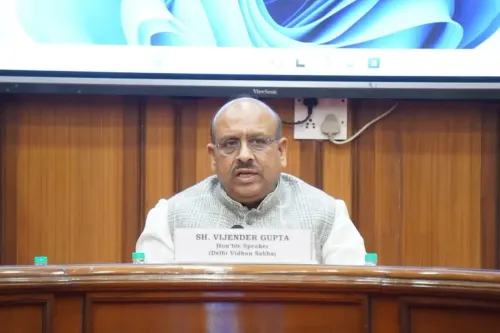
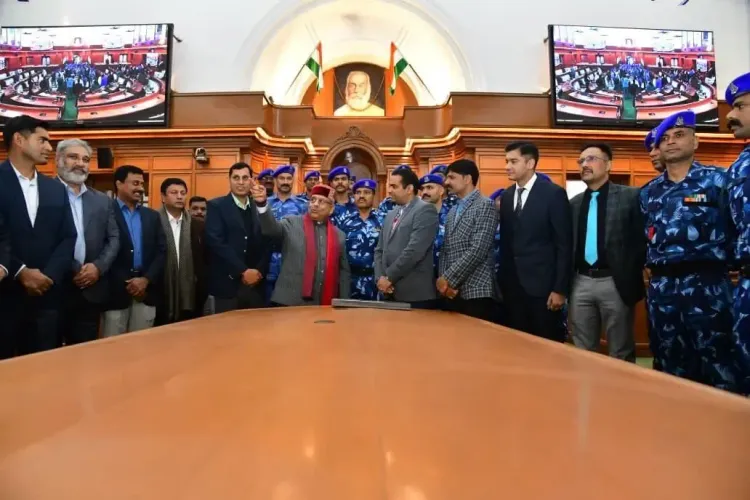
New Delhi, Dec 30 (NationPress) During a recent interaction with visiting personnel from the CRPF, Delhi Assembly Speaker Vijender Gupta commended the jawans for their operations in some of the most demanding security environments, acknowledging them as the backbone of India’s internal security.
In a meeting with the jawans and officers of the 103rd Battalion of the Central Reserve Police Force (CRPF), which included their families and children, Gupta emphasized the crucial role this force plays in combating militancy and insurgency, as well as tackling Left Wing Extremism.
He further recognized their contributions to maintaining security during elections, safeguarding key installations and dignitaries, and aiding civil authorities in times of emergencies and natural disasters.
The Speaker also acknowledged the essential role of the CRPF in international peacekeeping missions, reinforcing India’s dedication to global peace and stability.
Among those present were the Deputy Commandant, Assistant Commandant, and other officers from the 103rd Battalion.
Gupta particularly recognized the sacrifices made by CRPF personnel who have served in hostile areas such as Jammu and Kashmir, Dantewada, Sukma, and Bijapur, praising their commitment, bravery, and professionalism in challenging conditions.
The Speaker also pointed out the historical importance of the Delhi Vidhan Sabha, established in 1911, coinciding with the Third Delhi Durbar when King George V announced the capital's relocation from Calcutta to Delhi.
He noted the Assembly’s evolution over the past 113 years, recalling how early nationalist leaders like Gopal Krishna Gokhale and Lala Lajpat Rai voiced Indian concerns in legislative discussions during the colonial era.
Reflecting on the significance of events like the Rowlatt Act, the Jallianwala Bagh massacre of 1919, and India’s notable contributions during World War I, the Speaker mentioned that the Central Hall of the Assembly has witnessed many pivotal moments, including Delhi University's first convocation in 1923 and the passage of landmark legislation in 1925.
He noted that while legislative sessions moved to the new Parliament building in 1927, the Delhi Vidhan Sabha continues to symbolize India’s democratic heritage and constitutional development.
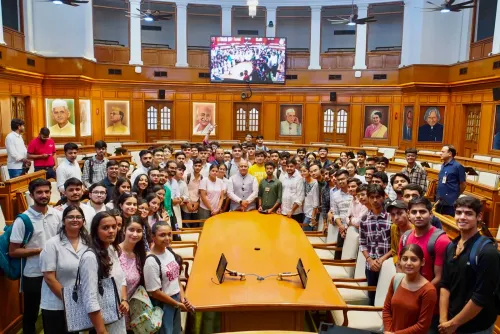
As part of the event, the jawans and officers received a guided tour of the Assembly House, where they learned about its operations, traditions, and parliamentary history.
The families of the CRPF personnel also participated in the tour, gaining insights into the 113-year legislative legacy of the Delhi Vidhan Sabha and its role in India's constitutional and democratic evolution.
On this occasion, the Speaker presented a Coffee Table Book titled “Delhi Legislative Assembly presents Shatabdi-Yatra: Veer Vithalbhai Patel” as a keepsake.
Describing the book as a vital historical document, he stated that it chronicles India's parliamentary journey from 1925 to 2025, featuring rare archival photographs, historic documents, and key moments in parliamentary history.
Gupta noted that Vice President C.P. Radhakrishnan inaugurated the Coffee Table Book, which was also presented to Prime Minister Narendra Modi, highlighting its national significance and honoring the lasting legacy of Veer Vithalbhai Patel, whose leadership established the foundation of modern parliamentary traditions in India.
Point of View
It is crucial to recognize the indispensable role of the CRPF in maintaining national security and public safety. This event not only honors their service but also reinforces our commitment to acknowledging the sacrifices made by these brave men and women. The Delhi Assembly serves as a powerful symbol of our democratic values and historical journey, reminding us of the importance of governance and representation in shaping our nation.
NationPress
16 Sept 2026
Frequently Asked Questions
What is the significance of the Delhi Vidhan Sabha?
The Delhi Vidhan Sabha, established in 1911, represents the historical evolution of India's democracy and legislative processes, playing a critical role in voicing the concerns of Indian citizens.
Who was honored at the event?
CRPF personnel from the 103rd Battalion, along with their families, were honored for their service and contributions to India's internal security.
What is the Coffee Table Book presented during the event?
The Coffee Table Book titled 'Delhi Legislative Assembly presents Shatabdi-Yatra: Veer Vithalbhai Patel' chronicles India's parliamentary journey from 1925 to 2025, showcasing significant legislative milestones.
What roles do CRPF personnel play?
CRPF personnel are involved in maintaining law and order, tackling insurgency, securing elections, and participating in international peacekeeping missions.
Why is the event significant?
This event highlights the contributions of the CRPF to national security and recognizes the historical importance of the Delhi Vidhan Sabha in India's democratic journey.