Are Delhi Families Earning Rs 1.20 Lakh Eligible for Ration Cards?
Synopsis
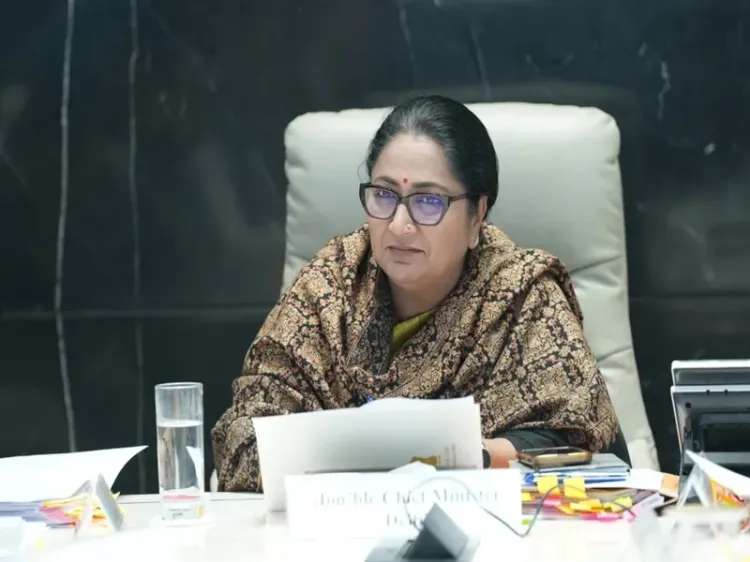
In a revolutionary step towards enhancing food security, Delhi's Chief Minister Rekha Gupta has increased the eligibility income for ration cards to Rs 1.20 lakh. This pivotal decision aims to make the system fairer for the needy while addressing the backlog of pending applications.
Key Takeaways
Delhi's new income limit for ration cards is Rs 1.20 lakh.
Eligibility excludes families with high-value assets or government jobs.
Applications will be assessed by district-level committees.
A waiting list will be maintained for timely filling of vacancies.
Transparency in the application process is now a priority.
New Delhi, Jan 17 (NationPress) Families in Delhi with an annual income of up to Rs 1.20 lakh will now qualify for a ration card, an increase from the previous limit of Rs 1 lakh. This announcement was made by Chief Minister Rekha Gupta on Saturday, following a recent decision by the Delhi Cabinet.
Gupta emphasized that this move aims to enhance the equity and focus of Delhi’s food security system towards the underprivileged.
As per the new guidelines, families will not qualify if they possess property in A to E category colonies in Delhi, pay income tax, own a four-wheeler (excluding one commercial vehicle used for livelihood), have any family member in government service, or have an electricity connection exceeding 2 kilowatts, according to an official statement.
The Chief Minister reiterated that food security is a fundamental right for the impoverished, not a charitable act. The government's commitment is to ensure that no individual in need goes hungry due to systemic flaws, the statement highlighted.
Official data indicates that due to unclear regulations over the years, over 3,89,883 applications have been pending in Delhi, leaving more than 11,65,965 individuals waiting for food security benefits. These individuals will now be incorporated into a transparent, need-based system.
Under the revised rules, the income threshold for identifying priority households has been adjusted to a more realistic figure.
Families earning up to Rs 1.20 lakh annually will now be included under food security, a significant change from the previous limit of Rs 1 lakh. An income certificate issued by the Revenue Department is now mandatory, effectively eliminating self-certification practices, she stated.
The Chief Minister also announced the discontinuation of the 'first-come, first-served' system. Applications will now undergo examination, approval, and prioritization by district-level committees, ensuring that those needing food subsidies the most are prioritized.
These committees, led by the District Magistrate (DM) or Additional District Magistrate (ADM), along with local MLAs and officials, will evaluate applications and organize them based on priority to ensure that the most deserving families receive assistance first. Furthermore, a 20 percent waiting list will be created to fill vacancies promptly.
The Chief Minister noted the extensive backlog that has built up due to ambiguous rules over the years. A review of the food security system's data unveiled various inconsistencies. Based on this assessment, individuals who were not legitimately eligible have been removed from the list.
Data analysis revealed approximately 6,46,123 beneficiaries whose income information did not align with the stipulated criteria. Around 95,682 individuals had lingered in the system for an extended period without receiving any benefits. Nearly 23,394 duplicate names were identified, and benefits were recorded under the names of 6,185 deceased persons. Furthermore, 56,372 people had voluntarily opted out of the system. These factors collectively resulted in over 8,27,756 vacancies.
Point of View
I firmly believe that the government's recent decision to adjust the ration card eligibility criteria reflects a critical step towards addressing food insecurity in Delhi. This approach prioritizes transparency and fairness, ensuring that the most vulnerable populations are served adequately. It is essential for the government to maintain this momentum and continue refining policies that support those in need.
NationPress
22 Sept 2026
Frequently Asked Questions
What is the new income limit for ration card eligibility in Delhi?
The new income limit for ration card eligibility in Delhi is Rs 1.20 lakh annually.
Who will be excluded from receiving ration cards under the new rules?
Families owning property in A to E category colonies, paying income tax, owning a four-wheeler, having a government employee in the family, or having an electricity connection above 2 kilowatts will be excluded.
How will applications be processed under the new guidelines?
Applications will be evaluated and prioritized by district-level committees, ensuring that the most deserving cases receive assistance first.
What measures are in place to avoid backlog in applications?
The government has implemented a transparent system and will no longer operate on a 'first-come, first-served' basis, aiming to address the backlog effectively.
What verification process will be used for applicants?
An income certificate from the Revenue Department will be required, replacing the previous self-certification system.