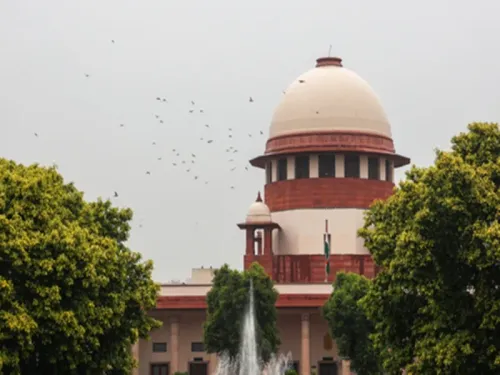
Delhi HC denies bail to Umar Khalid, Sharjeel Imam in UAPA conspiracy case
Synopsis
The Delhi High Court has again shut the door on bail for Umar Khalid and Sharjeel Imam in the 2020 northeast Delhi riots conspiracy case — this time citing the Supreme Court’s own January 2026 order as an immovable bar. With a larger bench now examining whether prolonged incarceration can override UAPA’s bail embargo, their fate may ultimately hinge on a ruling that could rewrite the rules for all UAPA undertrial detainees.
Key Takeaways
The Delhi High Court on 30 September dismissed bail pleas of Umar Khalid and Sharjeel Imam in the 2020 northeast Delhi riots ‘larger conspiracy’ case.
The bench of Justice Prathiba M.
Singh and Justice Dinesh Bhatt held that the Supreme Court’s January 5, 2026 order declining bail remained binding.
The Supreme Court had earlier granted bail to five co-accused but placed Khalid and Imam in a separate category due to their alleged roles as ‘masterminds.’ Co-accused Tasleem Ahmed and Khalid Saifi were recently granted six months’ interim bail by the Supreme Court.
The Supreme Court has referred to a larger bench the question of whether prolonged incarceration and trial delays can justify bail under Section 43D(5) of the UAPA .
Both accused have remained in custody for several years; the trial at Karkardooma Court is still ongoing.
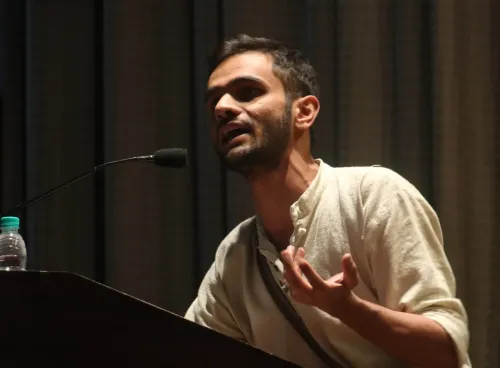
The Delhi High Court on Wednesday, 30 September dismissed the bail pleas of jailed student activists Umar Khalid and Sharjeel Imam in the 2020 northeast Delhi riots ‘larger conspiracy’ case, ruling that the Supreme Court’s earlier order declining them bail remained binding and that no fresh circumstances warranting reconsideration had arisen. The two have remained in custody for several years under the Unlawful Activities (Prevention) Act (UAPA) and other penal provisions.
What the High Court Ruled
A Division Bench of Justice Prathiba M. Singh and Justice Dinesh Bhatt rejected the pleas challenging the Karkardooma Court’s earlier orders refusing regular bail to Khalid and Imam. The bench held that the Supreme Court’s prior judgment had to be kept in view and that the threshold conditions for renewing their bail applications had not been met.
The High Court’s ruling tracks the position taken by the trial court, which had stated it had “no option but to follow the judgment dated January 5, 2026, as passed by the Supreme Court, whereby the petitions of both the applicants were dismissed.”
Background: Supreme Court’s Earlier Orders
Earlier in 2026, the Supreme Court had declined bail to Khalid and Imam, finding that prosecution material disclosed prima facie grounds attracting the statutory embargo under Section 43D(5) of the UAPA. The apex court had, however, permitted them to renew their bail prayer either after the examination of protected witnesses relied upon by the prosecution, or on the expiry of one year from the date of its January 5 order — whichever came earlier.
Notably, the Supreme Court simultaneously granted bail to five co-accused — Gulfisha Fatima, Meeran Haider, Shifa Ur Rehman, Mohd Saleem Khan, and Shadab Ahmed — placing Khalid and Imam in what Delhi Police described as a ‘qualitatively different category’ owing to their alleged roles.
More recently, the Supreme Court granted six months’ interim bail to co-accused Tasleem Ahmed and Khalid Saifi while simultaneously referring to a larger bench the broader legal question of whether prolonged incarceration and delay in trial could justify bail despite the restrictions under Section 43D(5).
Arguments Advanced by the Accused
Khalid and Imam had argued before the trial court and the High Court that a change in circumstances had occurred following the Supreme Court’s January order. They placed particular reliance on the apex court’s subsequent reference to a larger bench on the prolonged-incarceration question, contending this unsettled the legal position that had governed their earlier rejections.
The prosecution countered that merely referring a legal question to a larger bench did not disturb the law already declared in the specific judgment concerning Khalid and Imam, and that neither of the Supreme Court’s prescribed conditions for renewal had been fulfilled at the time the fresh applications were filed.
Prosecution’s Position and Police Submissions
Delhi Police, in separate replies, described Khalid and Imam as alleged ‘masterminds’ of the larger conspiracy and submitted that the Supreme Court had already assessed their alleged roles in detail. The prosecution maintained there was no substantial change in circumstances warranting reconsideration, and that the apex court had itself specified the narrow conditions under which bail could be revisited.
The Larger Case and What Comes Next
The case stems from the communal violence that erupted in northeast Delhi in February 2020, in which dozens were killed and hundreds injured. Khalid, Imam, and several others were booked under the UAPA and allied provisions on allegations of having conspired to instigate the riots. The trial at Karkardooma Court is ongoing, with the examination of protected witnesses a key pending step.
The Supreme Court’s larger-bench reference on prolonged incarceration under UAPA remains a live question that could, depending on its outcome, reshape the legal landscape for Khalid, Imam, and others similarly situated. Until that bench rules — or until the prescribed conditions materialise — the two activists are unlikely to find relief from the courts.
Point of View
In effect, a procedural lock — it cannot override the Supreme Court, and the Supreme Court has itself set a narrow gate for renewal. What makes this case consequential beyond its facts is the pending larger-bench reference on prolonged incarceration under UAPA: if that bench rules that years in custody without trial conclusion can itself constitute grounds for bail, Khalid and Imam would be among the first to benefit. The differential treatment between co-accused — five granted bail, two designated ‘masterminds’ — also raises questions about how prosecutorial categorisation interacts with the judiciary’s bail calculus under a statute that places the burden squarely on the accused. India’s UAPA bail jurisprudence is at an inflection point, and this case is at its centre.
NationPress
30 Sept 2026
Frequently Asked Questions
Why did the Delhi High Court deny bail to Umar Khalid and Sharjeel Imam?
The Delhi High Court dismissed their bail pleas on 30 September because the Supreme Court’s January 5, 2026 order declining them bail remained binding, and the court found that neither of the conditions prescribed by the apex court for renewing their bail applications had been fulfilled. The High Court held it could not grant bail in those circumstances.
What is the 2020 northeast Delhi riots larger conspiracy case?
The case relates to the alleged organised conspiracy behind the communal violence that broke out in northeast Delhi in February 2020, in which dozens were killed and hundreds injured. Several individuals, including Umar Khalid and Sharjeel Imam, were booked under the Unlawful Activities (Prevention) Act (UAPA) and other penal provisions on allegations of having planned and instigated the violence.
What does Section 43D(5) of the UAPA say about bail?
Section 43D(5) of the UAPA places a stringent restriction on bail: a court cannot grant bail if, on a perusal of the case diary or the report made under Section 173 of the CrPC, it is of the opinion that there are reasonable grounds for believing that the accusation is prima facie true. This creates a high bar that has kept many UAPA accused in prolonged pre-trial detention.
Why were some co-accused granted bail while Khalid and Imam were not?
The Supreme Court granted bail to five co-accused — Gulfisha Fatima, Meeran Haider, Shifa Ur Rehman, Mohd Saleem Khan, and Shadab Ahmed — while declining it to Khalid and Imam. Delhi Police had described Khalid and Imam as alleged ‘masterminds’ of the larger conspiracy, and the Supreme Court placed them in a qualitatively different category based on its assessment of the prosecution material regarding their alleged roles.
What is the Supreme Court’s larger-bench reference and how could it affect this case?
The Supreme Court has referred to a larger bench the legal question of whether prolonged incarceration and delay in trial can justify the grant of bail despite the restrictions under Section 43D(5) of the UAPA. If that bench rules in favour of such a ground, it could open a new avenue for bail for Khalid, Imam, and other UAPA undertrials who have spent years in custody awaiting trial.