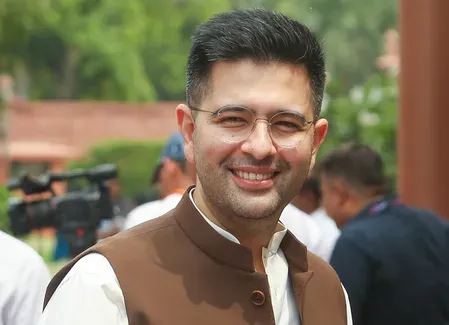
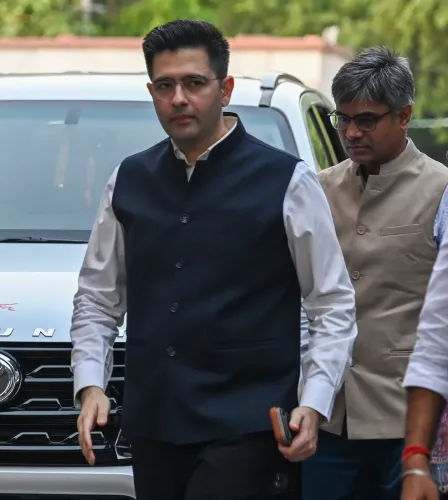
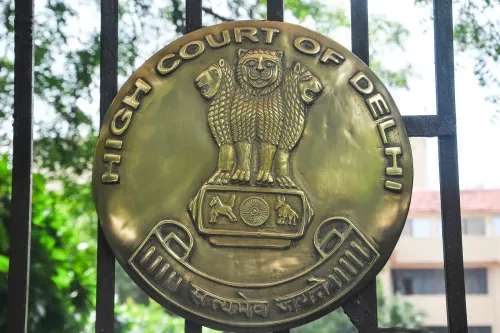
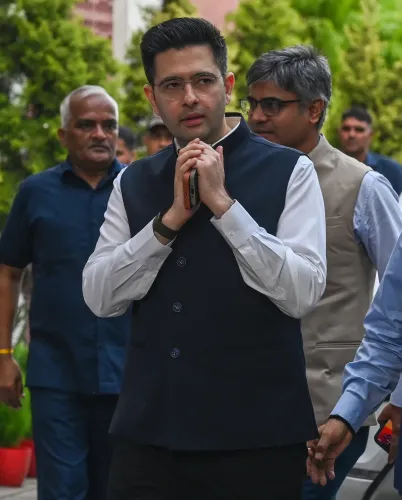
Delhi HC orders takedown of vulgar posts targeting Raghav Chadha
Synopsis
The Delhi High Court has drawn a sharp legal line: political satire targeting Raghav Chadha after his AAP-to-BJP switch is fair game, but 'profane and vulgar' posts are not. The ruling also flags AI deepfakes as a dignity threat — a signal that Indian courts are beginning to grapple seriously with synthetic media as a tool of reputational harm.
Key Takeaways
The Delhi High Court on 1 July ordered online platforms to remove posts targeting BJP Rajya Sabha MP Raghav Chadha that were found 'profane and vulgar.' Justice Subramonium Prasad identified 6 specific documents (Nos.
2, 8, 9, 11, 25, 40) as crossing the line from satire into defamatory content.
Platforms must comply and submit Basic Subscriber Information (BSI) and IP logs within two weeks .
The court declined to remove the remaining content from 52 documents , ruling that criticism of Chadha's switch from AAP to BJP constitutes protected political satire.
The court warned against the use of AI deepfakes and morphed images to harm individual dignity.
Chadha's lawyers alleged a coordinated, paid campaign by Influencer Marketing Agencies to spread defamatory content across multiple handles simultaneously.
The Delhi High Court on Wednesday, 1 July directed multiple online platforms to remove social media posts targeting Bharatiya Janata Party (BJP) Rajya Sabha MP Raghav Chadha, ruling that content which is 'profane and vulgar' falls outside the protection of political satire. The interim order, passed by a single-judge Bench of Justice Subramonium Prasad, marks a significant judicial intervention in the growing debate over the limits of online speech targeting public figures.
What the Court Ordered
Justice Prasad directed Defendants No. 2 and 4 — the intermediary platforms — to take down specific URLs associated with the flagged posts within two weeks. The platforms were also asked to furnish Basic Subscriber Information (BSI) and IP logs of the accounts linked to those posts to Chadha within the same timeframe.
The court identified Documents No. 2, 8, 9, 11, 25 and 40 as containing explicit content that crossed the line. 'Documents No. 2, 8, 9, 11, 25 and 40 contain explicit content, which is profane and vulgar in nature, and fall outside the purview of harmless satirical humour,' the Bench held.
What the Court Refused to Remove
The Bench declined to order the removal of the remaining content from the 52 documents placed before it. The court observed that the majority of the challenged material amounted to political criticism of Chadha's decision to switch allegiance from the Aam Aadmi Party (AAP) to the BJP — and that such criticism is constitutionally protected.
'The majority of the allegedly defamatory content appears to be satirical expressions of the Plaintiff's decisions in the political sphere, and such decisions are likely to attract both bouquets and brickbats at the same time,' the court noted. It further held that 'humour about change in political party alliances, governance, policies, etc. are a part and parcel of politics' and that public figures 'must accept being at the receiving end of the satirical humour as a necessary and inevitable aspect of their profession.'
The AI Deepfake Warning
Separately, the court issued a pointed caution on the use of artificial intelligence to generate harmful content. 'This Court in no way or manner endorses the use of AI to produce deepfake videos, morphed images, etc., when employed to harm the dignity of an individual,' Justice Prasad stated, adding that courts must strike 'a fair balance' between an individual's right to dignity and the constitutional guarantee of free speech.
Chadha had originally petitioned the court seeking protection of his personality and publicity rights against the alleged unauthorised use of his name, image, likeness, and identity — including through AI-generated, deepfake, and morphed content. His plea specifically sought the removal of synthetic voice cloning, fabricated speeches, and manipulated digital content allegedly portraying that he had 'sold himself for money' after switching parties. The court declined to grant wider interim protection under personality rights, choosing instead to examine the material through the narrower lens of defamation law.
Organised Defamation Campaign Alleged
Chadha's counsel — advocates Satatya Anand and Nikhil Aradhe — told the court that a coordinated and allegedly paid social media campaign had been run through multiple professional agencies to damage the MP's public image. According to the lawyers, material placed before the court demonstrated that 'defamatory posts, by several social media accounts and influencers publishing paid content, engaged by Influencer Marketing Agencies, were disseminated across numerous social media handles within minutes, reflecting a concerted and organised effort to amplify false narratives and cause irreparable reputational harm.'
Welcoming the order, the advocates said it 'reinforces the fact that freedom of speech cannot be used to run paid orchestrated campaigns of defamation and character assassination.' They described it as 'an important step towards ensuring quick action against organised online defamation and protecting the dignity of public discourse.'
What Happens Next
The platforms now have two weeks to comply with the takedown directive and submit subscriber data. The broader defamation suit filed by Chadha is expected to proceed, with the court set to examine the remaining contested content on its merits. The case is being closely watched as a test of how Indian courts balance free political speech against reputational harm in the age of AI-generated content.
Point of View
Which means the court has effectively validated the bulk of the online criticism Chadha faces as legitimate political speech. That is the more consequential signal — not the takedown, but the court's clear message that elected figures who switch parties must absorb the satirical fallout. The deepfake warning is notable, but it remains obiter; Indian law still lacks a dedicated statutory framework for AI-generated defamation, and without one, each such case will require bespoke litigation. The allegation of a paid, coordinated influencer campaign — if proven — raises harder questions about the line between political opposition and organised reputational attack, a distinction that courts and regulators have yet to draw clearly.
NationPress
30 Sept 2026
Frequently Asked Questions
What did the Delhi High Court rule in the Raghav Chadha defamation case?
The Delhi High Court ordered online platforms to remove six specific social media posts targeting BJP Rajya Sabha MP Raghav Chadha, finding them 'profane and vulgar' and outside the protection of political satire. The court declined to remove the remaining 46 documents, ruling they constituted protected political criticism of his party switch from AAP to BJP.
Why did Raghav Chadha approach the Delhi High Court?
Chadha petitioned the court seeking protection of his personality and publicity rights against the alleged unauthorised use of his name, image, and likeness — including AI-generated deepfakes, morphed images, and synthetic voice cloning that allegedly portrayed him as having 'sold himself for money' after switching parties.
What must the online platforms do following the court order?
The intermediary platforms have two weeks to take down the URLs associated with the six flagged documents and to provide Basic Subscriber Information and IP logs of the accounts behind those posts to Chadha.
Did the court protect all political satire targeting Chadha?
Yes, for the most part. The court held that humour about political party switches, governance, and policies is 'a part and parcel of politics,' and that public figures must accept satirical criticism as an inevitable aspect of their profession. Only content found to be explicitly vulgar or defamatory was ordered removed.
What did the court say about AI deepfakes?
Justice Subramonium Prasad stated that the court does not endorse the use of AI to produce deepfake videos or morphed images when employed to harm an individual's dignity, and that a fair balance must be struck between the right to dignity and the constitutional guarantee of free speech.