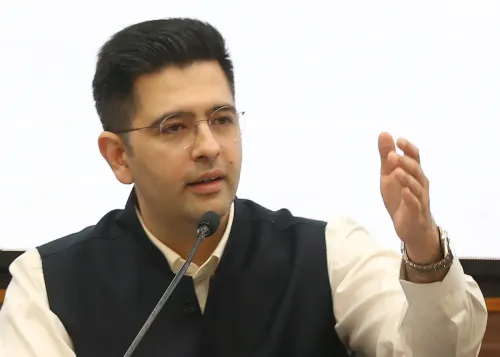
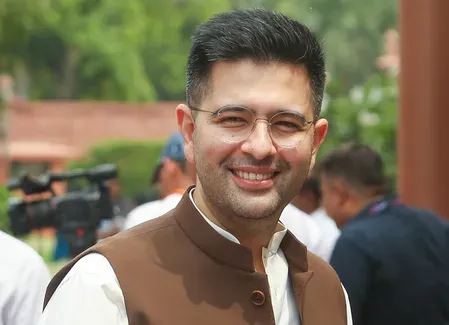
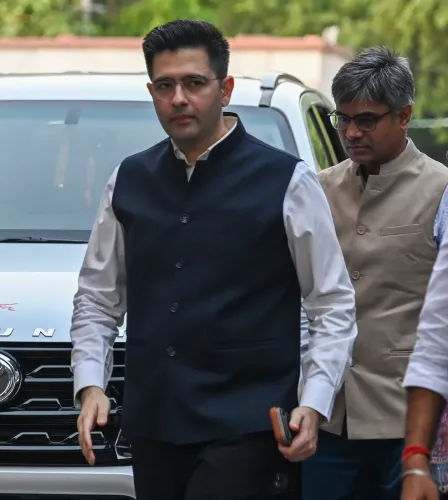
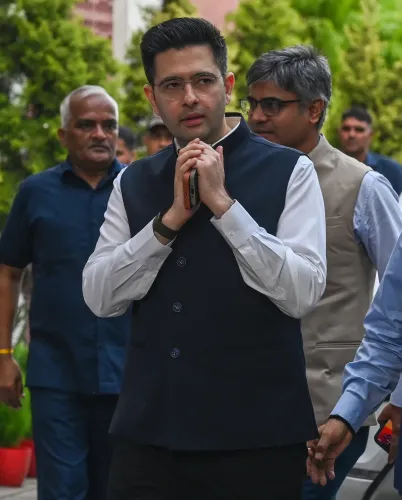
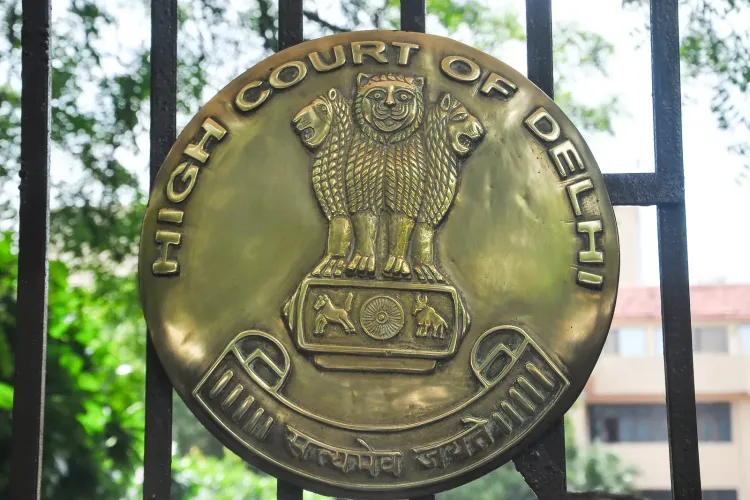
Delhi HC reserves order on Raghav Chadha's plea to remove defamatory content
Synopsis
The Delhi High Court has orally signalled that Raghav Chadha's bid to remove morphed 'sold himself for money' content may not hold up as a personality rights claim — and could instead require a full defamation suit. The court's reserved order will shape how India's judiciary draws the line between political satire and actionable online defamation.
Key Takeaways
The Delhi High Court reserved its order on 21 May on Raghav Chadha's interim plea to remove allegedly defamatory online content.
Justice Subramonium Prasad observed prima facie that the content appeared to be political criticism, not a violation of personality rights.
Chadha's counsel Rajiv Nayar cited morphed images and deepfakes portraying the MP as having 'sold himself for money' after switching from AAP to BJP .
The court suggested Chadha may need to amend his plaint to pursue a formal defamation suit rather than rely on personality rights.
The case is part of a broader trend: over a dozen public figures including Gautam Gambhir , Aishwarya Rai Bachchan , and Shashi Tharoor have recently sought similar protections at the Delhi HC.
The Delhi High Court on Thursday, 21 May reserved its order on an interim application filed by Rajya Sabha MP Raghav Chadha, who sought the removal of allegedly defamatory and manipulated online content claiming he 'sold himself for money' following his reported switch from the Aam Aadmi Party (AAP) to the Bharatiya Janata Party (BJP).
What the Court Observed
A single-judge bench of Justice Subramonium Prasad orally noted that, prima facie, the content flagged by Chadha appeared to constitute criticism of a political decision rather than a violation of personality rights. 'Prima facie, there is no personality right involved in this case. A decision taken by you in a political arena is being criticised,' the court remarked during the hearing.
Justice Prasad further observed that the line between criticism and defamation was 'quite thin,' and indicated that the present matter may not warrant an interim injunction on the basis of personality rights alone. The court also noted that personality rights protect against unauthorised commercial exploitation of an individual's persona — they do not, it suggested, extend to shielding public figures from critique of their political conduct.
Arguments by Chadha's Counsel
Senior advocate Rajiv Nayar, appearing for Chadha, contended that certain posts crossed the line from criticism into defamation, falsely portraying the MP as having 'sold himself for money.' Nayar referred to morphed images depicting the Prime Minister showering Chadha with cash, and pressed for interim relief limited to the removal of such profane and reputationally damaging material.
The court, however, remarked that the issue raised appeared to fall within the domain of defamation rather than personality rights. 'It is not a defamation suit. It is a suit on the basis of personality rights,' Justice Prasad said, while suggesting that Chadha may seek an amendment to the plaint if he intends to pursue defamation claims separately.
What Chadha's Petition Sought
Chadha had approached the High Court seeking protection of his personality and publicity rights against the alleged unauthorised use of his name, image, likeness, and identity across online and digital platforms. The petition specifically targeted AI-generated, deepfake, and morphed content, as well as synthetic voice cloning, fabricated speeches, and manipulated digital material allegedly circulated following his switch from AAP to BJP.
A Growing Trend at Delhi HC
The Chadha case adds to a rapidly expanding list of high-profile individuals invoking personality and publicity rights before the Delhi High Court. In recent months, former cricketer and India head coach Gautam Gambhir, former captain Sunil Gavaskar, spiritual leader Sri Sri Ravi Shankar, actors Arjun Kapoor, Allu Arjun, Nagarjuna, Kajol, Aishwarya Rai Bachchan, and Abhishek Bachchan, singer Jubin Nautiyal, filmmaker Karan Johar, podcaster Raj Shamani, and Congress MP Shashi Tharoor have all secured or sought court protection against the unauthorised use of their identity, likeness, or AI-generated imitations.
With the court having reserved its order, the ruling is expected to clarify the boundary between political satire and actionable defamation — a question with significant implications for online speech and the rights of public figures in India.
Point of View
Not to police political satire or partisan ridicule. Chadha's case tests whether that framework can stretch to cover a politician's reputational harm from deepfakes — and the court's scepticism suggests it cannot, at least not without a proper defamation suit. The broader pattern of celebrities and politicians rushing to Delhi HC for identity protection reflects how unprepared India's legal architecture is for AI-generated disinformation. Without a dedicated statutory remedy, courts are being asked to improvise — and the results will be inconsistent.
NationPress
7 Oct 2026
Frequently Asked Questions
What is Raghav Chadha's case in the Delhi High Court about?
Rajya Sabha MP Raghav Chadha filed a petition in the Delhi High Court seeking removal of allegedly defamatory and manipulated online content — including deepfakes and morphed images — that claimed he 'sold himself for money' after switching from the AAP to the BJP. The court reserved its order on his interim relief application on 21 May.
What did the Delhi High Court say about Chadha's personality rights claim?
Justice Subramonium Prasad orally observed that, prima facie, the content appeared to be criticism of a political decision and did not disclose a violation of personality rights. The court noted that personality rights protect against unauthorised commercial exploitation, not against critique of public figures' political conduct.
Why did the court suggest Chadha file a defamation suit?
The court indicated that the grievance — being falsely portrayed as having accepted money to switch parties — falls within the domain of defamation law rather than personality rights. Justice Prasad suggested Chadha could seek an amendment to his plaint to frame it as a defamation suit if he wishes to pursue that remedy.
What type of content did Chadha's petition target?
The petition sought removal of AI-generated, deepfake, and morphed visuals, including images depicting the Prime Minister showering Chadha with cash, as well as synthetic voice cloning and fabricated speeches circulated across online and digital platforms.
How does this case fit into the broader trend of personality rights litigation in India?
Chadha's case is part of a growing wave of high-profile individuals approaching the Delhi High Court over unauthorised use of their identity. Recent petitioners include Gautam Gambhir, Sunil Gavaskar, Aishwarya Rai Bachchan, Abhishek Bachchan, Allu Arjun, Kajol, Karan Johar, and Shashi Tharoor, reflecting rising concern over AI-generated impersonation and deepfake misuse.