Uttarakhand CM Dhami on Girl Child Day: Shakti reverence must translate to real opportunities
Synopsis
On a day that brought together the International Day of the Girl Child and the first evening of Navratri, Uttarakhand CM Pushkar Singh Dhami wove together cultural symbolism and policy action — invoking Kanya Pujan, Operation Sindoor's women officers, and a 30% state job reservation — to argue that reverence for women must move from ritual to real-world opportunity.
Key Takeaways
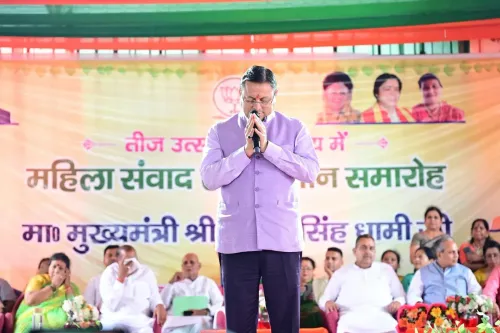
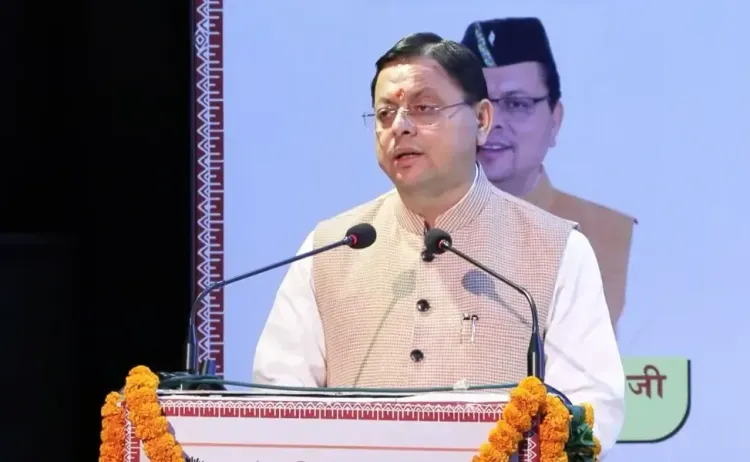
Uttarakhand CM Pushkar Singh Dhami addressed a Girls' Education Promotion Programme event in Dehradun on 11 October 2025 , coinciding with the International Day of the Girl Child and the first day of Sharadiya Navratri .
Dhami argued that cultural traditions like Kanya Pujan carry a social obligation to provide girls with real opportunities in education and employment.
He cited Wing Commander Vyomika Singh and Colonel Sofiya Qureshi , who briefed media on Operation Sindoor , as examples of women's contribution to national defence.
The Uttarakhand government has introduced 30 per cent horizontal reservation for women in all state government jobs.
CM Dhami distributed smartphones to girl students to support digital access and education.
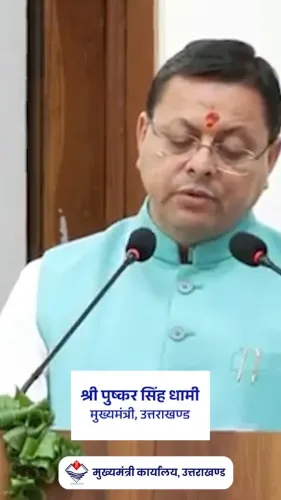
Uttarakhand Chief Minister Pushkar Singh Dhami on Sunday, 11 October 2025, used the occasion of the International Day of the Girl Child to draw a direct line between India's cultural reverence for women and the urgent need to convert that sentiment into tangible opportunities in education, employment and public life. Speaking at an event in Dehradun organised under the Girls' Education Promotion Programme, Dhami argued that centuries of tradition honouring women as embodiments of Shakti carry a social obligation — one that governments and communities must actively fulfil.
Navratri and Girl Child Day: A Symbolic Convergence
The event coincided with the first day of Sharadiya Navratri, when Goddess Shailputri is traditionally worshipped — a timing the Chief Minister described as deeply significant. He invoked the practice of Kanya Pujan, observed during Ashtami and Navami, in which young girls are ritually honoured, to make the case that respect for daughters is not merely ceremonial.
'Today is special because it is both the International Day of the Girl Child and the first day of Navratri, when we worship Goddess Shailputri. For centuries, our culture has revered girls as embodiments of Shakti, and the tradition of worshipping young girls during Ashtami and Navami reflects this belief. Respecting daughters and recognising women as ‘Shakti’ (embodiments of strength) are important parts of our cultural heritage,' CM Dhami said.
He added that the 'true spirit of Kanya Pujan' could only be fulfilled by ensuring girls have the pathways to pursue education, build careers and advance safely in life.
Operation Sindoor and the Role of Women Officers
In a notable departure from the event's primary theme, CM Dhami referenced the 2025 Pahalgam terror attack in Kashmir, in which 26 people were killed, and the subsequent military operation — Operation Sindoor — launched by India under the leadership of Prime Minister Narendra Modi. He specifically highlighted that the public communication of the military action was led by two women officers of the Indian armed forces.
'The press conference regarding the same was held by two women officers of the Indian armed forces — Wing Commander Vyomika Singh and Colonel Sofiya Qureshi,' Dhami said, citing them as examples of what women can achieve when given equal standing in national institutions.
The reference was intended to underscore how women in uniform had stepped to the forefront of one of the country's most significant recent military moments — a point Dhami used to reinforce his broader argument about female capability across all fields.
Policy Measures: Reservation and Digital Access
The Chief Minister cited concrete policy steps taken by the Uttarakhand government to back up the cultural argument with institutional action. He pointed to a 30 per cent horizontal reservation for women in all state government jobs, framing it as a mechanism to expand employment access for the daughters of the state.
'Our government has ensured 30 per cent horizontal reservation for women in all government jobs in the state, so that the daughters of the state can get better employment opportunities and, by becoming self-reliant, play their important role in the development of the state,' he said.
Dhami also distributed smartphones to girl students at the event, saying he was 'fully confident' the devices would help them 'further enhance their education and leverage new opportunities in the fields of knowledge and technology.' The gesture was positioned as a step toward bridging the digital divide for young women in the state.
Empowerment Beyond Symbolism
Dhami stressed that preparing girls for both employment and self-employment was central to his government's agenda, noting that women across Uttarakhand were increasingly demonstrating their abilities when given an opening. He also credited schemes led by Prime Minister Narendra Modi with strengthening female economic participation at the national level.
'Our government is also continuously working for the economic and social empowerment of women, so that women's empowerment in the state can move forward with dignity, self-respect, and self-reliance,' he added.
The event underlined a growing political trend of linking cultural-religious symbolism with governance commitments on gender — a framing that resonates in Uttarakhand's socio-cultural context but will also be measured against ground-level outcomes in education and employment data in the months ahead.
Point of View
Verifiable edge that many such event-day addresses lack. Yet the invocation of Operation Sindoor, while symbolically potent, risks overshadowing the event's core focus on girls' education and employment. The deeper question is whether Uttarakhand's institutional capacity — in schools, skilling centres, and labour markets — is keeping pace with the rhetoric; the state's female workforce participation and school retention rates will be the real scorecard for these commitments.
NationPress
11 Oct 2026
Frequently Asked Questions
What did Uttarakhand CM Dhami say on International Day of the Girl Child?
Chief Minister Pushkar Singh Dhami said that India's cultural tradition of revering women as embodiments of Shakti must be matched by concrete action — through education, employment, and equal opportunities. He spoke at a Girls' Education Promotion Programme event in Dehradun on 11 October 2025, which also coincided with the first day of Sharadiya Navratri.
Why did CM Dhami mention Operation Sindoor at a Girl Child Day event?
Dhami referenced Operation Sindoor — India's military response to the 2025 Pahalgam terror attack in Kashmir — to highlight the prominent role played by women officers Wing Commander Vyomika Singh and Colonel Sofiya Qureshi, who conducted the public briefing on the operation. He used their example to argue that women excel in every field when given equal standing.
What is the 30 per cent reservation for women in Uttarakhand government jobs?
The Uttarakhand government has introduced a 30 per cent horizontal reservation for women across all state government positions, aimed at expanding employment opportunities for women and enabling them to contribute to the state's development. CM Dhami cited this as a key policy measure backing the state's women empowerment agenda.
What is the connection between Navratri and the International Day of the Girl Child in Dhami's speech?
Dhami drew a symbolic link between the two occasions, noting that both the international observance and the Navratri tradition of Kanya Pujan — ritually honouring young girls — reflect a shared value of respecting female strength. He argued that the true spirit of Kanya Pujan is realised only when girls are given the tools and pathways to build their futures.
What did CM Dhami distribute to girl students at the Dehradun event?
CM Dhami distributed smartphones to girl students at the event, stating his confidence that the devices would help them enhance their education and access opportunities in knowledge and technology to build their futures.