What is the breakup of 91.46 lakh cases of 'logical discrepancy' reported by ECI during SIR in Bengal?
Synopsis
Discover how the Election Commission of India (ECI) has identified 91.46 lakh cases of logical discrepancies in West Bengal during the Special Intensive Revision (SIR). This breakdown reveals significant issues with voter records that could impact upcoming elections.
Key Takeaways
91.46 lakh cases of logical discrepancies identified.
Initial report indicated 1.36 crore cases.
Majority due to name mismatches with the 2002 voters list .
Final voters' list to be published on February 4 .
Implications for electoral integrity must be addressed.
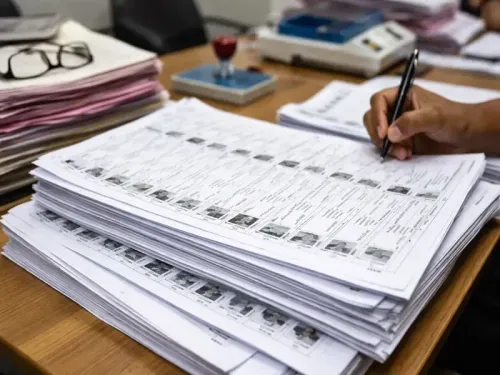
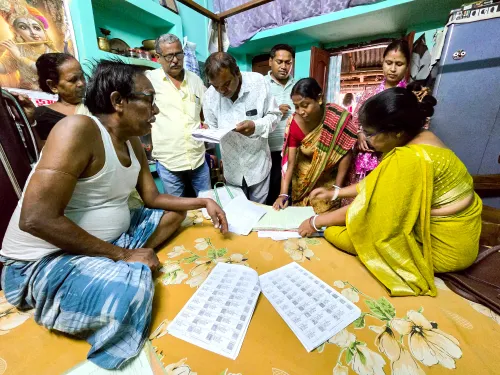
Kolkata, Jan 3 (NationPress) The Election Commission of India (ECI) has provided a detailed breakdown of the 91.46 lakh cases identified as logical discrepancies during the ongoing Special Intensive Revision (SIR) in West Bengal. These cases arise from unusual family-tree data detected during the progeny-mapping process.
Initially, the ECI reported 1.36 crore logical discrepancies at the end of the enumeration phase, which marked the first stage of the three-step SIR process. After a meticulous evaluation, the number has been revised to 91.46 lakhs.
This 91.46 lakhs of logical discrepancies is in addition to 58.20 lakhs of excluded voters and 30 lakhs of unmapped voters, who could not establish any connection with the 2002 voters list through either self-mapping or progeny-mapping.
The Commission is currently reviewing cases of these unmapped voters, and subsequently, the logical discrepancy cases will be addressed.
As per sources from the Chief Electoral Officer (CEO) of West Bengal, the majority of the 91.46 lakhs identified logical discrepancies are due to name mismatches with the 2002 list, accounting for 51 lakhs. The second-highest category involves 24 lakh cases linked to six or more voters associated with a single father.
There are also 4.75 lakhs of voters who are aged 15 years or less than their fathers, while 8.41 lakhs have age differences of 50 years or more than their fathers. Furthermore, three lakhs of voters have an age difference of 40 years or less from their grandfather.
The Trinamool Congress has asserted that rather than secretly leaking information to the media about these logical discrepancy cases, the Commission should issue an official statement detailing the situation.
The draft voters' list in West Bengal was released on December 16 last year, and the final list will be published on February 4. Following this, the Commission will announce polling dates for the significant Assembly elections scheduled in the state this year.
Point of View
It is crucial to approach the findings of the Election Commission of India with a sense of diligence and transparency. The identification of 91.46 lakh cases of logical discrepancies calls for comprehensive reviews to ensure the electoral process remains robust and trustworthy. Engaging with the concerns of political parties, such as the Trinamool Congress, is essential for maintaining public confidence in democratic processes.
NationPress
28 Sept 2026
Frequently Asked Questions
What are logical discrepancy cases?
Logical discrepancy cases refer to instances where unusual family-tree data have been detected in voter records during the progeny-mapping process.
How many logical discrepancy cases were originally reported?
Initially, the Election Commission of India reported 1.36 crore logical discrepancy cases.
What is the significance of the SIR process?
The Special Intensive Revision (SIR) process is essential for updating and ensuring the accuracy of voter records in preparation for upcoming elections.
When will the final voters' list be published?
The final voters' list for West Bengal is scheduled to be published on February 4 .
What implications do these discrepancies have?
These discrepancies could significantly impact the electoral process, raising concerns over voter authenticity and representation in the upcoming Assembly elections.