ED maps tech, AI, fast-track trials roadmap at 36th Zonal Conference in Bengaluru
Synopsis
The ED's 36th Quarterly Conference at IIM-B wrapped with a concrete action plan: time-bound cadre restructuring, AI and forensic tools in investigations, faster trials, and victim restitution — with an FBI special agent and the World Bank's StAR Initiative adding rare international weight to the deliberations.
Key Takeaways
The ED held its 36th Quarterly Conference of Zonal Officers at IIM-B, Bengaluru on 14–15 September 2026 , preceded by a leadership workshop on 13 September .
The roadmap for the coming quarter covers cadre restructuring , AI and forensic capability , fast-tracking of trials , and victim restitution .
A Special Agent of the FBI from the US Embassy, New Delhi contributed to sessions on international cooperation and cyber threats.
The World Bank's Stolen Asset Recovery (StAR) Initiative shared knowledge on asset-tracing and recovery strategies.
The central theme was a shift from case-centred to ecosystem-centred financial crime investigation.
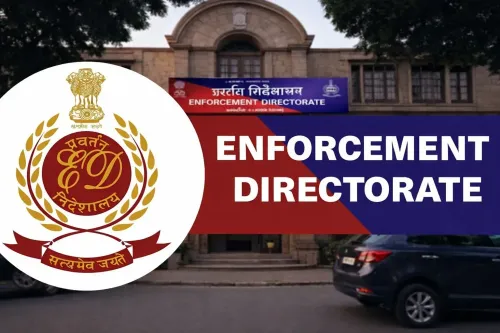
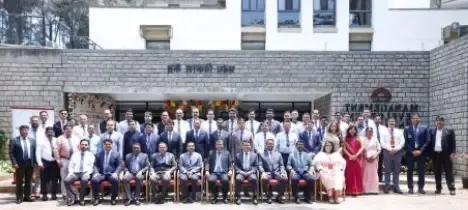
The Enforcement Directorate (ED) concluded its 36th Quarterly Conference of Zonal Officers (QCZO) at the Indian Institute of Management, Bengaluru (IIM-B) on 15 September 2026, charting a clear roadmap for the coming quarter that prioritises technology-driven investigation, faster trials and convictions, and greater restitution to victims of economic crime.
Key Outcomes of the Conference
The two-day conference, held on 14–15 September and preceded by a Management and Leadership Workshop by IIM-B faculty on 13 September, finalised a set of institutional priorities. According to an official statement, the agenda included time-bound cadre restructuring, fuller use of technology and forensic capability, fast-tracking of trials and convictions, and a sustained push to recover assets for victims of financial crime.
The ED reaffirmed its commitment to fair enforcement of laws and to protecting the integrity of India's financial system, according to the official statement posted on social media platform X.
AI, Deepfakes and Cyber Threats on the Agenda
Sessions at the workshop were led by IIM-B faculty and international experts. Topics included the future of financial investigation within India's digital public infrastructure, the application of Artificial Intelligence (AI) and data analytics in economic crime probes, and the associated risks from deepfakes and AI-enabled fraud, as well as broader cyber threats and international cooperation frameworks.
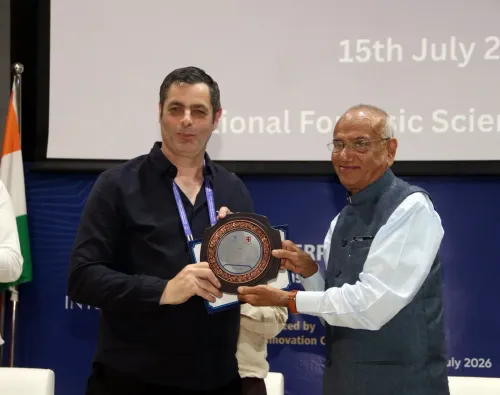
Notably, inputs from a Special Agent of the Federal Bureau of Investigation (FBI) attached to the United States Embassy in New Delhi contributed to the discussions, adding an international law-enforcement dimension to the deliberations.
World Bank's Stolen Asset Recovery Initiative
Asset-tracing and recovery strategies were also on the agenda, with knowledge shared through the Stolen Asset Recovery (StAR) Initiative of the World Bank Group. The inclusion of a multilateral mechanism underlines the ED's intent to align domestic enforcement with global best practices in recovering proceeds of financial crime.
Ecosystem-Centred Approach to Investigation
According to the official statement, the recurring theme across sessions was a fundamental shift in investigative philosophy — moving from a case-centred to an ecosystem-centred approach. This means mapping the broader network of actors, assets, and enablers around a financial crime rather than focusing narrowly on individual cases. The agency also stressed the need to strengthen institutional capacity while managing the risks that emerging technologies carry.
What Comes Next
The roadmap agreed upon at the QCZO is expected to guide ED operations in the coming quarter, with cadre restructuring to be implemented on a time-bound basis. The integration of AI and forensic tools into active investigations is likely to be a visible near-term outcome, particularly in complex money-laundering and foreign-exchange violation cases.
Point of View
Meanwhile, has been a recurring agenda item in such conferences; the word 'time-bound' will only matter if deadlines are made public.
NationPress
15 Sept 2026
Frequently Asked Questions
What was decided at the ED's 36th Quarterly Conference in Bengaluru?
The ED finalised a roadmap covering time-bound cadre restructuring, greater use of AI and forensic tools, fast-tracking of trials and convictions, and sustained pursuit of restitution for victims of economic crime. The conference was held at IIM-B on 14–15 September 2026.
What role did the FBI play in the ED conference?
A Special Agent of the Federal Bureau of Investigation (FBI), attached to the US Embassy in New Delhi, contributed inputs to discussions on international cooperation, cyber threats, and AI-enabled fraud risks during the two-day conference.
What is the ecosystem-centred approach the ED is moving towards?
It refers to investigating the broader network of actors, assets, and enablers surrounding a financial crime, rather than focusing narrowly on individual cases. The ED identified this shift as a recurring theme across conference sessions.
How does the World Bank's StAR Initiative connect to ED's work?
The Stolen Asset Recovery (StAR) Initiative of the World Bank Group shared knowledge on asset-tracing and recovery strategies at the conference, helping align the ED's practices with international standards for recovering proceeds of economic crime.
What is the significance of holding the conference at IIM Bengaluru?
IIM-B faculty led the Management and Leadership Workshop on 13 September and sessions during the conference itself, covering AI, data analytics, digital public infrastructure, and financial investigation — reflecting the ED's intent to build institutional and analytical capacity through academic collaboration.