Did the ED Uncover a Fake Passport Racket in Bengal Linked to a Pakistani National?
Synopsis
The ED's recent raid in Kolkata marks a significant step in uncovering a fake passport racket tied to a Pakistani national. This investigation reveals a web of corruption involving local operatives and international connections. Read on to discover the unfolding details of this critical case.
Key Takeaways
The ED raided an online passport application center in Kolkata.
Three individuals were arrested in connection to the fake passport racket.
Approximately 350 fake passport applications were linked to the investigation.
The case is tied to a Pakistani national, Azad Mallick.
The investigation highlights the ongoing issue of illegal immigration and document fraud.
Kolkata, Nov 3 (NationPress) The Enforcement Directorate (ED) conducted extensive searches on Monday at an online passport application center located near the Passport Seva Kendra in Kolkata, as part of its ongoing probe into the fake passport corruption scandal.
As per ED officials, vital information was gathered during their visit to the passport office. Reports suggest that these online application centers situated outside the passport office may have facilitated the illicit creation of fake passports.
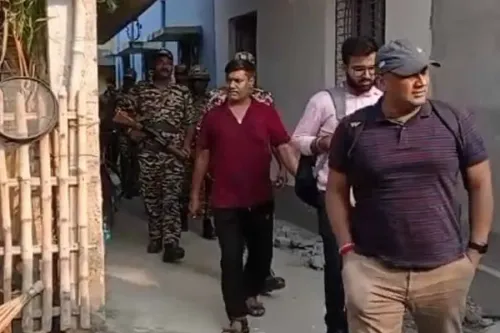
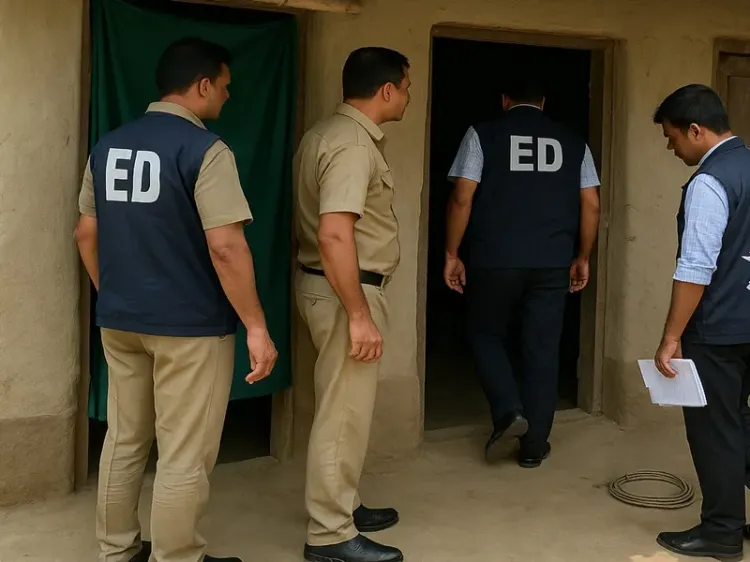
Earlier in the day, the ED also targeted the residence of a carpenter in Chakdaha, located in the Nadia district. Family members were interrogated during this operation. Local sources identified the carpenter as Biplab Sarkar, a resident of Padari village.
Subsequently, three individuals, including the two brothers and another person, were apprehended. The detained suspects are Biplab, Binanda Sarkar, and Bipul Sarkar. According to ED sources, one individual from Nadia has been taken to the ED office in Kolkata for further questioning.
Upon their arrival in Chakdaha earlier that morning, the ED team directly proceeded to Biplab Sarkar's residence. The search commenced immediately upon entering his modest clay home. The ongoing investigation seeks to uncover the methods employed in producing fake passports and the destinations frequented by Biplab and his family using these fraudulent documents.
Reports indicate that approximately 350 fake passport applications were submitted from the cyber café operated by Indu Bhushan, who was arrested last month. The ED's search at Sarkar's residence was triggered by this discovery. Although Biplab is known as a carpenter, investigators are delving into potential connections with Bangladesh, given that Indu Bhushan was also implicated in producing fake identity cards in several instances.
The investigative team is currently scrutinizing Biplab Sarkar's travel history and all banking transactions. Officials are verifying the documents and passports of his brother Bipul Sarkar and other family members, along with their travel records. They are also investigating the origins of the passports and examining mobile devices.
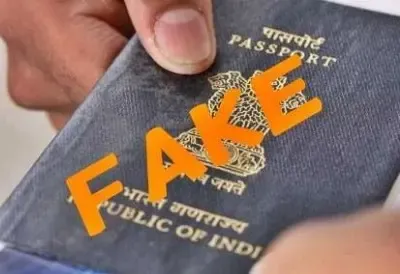
Sources reveal that Biplab's name emerged during the questioning of Indu Bhushan Halder, a middleman arrested last month for assisting foreigners in acquiring Indian identity documents (passports) in exchange for money.
It is noteworthy that Azad Mallick, a citizen of Pakistan, was apprehended earlier this year in connection with the fake passport case.
Previously, the ED had conducted extensive searches throughout the India-Bangladesh border, specifically in the North 24 Parganas and Nadia districts. Today's operation is also anchored in similar intelligence.
The investigation into the fraudulent Indian passport network operating from West Bengal was initially launched by the West Bengal Police at the end of last year, resulting in multiple arrests.
Eventually, the ED assumed control of the case, primarily due to the involvement of money laundering.
In April, ED officials achieved a significant breakthrough by detaining Azad Mullick in this matter.
Investigations have revealed that, in addition to managing hawala and fake Indian passport operations, Mullick was also responsible for arranging counterfeit visas for individuals seeking to travel abroad.
The state police had previously filed a chargesheet in this matter, listing 130 individuals as accused, with 120 identified as illegal Bangladeshi infiltrators.
The police have also issued lookout notices against them.
Point of View
I emphasize that the integrity of our national identification systems is paramount. The ongoing investigation into the fake passport racket is a critical step in safeguarding our sovereignty and ensuring that justice prevails. The ED's diligent efforts reflect a commitment to tackling corruption and illegal activities that threaten our national security.
NationPress
2 Oct 2026
Frequently Asked Questions
What prompted the ED's raid in Kolkata?
The ED's raid was part of an ongoing investigation into a fake passport corruption case linked to a Pakistani national.
Who was arrested during the ED's investigation?
Three individuals, including Biplab Sarkar, Binanda Sarkar, and Bipul Sarkar, were arrested during the investigations.
How many fake passport applications were reportedly submitted?
Approximately 350 fake passport applications were submitted from Indu Bhushan's cyber café in Chakdaha.
What connections were found regarding the suspects?
Investigators are probing potential connections between the suspects and illegal activities involving Bangladeshi infiltrators.
What role did Azad Mallick play in the case?
Azad Mallick, a Pakistani citizen, was arrested earlier this year in connection with the fake passport case.