ED raids four locations in Srinagar in LeT terror financing case
Synopsis
The Enforcement Directorate has raided four locations in Srinagar targeting an alleged Lashkar-e-Taiba Over Ground Worker, Umar Adil Dar, who reportedly spent four years in jail for separatist activities. The operation underscores how India is increasingly using financial prosecution — not just criminal law — to choke off terror networks in J&K.
Key Takeaways
The Enforcement Directorate (ED) searched four locations in Srinagar on 3 November 2026 in a terror-financing probe.
Key suspect Umar Adil Dar is alleged to have served as an Over Ground Worker (OGW) for the banned Lashkar-e-Taiba (LeT) .
Dar and associates were earlier apprehended allegedly carrying cash and literature linked to the banned outfit; Dar reportedly served nearly four years in jail for separatist activities.
The ED is tracing suspected financial transactions and possible cross-border funding links under the Prevention of Money Laundering Act (PMLA) .
The operation is coordinated with the NIA and SIA as part of India's broader counter-terror financing strategy aligned with FATF standards.
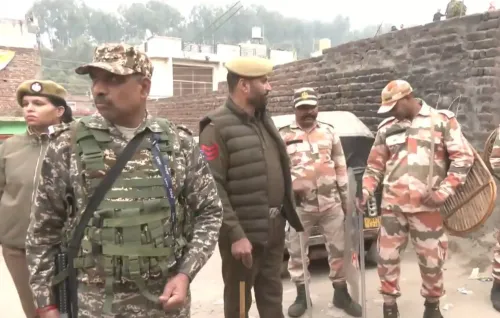
The Enforcement Directorate (ED) on Tuesday, 3 November 2026, conducted searches at four locations across Srinagar in Jammu and Kashmir as part of an ongoing investigation into an alleged terror-financing network. The operation targets suspected financial links to the banned Lashkar-e-Taiba (LeT), with a key suspect identified as an Over Ground Worker (OGW) for the outfit.
Key Developments in the Operation
According to officials, the investigation centres on Umar Adil Dar, who is alleged to have functioned as an Over Ground Worker (OGW) for the Lashkar-e-Taiba — a Pakistan-based terror group banned in India. Dar and several associates were reportedly apprehended earlier while allegedly in possession of a substantial amount of cash along with literature purportedly linked to the banned organisation.
Dar had also reportedly served nearly four years in jail in connection with a case involving alleged separatist and anti-national activities in Jammu and Kashmir.
What the ED Is Investigating
The searches aim to examine suspected financial transactions, identify possible sources and channels of funding, trace alleged proceeds of crime, and establish whether any financial links existed with handlers operating from across the border, officials said. The operation forms part of the agency's broader effort to map and dismantle the financial infrastructure allegedly supporting terror-related activities in the region.
Notably, further details are awaited as the search operations were still continuing at the time of reporting.
India's Counter-Terror Financing Framework
The ED plays a central role in India's strategy to disrupt financial networks supporting terrorism, invoking the Prevention of Money Laundering Act (PMLA) to freeze assets, seize properties, and investigate cross-border and narco-terror funding. It operates in coordination with the National Investigation Agency (NIA) and the State Investigation Agency (SIA) in Jammu and Kashmir.
Previous ED operations in the region have led to the identification and attachment of properties linked to figures such as Hizbul Mujahideen chief Syed Salahuddin and separatist leader Shabir Shah, with assets valued at crores of rupees. India's domestic counter-terror financing mechanism operates under the Ministry of Home Affairs Combatting Financing of Terrorism (CFT) Cell and is aligned with global standards set by the Financial Action Task Force (FATF).
Broader Pattern of ED Action in J&K
This is not an isolated action. The ED has, in recent years, conducted simultaneous multi-location raids across Jammu and Kashmir targeting handlers linked to cross-border smuggling networks, illegal infiltration routes, and narcotics-linked terror financing. The agency has also probed organised syndicates with suspected links to former public officials. The consistent use of PMLA proceedings signals that financial pressure — alongside law enforcement action — is now a core pillar of counter-insurgency strategy in the region.
As the Srinagar searches continue, the agency's findings are expected to shape further investigative steps, with possible arrests or asset attachments likely if money-laundering evidence is established.
Point of View
Shelter operatives, and courier material. Choking their finances under PMLA can be more disruptive than a single arrest. What remains to be seen is whether the ED's findings produce prosecutable money-laundering charges or remain at the level of asset attachment — a distinction that matters greatly for long-term deterrence. The cross-border handler angle, if corroborated, could also carry diplomatic implications.
NationPress
3 Nov 2026
Frequently Asked Questions
Why did the ED conduct raids in Srinagar on 3 November 2026?
The Enforcement Directorate searched four locations in Srinagar as part of an ongoing investigation into an alleged terror-financing network linked to the banned Lashkar-e-Taiba. The agency is probing suspected financial transactions, possible cross-border funding channels, and the alleged proceeds of crime connected to the case.
Who is Umar Adil Dar and what is his alleged role?
Umar Adil Dar is the key suspect in the investigation, alleged to have functioned as an Over Ground Worker (OGW) for the banned Lashkar-e-Taiba. He and some associates were reportedly detained earlier while allegedly carrying a substantial amount of cash and literature linked to the outfit, and Dar reportedly spent nearly four years in jail for alleged separatist and anti-national activities.
What is an Over Ground Worker (OGW) in the context of J&K militancy?
An Over Ground Worker is a civilian associate who provides logistical, financial, or other support to armed militant groups without directly participating in violence. In Jammu and Kashmir, OGWs are considered a critical support layer for groups like Lashkar-e-Taiba, facilitating cash movement, shelter, and communication for cross-border operatives.
What law does the ED use in terror financing cases?
The ED invokes the Prevention of Money Laundering Act (PMLA) in terror financing investigations, allowing it to freeze assets, seize properties, and trace the proceeds of crime. This is complementary to criminal proceedings pursued by the NIA and state police under anti-terror laws.
How do these raids fit into India's broader counter-terror financing strategy?
India's counter-terror financing efforts are coordinated through the Ministry of Home Affairs' Combatting Financing of Terrorism (CFT) Cell and are aligned with global standards set by the Financial Action Task Force (FATF). The ED, NIA, and SIA operate jointly in Jammu and Kashmir, with previous actions resulting in asset attachments linked to figures such as Hizbul Mujahideen chief Syed Salahuddin and separatist leader Shabir Shah.