Celebrating Harmony: Eid-ul-Fitr and Gangaur Festivals Unite Rajasthan's Bikaner
Synopsis
Witness the vibrant display of Ganga-Jamuni Tehzeeb in Bikaner as the Eid-ul-Fitr and Gangaur festivals unfold side by side, symbolizing the harmonious coexistence of Hindu and Muslim traditions.
Key Takeaways
Bikaner celebrates both Eid-ul-Fitr and Gangaur, showcasing communal harmony .
The Gangaur festival is dedicated to Lord Shiva and Goddess Parvati.
Women participate in rituals to seek husbands or pray for their well-being.
Eid-ul-Fitr signifies the end of Ramadan for Muslims.
Historian Ravi Bhatt emphasizes the importance of Ganga-Jamuni Tehzeeb in cultural identity.
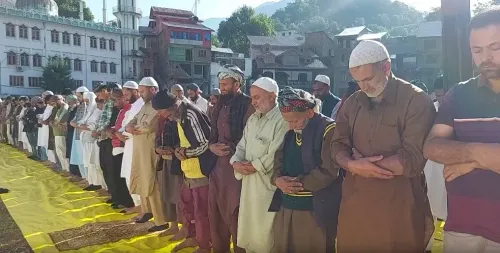
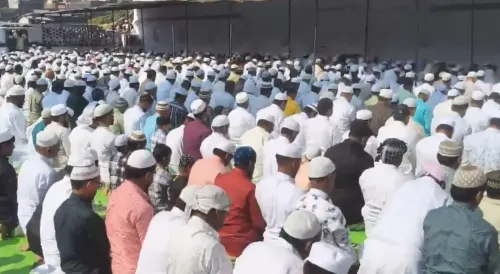
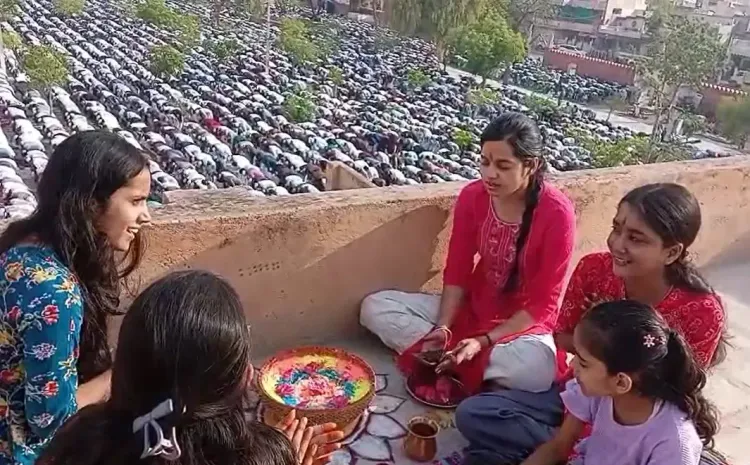
Bikaner (Rajasthan), March 21 (NationPress) In a remarkable showcase of Ganga-Jamuni Tehzeeb, a beautiful amalgamation of Hindu and Muslim customs, the city of Bikaner in Rajasthan celebrated the coexistence of two diverse religious communities on Saturday. On one side, Muslim worshippers gathered to perform Eid-ul-Fitr prayers, while on the opposite side, Hindu girls engaged in 'Gangaur' rituals.
This event sets a shining example of communal harmony, as young Hindu girls sang traditional melodies on a terrace while participating in the 'Gangaur' festival, all while men from the Muslim community offered their 'namaz' nearby.
The 'Gangaur' festival, celebrated across various regions in India—most notably in Rajasthan, Haryana, Madhya Pradesh, and Uttar Pradesh—is observed this year on Saturday, March 21.
This festival honors Lord Shiva and Goddess Parvati. It is particularly significant for women; unmarried girls partake in 'Gangaur' to seek their ideal spouses, while married women pray for the longevity, prosperity, and well-being of their husbands.
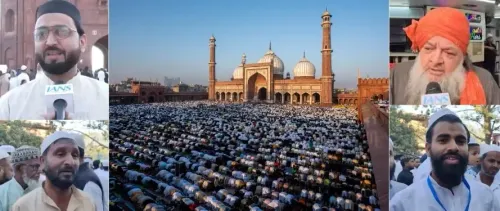
Simultaneously, Eid-ul-Fitr, which marks the end of the holy month of Ramadan, was also celebrated by Muslims around the world, including India, on this same Saturday.
The coincidence of these celebrations provided a unique opportunity for both Hindu and Muslim communities in the city to observe their traditions in a peaceful manner.
Historian Ravi Bhatt notes that the nawabs of Awadh were instrumental in fostering the Ganga-Jamuni Tehzeeb, a shared cultural tradition that continues to shape the identity of cities like Lucknow.
During a recent event held in Delhi, Bhatt explained that as political power shifted away from Delhi, the nawabs concentrated on establishing institutions that promoted art, literature, and social practices among communities. Their courts facilitated interactions between diverse traditions, creating a cohesive cultural environment.
The Ganga-Jamuni Tehzeeb was also highlighted during last year’s Dev Deepawali festivities in Varanasi, where Muslim women contributed to preparing a significant number of lamps made from cow dung, illuminating the ghats of Varanasi.
Point of View
This event in Bikaner is a testament to India's diverse cultural heritage. It highlights the enduring spirit of unity among different religious communities and serves as a reminder of the importance of mutual respect and harmony in a pluralistic society.
NationPress
24 Sept 2026
Frequently Asked Questions
What is the significance of the Gangaur festival?
The Gangaur festival honors Lord Shiva and Goddess Parvati, with women participating in rituals to seek ideal partners or pray for the well-being of their husbands.
What does Eid-ul-Fitr celebrate?
Eid-ul-Fitr marks the end of Ramadan, a holy month of fasting for Muslims, celebrated with prayers and feasting.
Where is Ganga-Jamuni Tehzeeb most prominent?
Ganga-Jamuni Tehzeeb is notably present in cities like Lucknow and Bikaner, showcasing the harmonious blend of Hindu and Muslim cultures.
How do the communities celebrate together?
In Bikaner, Hindu girls performed Gangaur rituals while Muslim men offered Eid prayers, symbolizing peaceful coexistence.
What role did the nawabs of Awadh play?
The nawabs of Awadh fostered the Ganga-Jamuni Tehzeeb by building institutions that supported cultural exchanges between Hindu and Muslim traditions.