Fadnavis accuses Rahul Gandhi, INDIA bloc of plotting to weaken Supreme Court
Synopsis
Maharashtra CM Devendra Fadnavis has accused the INDIA bloc of running a coordinated campaign to delegitimise the Supreme Court, the CAG, and the RBI — framing their march on the apex court as an assault on Dr Ambedkar's Constitution. The charge comes as Rahul Gandhi leads a high-profile protest in New Delhi demanding the Chief Election Commissioner's removal, sharpening a battle over institutional authority that could define the political discourse ahead of Parliament's winter session.
Key Takeaways
Maharashtra CM Devendra Fadnavis accused Rahul Gandhi and the INDIA bloc of deliberately pressuring and delegitimising the Supreme Court , CAG , and RBI .
The INDIA bloc march in New Delhi demands the removal of Chief Election Commissioner Gyanesh Kumar .
Fadnavis alleged the protests form part of an 'extreme far-left plot' to undermine Dr B R Ambedkar's Constitution .
He drew a parallel with the 1975 Emergency , accusing Congress of a history of constitutional tampering.
Fadnavis cited Congress's absence from power in 18 states , including Tamil Nadu ( 59 years ) and West Bengal ( 50 years ), as evidence of a 'rejected leadership.' He called on Congress to stop blaming EVMs and examine its own leadership failures.
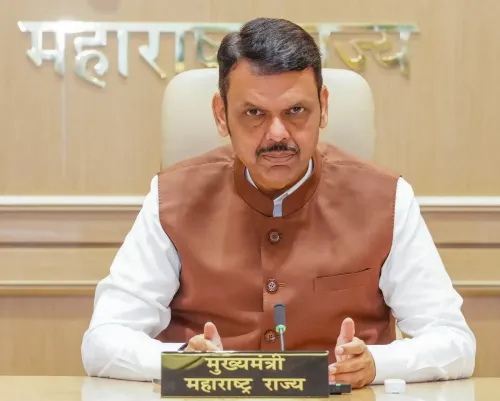
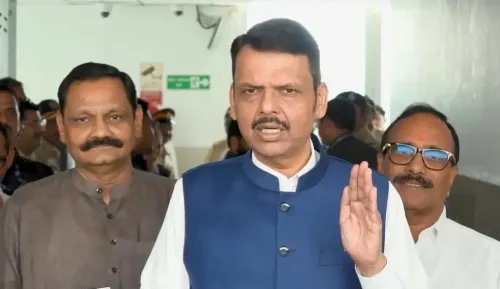
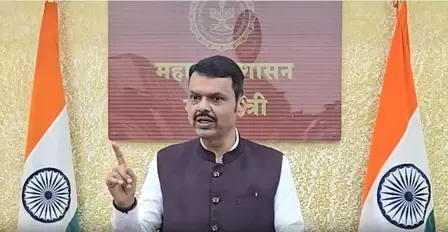
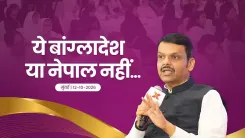
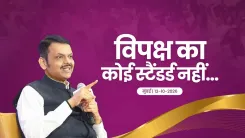
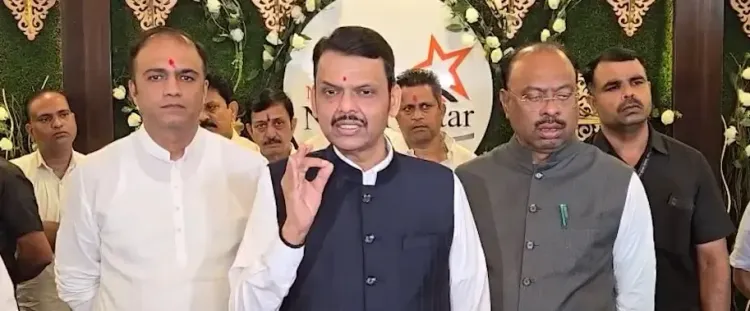
Maharashtra Chief Minister Devendra Fadnavis on Monday, 13 October 2025, launched a sharp broadside against Lok Sabha Opposition Leader Rahul Gandhi and the INDIA bloc, alleging that the opposition is executing a coordinated strategy to pressure and delegitimise India's constitutional institutions — including the Supreme Court, the Comptroller and Auditor General (CAG), and the Reserve Bank of India (RBI). The remarks came from Mumbai as opposition leaders, led by Gandhi, staged a high-profile march in New Delhi towards the Supreme Court.
What Triggered Fadnavis's Remarks
The INDIA bloc march was organised to demand the removal of Chief Election Commissioner (CEC) Gyanesh Kumar, with opposition leaders accusing Kumar, Prime Minister Narendra Modi, and Union Home Minister Amit Shah of subverting electoral integrity and, in their words, 'robbing the nation.' The high-visibility protest drew an immediate counter-offensive from the ruling Bharatiya Janata Party (BJP), with Fadnavis taking the most combative stance.
Fadnavis's Core Allegation
Fadnavis alleged that the current wave of protests forms part of an 'extreme far-left plot' intended to reject the Constitution drafted by Dr B R Ambedkar and breed public distrust in democratic systems. He criticised the opposition for carrying copies of the Constitution while, in his view, systematically undermining constitutional bodies.
Questioning the legality of marching to the apex court to demand a meeting with the Chief Justice of India (CJI), he said: 'Which section of the Constitution empowers a political march to demand an audience with the Chief Justice of India? Attempting to exert pressure on the Supreme Court is a direct insult to Dr Ambedkar's Constitution.'
Emergency Parallel and Congress's Electoral Record
Drawing a pointed historical contrast, Fadnavis invoked the 1975 Emergency imposed by former Prime Minister Indira Gandhi, noting that the Congress government then suspended fundamental rights and barred citizens from approaching High Courts and the Supreme Court. 'We fought against constitutional tampering in 1975, and we will fight again today,' he declared.
The Chief Minister also pointed to states that have, according to him, rejected the Indian National Congress (Congress) for decades — citing Tamil Nadu (59 years), West Bengal (50 years), Uttar Pradesh (46 years), Sikkim (42 years), Bihar (36 years), Tripura (33 years), Gujarat (31 years), and Madhya Pradesh and Odisha (over 23 years). He argued that Congress's dependence on regional partners like the Dravida Munnetra Kazhagam (DMK), Rashtriya Janata Dal (RJD), and Bahujan Samaj Party (BSP) reflects a party unable to win on its own.
EVMs, Social Media, and 'Rejected Leadership'
Fadnavis also took aim at Congress's continued criticism of Electronic Voting Machines (EVMs), saying the party must look inward rather than at the machines. 'Congress needs to find the reasons for its failure not in EVMs, but in its own leadership. This is a rejected leadership that is repeatedly re-launched, only to fail every time,' he said.
He additionally referenced past agitations at Jantar Mantar, alleging that social media algorithms were reportedly manipulated during those protests to spread chaos, and noting that platforms including Meta subsequently issued apologies over ad-driven content and missteps involving posts related to Prime Minister Modi.
What This Signals
The confrontation marks a significant escalation in the ongoing battle over institutional legitimacy — with the opposition framing its protest as a defence of electoral integrity and the BJP framing it as an attack on constitutional bodies. With the INDIA bloc doubling down on its demand for the CEC's removal and the ruling party sharpening its counter-narrative, the standoff is unlikely to ease ahead of upcoming legislative sessions.
Point of View
The BJP is attempting to flip the opposition's Constitution-as-shield narrative on its head. What the mainstream coverage underplays is that both sides are now in a race to own 'institutional defender' as a brand, with the INDIA bloc using the CEC row as the vehicle and the BJP using the Supreme Court march as the foil. The real institutional question — whether India's election oversight framework requires structural reform — is getting buried under this counter-narrative war. That question deserves answers independent of which party benefits from asking it.
NationPress
12 Oct 2026
Frequently Asked Questions
Why did Maharashtra CM Fadnavis attack Rahul Gandhi on 13 October 2025?
Fadnavis launched his attack in direct response to the INDIA bloc's march in New Delhi towards the Supreme Court, which demanded the removal of Chief Election Commissioner Gyanesh Kumar. He alleged the protest was part of a broader strategy to pressure and delegitimise constitutional institutions including the Supreme Court, CAG, and RBI.
What is the INDIA bloc demanding in its New Delhi march?
The INDIA bloc, led by Rahul Gandhi, is demanding the removal of Chief Election Commissioner Gyanesh Kumar, accusing him, Prime Minister Modi, and Home Minister Amit Shah of subverting electoral integrity. The march moved towards the Supreme Court as part of the demonstration.
What did Fadnavis say about the 1975 Emergency?
Fadnavis drew a parallel between the current protests and the 1975 Emergency imposed by former PM Indira Gandhi, during which fundamental rights were suspended and citizens were barred from approaching courts. He said the BJP had fought constitutional tampering then and would do so again.
Which states did Fadnavis cite to argue Congress has been rejected by voters?
Fadnavis cited Tamil Nadu (59 years), West Bengal (50 years), Uttar Pradesh (46 years), Sikkim (42 years), Bihar (36 years), Tripura (33 years), Gujarat (31 years), and Madhya Pradesh and Odisha (over 23 years) as states where Congress has been out of power for decades, arguing the party relies on allies like the DMK, RJD, and BSP to survive.
What did Fadnavis say about EVMs and Congress's electoral losses?
Fadnavis said Congress must stop blaming Electronic Voting Machines for its defeats and instead examine its own leadership, calling it 'a rejected leadership that is repeatedly re-launched, only to fail every time.' He argued that EVM criticism is a deflection from deeper organisational failures.