Fadnavis orders long-term water plan for Mumbai, Pune metro regions to 2051
Synopsis
Maharashtra CM Devendra Fadnavis has set the clock ticking on one of India's most consequential urban water challenges: Mumbai needs to handle 16,139 MLD by 2051, while Pune faces a demand of 100 TMC by 2047 — nearly three times current allocations. Friday's review meeting moved beyond routine directives, ordering river-linking feasibility studies, a dedicated MIDC water subsidiary for industries and data centres, and smart metering to plug 350 MLD in losses.
Key Takeaways
CM Devendra Fadnavis on 20 November 2026 directed officials to prepare long-term water plans for MMR up to 2051 and PMR up to 2047 .
MMR's total water demand is projected at 16,139 MLD by 2051 , up from a current population base of 2.75 crore .
PMR's demand is estimated to reach 100 TMC (7,816 MLD) by 2047 as the population grows from 1.80 crore to 4.12 crore .
Smart metering and pipeline replacement could save roughly 350 MLD of water through leakage and loss reduction.
Feasibility studies ordered for diverting 8 TMC from Mulshi Dam and linking Savitri River basin to Pune-area rivers.
MIDC directed to establish a wholly-owned subsidiary to supply treated and regular water to industries and data centres.
Maharashtra Chief Minister Devendra Fadnavis on Friday, 20 November 2026, directed officials to draw up an integrated, time-bound, and financially viable long-term water supply plan for the Mumbai Metropolitan Region (MMR) extending to 2051 and the Pune Metropolitan Region (PMR) extending to 2047, citing relentless population growth, rapid urbanisation, surging industrial demand, and the emerging water footprint of data centres.
Key Directives from the Review Meeting
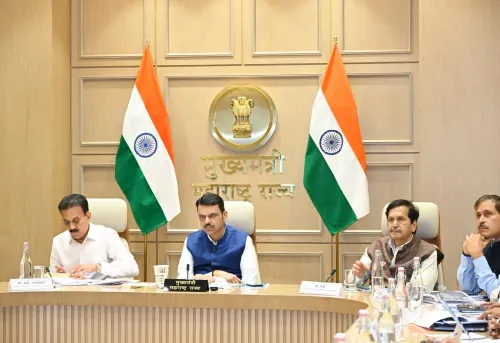
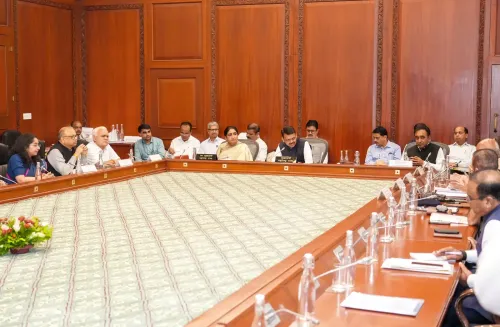
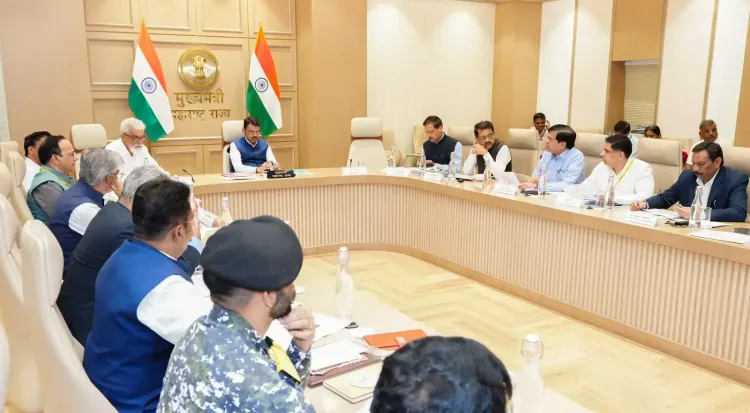
Fadnavis chaired a comprehensive review of water planning and management across the Mumbai Metropolitan Region Development Authority (MMRDA) and Pune Metropolitan Region Development Authority (PMRDA) areas. Beyond commissioning new dam projects, he stressed that equal priority must go to treated wastewater reuse, leakage control, rainwater harvesting, and tapping alternative water sources. Officials were also instructed to complete all ongoing water infrastructure projects on schedule, running forest clearances, environmental approvals, land acquisition, and rehabilitation processes in parallel rather than sequentially.
To tackle non-revenue water losses, the Chief Minister directed municipal corporations and councils to conduct water audits — ensuring a verifiable match between water inflow, distribution, and actual billing — and to accelerate the rollout of smart meters for commercial and industrial consumers. He added that 24x7 water supply schemes, smart metering, and replacement of ageing pipelines could collectively conserve roughly 350 million litres per day (MLD).
Mumbai's Water Demand: The 2051 Challenge
MMRDA Metropolitan Commissioner Sanjay Mukherjee presented the authority's water planning report, revealing that MMR's current population of approximately 2.75 crore is projected to push total water demand to 16,139 MLD by 2051. Existing sources — Bhatsa, Pinjal, Tansa, and Vaitarna — remain vital but insufficient to bridge the widening supply gap without multi-pronged intervention.
Fadnavis instructed authorities to resolve forest land, environmental clearance, land acquisition, and rehabilitation hurdles on a priority basis for proposed projects including Kalu, Deharji, Balganga, Kondhane, Kholsapada, and Shilar, stressing that all clearances must be secured before ground-breaking to avoid mid-project delays that have historically dogged large infrastructure in the region.
Pune's Looming Shortfall and the 100 TMC Target
PMRDA Metropolitan Commissioner Abhijit Chaudhary presented Pune's water blueprint, showing the region's current population of 1.80 crore is expected to surge to 4.12 crore by 2047. Against a current water reservation of 36.90 TMC and present demand of 41.65 TMC — already exceeding existing allocations — total demand by 2047 is estimated at approximately 100 TMC (7,816 MLD). The gap underscores the urgency of advance planning.
Fadnavis directed that tertiary-treated wastewater be supplied to large consumers such as industries, power plants, and data centres, while secondary-treated water be channelled for irrigation, thereby reducing pressure on potable water reserves.
River-Linking and Industrial Water Supply
In a forward-looking move, Fadnavis ordered technical and economic feasibility studies for two significant water diversion proposals: bringing approximately 8 TMC of water from Mulshi Dam via pipeline to the Khadakwasla area, and diverting water from the Savitri River basin in Central Konkan toward the Kukadi, Bhima, Indrayani, Mula-Mutha, and Nira basins. Officials have been directed to prepare a Preliminary Project Report (PPR) for this river-linking scheme.
Separately, the Chief Minister instructed the Maharashtra Industrial Development Corporation (MIDC) to draft a proposal establishing a wholly-owned subsidiary dedicated to supplying water — both regular and treated — to industries and data centres. This entity would operate in conjunction with existing sewage treatment plants (STPs), backed by specific policy provisions for integrated operation and maintenance.
What Comes Next
The review signals a shift from reactive crisis management to anticipatory infrastructure planning in Maharashtra's two most populous urban corridors. With the state now formally tasked with feasibility studies, PPR submissions, and fast-tracked clearances, the pace at which these proposals translate into shovel-ready projects will determine whether Mumbai and Pune can avert a water crisis by mid-century.
Point of View
139 MLD for Mumbai by 2051, 100 TMC for Pune by 2047 — but for the explicit acknowledgement that existing reservations already fall short of current Pune demand. The directive to run clearances in parallel with project execution, rather than sequentially, is a tacit admission that bureaucratic sequencing has historically been a bigger bottleneck than engineering. The river-linking and MIDC subsidiary proposals are ambitious, but feasibility studies ordered today have a long road to implementation; Maharashtra's infrastructure record on water projects — Pinjal and Damanganga-Pinjal have been in the pipeline for years — warrants measured optimism. The data centre angle is new and significant: as Maharashtra positions itself as a data centre hub, ensuring these facilities do not compete with household drinking water will be a governance test few states have faced at this scale.
NationPress
20 Nov 2026
Frequently Asked Questions
What water supply targets did CM Fadnavis set for Mumbai and Pune?
Fadnavis directed officials to plan for a total water demand of 16,139 MLD for the Mumbai Metropolitan Region by 2051 and approximately 100 TMC (7,816 MLD) for the Pune Metropolitan Region by 2047. Both plans must be integrated, time-bound, and financially viable, covering new dams as well as wastewater reuse and leakage control.
Why is Pune's water situation more urgent than Mumbai's?
Pune's current water demand of 41.65 TMC already exceeds its existing reservation of 36.90 TMC, meaning the region is operating in deficit even before accounting for future growth. With the population expected to more than double to 4.12 crore by 2047, the gap between supply and demand is set to widen sharply.
What is the river-linking scheme Fadnavis has ordered studied?
Fadnavis ordered feasibility studies for two proposals: diverting about 8 TMC of water from Mulshi Dam via pipeline to the Khadakwasla area, and linking the Savitri River basin in Central Konkan to the Kukadi, Bhima, Indrayani, Mula-Mutha, and Nira basins near Pune. Officials have been asked to prepare a Preliminary Project Report for the river-linking scheme.
How does the government plan to reduce water wastage in Mumbai and Pune?
The Chief Minister directed municipal corporations to conduct water audits to track inflow, distribution, and billing, and to expand smart metering for commercial and industrial users. Replacing old pipelines and rolling out 24x7 water supply schemes could together save approximately 350 MLD of water that is currently lost to leakage and unmetered supply.
What role will MIDC play in the new water supply framework?
The Maharashtra Industrial Development Corporation (MIDC) has been directed to draft a proposal for a wholly-owned subsidiary that will supply both regular and treated wastewater to industries, power plants, and data centres. This would reduce industrial pressure on drinking water sources by channelling tertiary-treated municipal wastewater to bulk non-potable consumers.