Maharashtra drafts 25-year water master plan for Mumbai Metropolitan Region
Synopsis
Maharashtra has ordered a 25-year water blueprint for the Mumbai Metropolitan Region — India's economic nerve centre — with demand projections stretching to 2051 and a mandate that goes far beyond dams, covering recycled water reuse, rainwater harvesting, NRW reduction, and climate risk. A retired Water Resources secretary chairs the panel, which must report within three months.
Key Takeaways
The Maharashtra government has constituted a high-level study group to draft a 25-year water management plan for the Mumbai Metropolitan Region (MMR) .
The panel, chaired by retired secretary Sanjay Belsare , must submit its report within three months .
Demand projections will cover three planning horizons: 2031 , 2041 , and 2051 , across domestic, industrial, commercial, and construction sectors.
The mandate includes recycled wastewater reuse , rainwater harvesting , groundwater recharge , and Non-Revenue Water (NRW) reduction — not just new infrastructure.
Climate vulnerabilities — altered monsoons, extreme rainfall, rising sea levels — are explicitly part of the assessment scope.
The final output will be an integrated Water Security Plan 2051 with capital expenditure estimates, timelines, and inter-departmental responsibilities.
The Maharashtra government has constituted a high-level study group to prepare a comprehensive 25-year water management blueprint for the Mumbai Metropolitan Region (MMR), in what officials describe as a landmark step toward long-term water security for India's largest economic hub. The directive was issued through a Government Resolution (GR) by the Water Resources Department, mandating the expert panel to submit an actionable roadmap within three months.
Why the MMR Faces a Water Crisis
The Mumbai Metropolitan Region — encompassing major municipal corporations, industrial corridors, and fast-growing semi-urban centres — is confronting sharply escalating water demand, driven by population growth, commercial expansion, and large-scale megaprojects. The region currently depends on a hybrid network of state dams and civic water sources, but authorities acknowledge that fragmented, piecemeal management is no longer adequate to meet future needs.
The study group will conduct an integrated demand audit spanning domestic, industrial, commercial, institutional, and construction sectors, establishing precise projections for three key planning horizons: 2031, 2041, and 2051.
Who Is on the Expert Panel
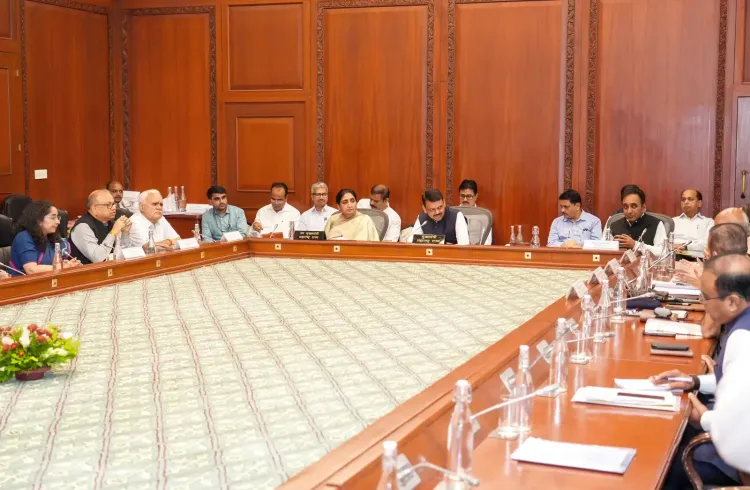
The study group is chaired by Sanjay Belsare, retired Secretary of the Water Resources Department. Its membership is structured to ensure inter-agency coordination across administrative boundaries and includes the Chief Engineer, Konkan Region (Member Secretary); Additional Commissioners from the Brihanmumbai Municipal Corporation (BMC) and the Mumbai Metropolitan Region Development Authority (MMRDA); Commissioners of Thane, Navi Mumbai, and Kalyan-Dombivli; and representatives from the Maharashtra Industrial Development Corporation (MIDC), Maharashtra Jeevan Pradhikaran (MJP), and the Maharashtra Remote Sensing Application Centre (MRSAC).
Scope: Beyond Dams to Climate Resilience
Notably, the panel's mandate goes well beyond conventional dam-building solutions. The group is tasked with reviewing completed, ongoing, and proposed water supply projects to assess total assured yields against projected shortfalls. It will also evaluate recycled wastewater reuse, large-scale rainwater harvesting, groundwater recharge, and the ecological revival of local water bodies.
The panel is further directed to recommend strict measures to curtail Non-Revenue Water (NRW) — water lost through distribution leaks and unmetered usage — and to modernise metering infrastructure. Climate vulnerability assessments are also within scope, covering altered monsoon patterns, extreme rainfall events, prolonged dry spells, and rising sea levels that threaten coastal aquifers.
The Final Deliverable: Water Security Plan 2051
The study group's final report is expected to deliver an integrated Water Security Plan 2051, detailing prioritised infrastructure projects, estimated capital expenditures, implementation timelines, funding mechanisms, and clearly defined inter-departmental responsibilities. The Maharashtra government has framed the initiative as essential to eliminating future supply bottlenecks and sustaining economic stability across the region for the next 25 years.
This comes amid a broader national push to future-proof urban water systems, as Indian cities increasingly grapple with climate-driven water stress. The MMR blueprint, if executed on schedule, could serve as a model for other metropolitan regions facing similar structural pressures.
Point of View
But Maharashtra has a long history of infrastructure reports that stall between recommendation and execution. The real test will be whether the Water Security Plan 2051 comes with enforceable inter-departmental mandates and ring-fenced funding — or becomes another shelf document. The inclusion of Non-Revenue Water reduction and recycled wastewater reuse signals a more mature, demand-side framing, which is welcome; Mumbai's water losses through leakage alone are estimated to be among the highest of any major Indian city. What the directive does not yet specify is an independent oversight mechanism or a legislative backstop to hold agencies accountable across the plan's 25-year horizon.
NationPress
26 Oct 2026
Frequently Asked Questions
What is Maharashtra's 25-year water plan for the Mumbai Metropolitan Region?
It is a comprehensive water management blueprint being drafted by a government-appointed study group, covering demand projections up to 2051 and addressing infrastructure gaps, climate risks, recycled water reuse, and Non-Revenue Water reduction across the MMR. The directive was issued by the Maharashtra Water Resources Department through a Government Resolution.
Who is chairing the MMR water study group?
The study group is chaired by Sanjay Belsare , a retired Secretary of the Water Resources Department of Maharashtra. The panel also includes senior officials from BMC, MMRDA, MIDC, and the commissioners of Thane, Navi Mumbai, and Kalyan-Dombivli.
When will the water security report be submitted?
The study group has been given a three-month deadline to submit its actionable roadmap to the Maharashtra government. The final deliverable will be an integrated Water Security Plan 2051.
Why does the Mumbai Metropolitan Region need a new water plan?
The MMR faces rising water demand from population growth, industrial expansion, and megaprojects, while relying on a fragmented network of state dams and civic sources. Climate-related risks — including erratic monsoons and rising sea levels threatening coastal aquifers — have further underscored the need for a long-term, integrated strategy.
What does Non-Revenue Water mean and why is it part of the plan?
Non-Revenue Water (NRW) refers to treated water that is lost before it reaches consumers — primarily through distribution leaks and unmetered usage. Reducing NRW is a cost-effective way to improve water availability without building new supply infrastructure, and the study group has been directed to recommend strict measures to address it across the MMR.