Will the Farakka Treaty Renewal Challenge the New Bangladesh Government's Relations with India?
Synopsis
As Bangladesh prepares for a new government post-elections, the renewal of the crucial Farakka water sharing treaty with India looms large. Set to expire in 2026, this treaty poses significant diplomatic challenges, potentially affecting India-Bangladesh relations. Will trust prevail in these negotiations, or will underlying tensions surface?
Key Takeaways
The Farakka treaty is critical for water sharing between India and Bangladesh.
Expiration in 2026 necessitates urgent negotiations.
Political stability in Bangladesh is essential for trust-building.
The treaty's renewal could reshape regional cooperation.
Public perception in Bangladesh impacts diplomatic efforts.
New Delhi, Jan 1 (NationPress) As a new government prepares to take office in Bangladesh after the February 12 election, a pivotal matter on its agenda will be the renewal of the Farakka water sharing treaty with India, which is set to expire in 2026. Lacking an automatic renewal clause, this situation demands new negotiations.
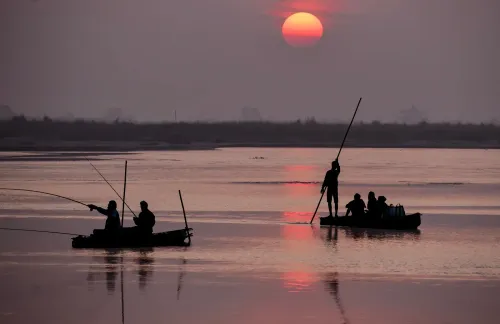
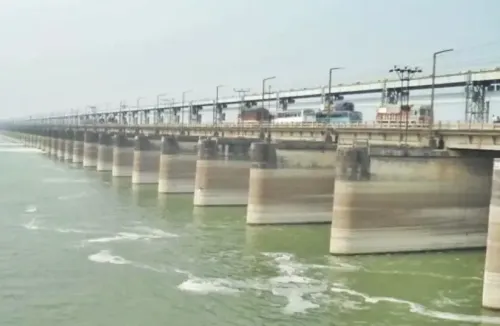
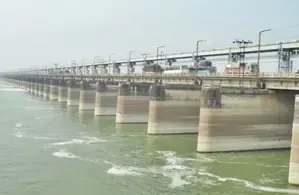
The Farakka Barrage, situated in West Bengal's Murshidabad district, has long been a significant element in the relationship between India and Bangladesh.
Originally constructed to redirect water from the Ganga to the Hooghly river to eliminate silt and enhance navigability for the Kolkata port, it has also become the center of one of South Asia's most delicate transboundary water issues.
Notably, previous treaties were established between leaders of both nations who had recently taken office, within a year of their leadership transition.
The first “Agreement on sharing of the Ganges waters at Farakka” was concluded in Dhaka on November 7, 1977.
Just months before this treaty, Morarji Desai had begun his term as India's Prime Minister in March, while Major-General Ziaur Rahman became the Bangladesh President in April of that same year.
Similarly, the second agreement was forged on December 12, 1996, with both Prime Ministers—H.D. Deve Gowda of India and Sheikh Hasina of Bangladesh—having been in office for a mere six months.
Both leaders assumed their respective roles in June.
Currently, India is governed by a steady administration led by Prime Minister Narendra Modi, while Bangladesh is on the path to forming a democratically elected government after a turbulent period of nearly 17 months.
It remains to be seen whether the treaty will be renewed later this year through mutual agreement, with potential enhancements, or if New Delhi will adopt a firm stance should Dhaka continue to engage with international entities aiming to destabilize India.
In light of current circumstances, New Delhi may act to safeguard the security and integrity of the nation and its citizens.
Interestingly, India previously placed the Indus Waters Treaty on hold due to Pakistan's ongoing support for cross-border terrorism, notably including the lethal terror incident in Pahalgam in April 2025.
This decision was part of a broader array of retaliatory actions aimed at protecting India's sovereignty against Pakistan's provocations, which included precision strikes on terror launch sites across the border.
The project for the Farakka Barrage was envisioned in the 1950s and completed in 1975.
Its main objective was to redirect up to 40,000 cusecs of water from the Ganga into the Hooghly, preventing silt buildup at the Kolkata port.
However, Bangladesh (then known as East Pakistan) expressed concern that the upstream diversion would diminish dry-season flows, adversely impacting agriculture, fisheries, and navigation.
Tensions flared after the barrage became operational in April 1975, coinciding with a politically unstable time in Bangladesh.
The absence of a long-term agreement resulted in temporary arrangements during the late 1970s and 1980s, yet mistrust lingered.
The 1996 Treaty marked a breakthrough and was celebrated as a diplomatic achievement.
It established a 30-year framework for sharing Ganga waters during the critical dry season (January–May).
Based on a 10-day flow measurement at Farakka, it guaranteed a minimum of 35,000 cusecs for each country under specific conditions. A joint committee oversees its implementation and dispute resolution.
While the treaty has eased tensions, its execution has encountered numerous challenges.
Factors such as climate change, glacial retreat, and upstream water usage in Indian states have diminished dry-season flows, complicating the fulfillment of allocations.
Bangladesh frequently claims it receives less than its fair share, particularly during drought years, while India cites hydrological limitations.
Over the last ten years, collaboration between India and Bangladesh has broadened in trade, connectivity, and security.
Nevertheless, water remains a politically charged issue in Bangladesh, where public sentiment often perceives India's upstream initiatives with skepticism.
Furthermore, the unresolved Teesta River dispute, lingering for over a decade, has added to the complications in perceptions.
In this backdrop, the renewal of the Farakka treaty will serve as a crucial test of bilateral trust.
Point of View
The renewal of the Farakka treaty presents a significant opportunity for both India and Bangladesh to reinforce their diplomatic ties. While challenges abound, a commitment to dialogue and cooperation could pave the way for mutual benefits. The upcoming negotiations should be approached with a focus on trust-building measures, as the water-sharing issue is vital for both nations' livelihoods and regional stability.
NationPress
21 Sept 2026
Frequently Asked Questions
What is the Farakka water sharing treaty?
The Farakka water sharing treaty is an agreement between India and Bangladesh regarding the distribution of Ganga river waters, particularly addressing the impact of the Farakka Barrage on water flows.
When does the current treaty expire?
The current Farakka water sharing treaty is set to expire in 2026, requiring new negotiations for renewal.
What are the implications of the treaty for Bangladesh?
For Bangladesh, the treaty affects water availability for agriculture, fisheries, and navigation, making its renewal crucial for the country's economic stability.
How has the treaty affected India-Bangladesh relations?
The treaty has historically been a point of contention, but it has also provided a framework for cooperation, reducing tensions over water sharing.
What challenges does the treaty face?
Challenges include climate change, hydrological constraints, and political perceptions, which complicate the equitable distribution of water resources.