US-India trade deal 'unequal', warns farmer leader Gurnam Singh Charuni
Synopsis
Farmer leader Gurnam Singh Charuni is drawing a direct line from the US-India trade deal to the spectre of 2020–2021 — warning that American farm produce, subsidised and GM, will undercut Indian farmers into selling their land. With a pan-India protest called for 23 June and letters sent to ministries and the US Embassy, the agitation machinery is already in motion even as New Delhi touts ‘significant progress’ on the deal.
Key Takeaways
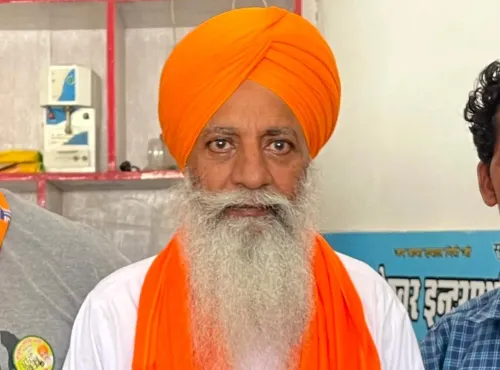
Gurnam Singh Charuni , president of Bhartiya Kisan Union (Charuni) , called the proposed US-India trade deal an ‘unequal agreement’ on 20 June .
A pan-India farmer agitation with black flag protests is scheduled for 23 June across all cities.
A national meeting of all farmer union representatives has been called in Chandigarh on the same day to plan a large-scale agitation.
Charuni warned that GM crop imports from the US at lower prices would make Indian farmers uncompetitive and force land sales.
Letters have been sent to all relevant Union Ministries and the American Embassy in India demanding the deal be halted.
The MEA confirmed PM Modi and President Trump discussed ‘significant progress’ on the interim trade deal at the G7 Summit in Evian, France .
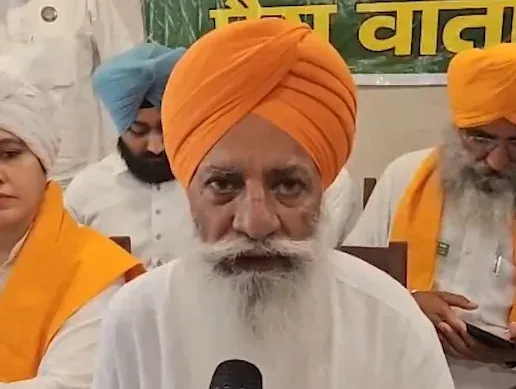
Bhartiya Kisan Union (Charuni) National President Gurnam Singh Charuni on Saturday, 20 June sharply criticised the proposed US-India trade deal, calling it an “unequal agreement” that could devastate Indian agriculture and reduce the country to economic dependence. Speaking from Chandigarh, Charuni announced a pan-India farmer agitation on 23 June to push back against the pact.
What Charuni Said
The farmer leader argued that the structural asymmetry between the two economies makes any open-trade arrangement inherently skewed. “The trade deal is an unequal agreement. America is a bigger nation than India, having four times less population than us,” Charuni said.
He warned that if India accepts American conditions capping its ability to set export limits or levy tariffs, US agricultural produce — priced lower due to heavy subsidies — would flood Indian markets. “Indian farmers won’t be able to compete with them,” he cautioned.
Fears Over GM Crops and Land Loss
Charuni raised additional concerns about the nature of imported farm produce, warning that it would largely be Genetically Modified (GM), which he said “might cause diseases.” He further cautioned that financially squeezed farmers would be “compelled to sell their lands, which will be bought by companies which will benefit from those.” In his assessment, this trajectory would make “India an economic slave.”
June 23 Agitation Plans
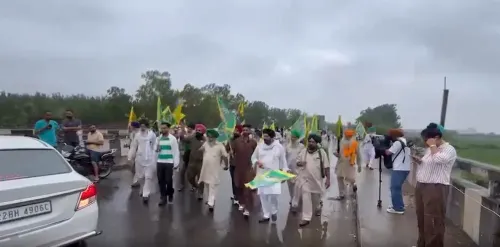
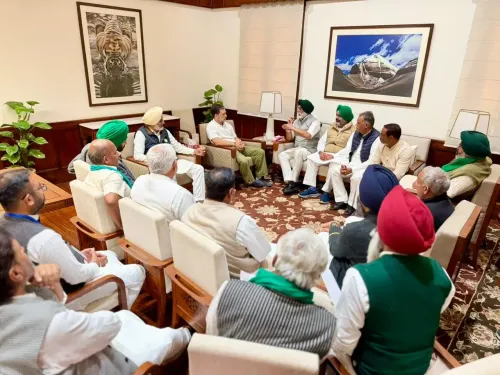
Charuni announced that protests will be staged across all cities on 23 June, with demonstrators displaying black flags. A national-level meeting of representatives from all farmer unions has also been called on the same day in Chandigarh, where a decision will be taken on launching a large-scale agitation comparable to the landmark 2020–2021 farmers’ protest.
Letters have reportedly been dispatched to all Union Ministries connected with the trade negotiations and to the American Embassy in India, demanding that the agreement be immediately halted.
Government’s Position
The Ministry of External Affairs (MEA) stated on Thursday that Prime Minister Narendra Modi met US President Donald Trump on the sidelines of the G7 Summit in Evian, France, where the two leaders discussed “significant progress” in the India-US interim trade deal alongside defence, strategic technologies, energy, and bilateral cooperation. The government’s framing stands in stark contrast to the farmer unions’ alarm, underscoring the political fault lines the deal is opening up.
This comes amid a broader pattern of farm-sector anxiety over trade liberalisation — a concern that helped fuel the 2020–2021 agitation, which ultimately forced the Centre to roll back three contentious farm laws. Whether the June 23 mobilisation gains similar momentum will depend on how many unions rally behind Charuni’s call.
Point of View
Suggesting the farm lobby is not waiting to read the fine print. The government’s framing of ‘significant progress’ at the G7 is calibrated for diplomatic optics, not domestic agricultural constituencies. The real tension is structural — any trade deal that exposes Indian agriculture to heavily subsidised American produce will face this resistance regardless of what the text says. New Delhi will need a credible ring-fencing mechanism for farm goods, or it risks another prolonged standoff at the borders of the capital.
NationPress
19 Sept 2026
Frequently Asked Questions
Why is Gurnam Singh Charuni opposing the US-India trade deal?
Charuni argues the deal is structurally unequal because the US, with a far smaller population, produces subsidised farm goods that Indian farmers cannot competitively match. He also warns that imported produce will be Genetically Modified and that the deal could force Indian farmers to sell their land to corporations.
What is planned for the 23 June farmer protest?
Black flag demonstrations are planned in cities across India on 23 June. A national meeting of all farmer union representatives will also be held in Chandigarh on the same day to decide on launching a large-scale agitation similar to the 2020–2021 farmers’ protest.
What is the government’s position on the US-India trade deal?
The Ministry of External Affairs confirmed that Prime Minister Narendra Modi discussed ‘significant progress’ on the India-US interim trade deal with US President Donald Trump at the G7 Summit in Evian, France. The government has not publicly addressed the farmer unions’ specific concerns.
Who is Gurnam Singh Charuni?
Gurnam Singh Charuni is the National President of the Bhartiya Kisan Union (Charuni), a prominent farmer organisation. He was a key figure in the 2020–2021 farmers’ protest against the Centre’s farm laws, which were eventually repealed.
What are the concerns about GM crops in the trade deal?
Charuni has warned that agricultural imports from the US under the proposed deal would largely consist of Genetically Modified (GM) produce, which he claims could pose health risks. India currently has strict regulations on GM food crops, and any trade agreement that eases those restrictions would be deeply contentious.