Fuel Crisis Cripples Quetta Police Patrolling, Residents Fear Crime Surge
Synopsis
Quetta's police stations are receiving just 70 litres of fuel per month — enough for barely four days of patrolling. With patrol vehicles parked for most of the month, vast parts of Pakistan's Balochistan capital are left without police cover, as a national energy crisis triggered by West Asia conflict deepens on-ground safety failures.
Key Takeaways
Quetta police stations are receiving only 70 litres of fuel per month , enough for fewer than four days of patrol vehicle operation.
A daily allocation of just two litres of fuel per station has effectively halted routine patrolling across Balochistan's provincial capital.
Large parts of Quetta are left without regular police presence for over three weeks every month , raising serious public safety concerns.
Pakistan PM Shehbaz Sharif announced nationwide energy conservation measures on April 6 , mandating market closures by 8 pm across most provinces from April 7 .
The fuel crisis coincides with Pakistan's national energy emergency triggered by the escalating conflict in West Asia affecting petroleum supplies.
Medical stores and pharmacies have been exempted from Pakistan's energy conservation closure orders, but no such exemption has been reported for police fuel allocations.
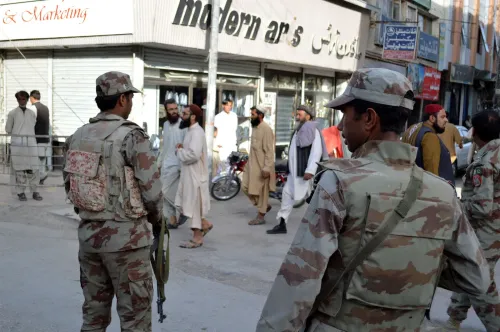
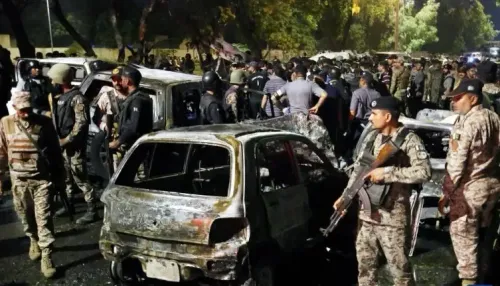
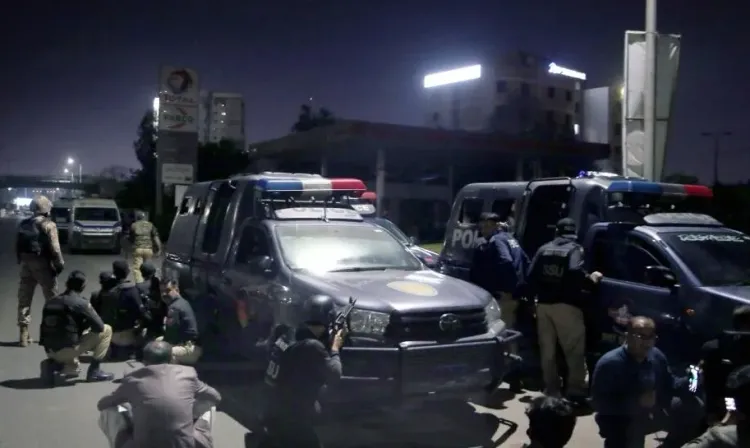
Quetta, April 23 — A severe fuel shortage has effectively paralysed routine police patrolling in Quetta, Balochistan's provincial capital, raising alarm among residents over a looming surge in crime and dangerously delayed emergency response times. Police stations across the city are receiving critically inadequate petrol and diesel allocations, leaving patrol vehicles stationary for most of the month, according to Pakistan's The Express Tribune.
How Severe Is the Fuel Shortage?
The scale of the crisis is stark. Each police station in Quetta is being allotted only 70 litres of petrol and diesel per month — a quantity that officials themselves admit cannot keep a single patrol vehicle operational for more than four days. For the remaining 26-plus days, the majority of patrol vehicles sit idle and parked.
The situation is compounded by a dysfunctional daily allocation system under which individual stations receive as little as two litres of fuel per day for all patrol duties combined. To put that in perspective, a standard police patrol vehicle typically consumes between 8 to 12 litres per 100 kilometres, making two litres per day operationally meaningless for any meaningful coverage of an urban area the size of Quetta.
The result: large swathes of Quetta are going without any regular police presence for extended periods each month, a situation that law enforcement experts widely regard as an open invitation to criminal elements.
Ground-Level Impact on Public Safety
Residents of Quetta have expressed growing anxiety over the absence of visible policing. Without routine patrols, response times to emergencies — robberies, assaults, accidents — are expected to increase significantly, as officers would need to mobilise from stationary positions rather than intercept incidents en route.
Criminal networks, particularly those involved in street crime, vehicle theft, and extortion, are most likely to exploit predictable gaps in police coverage. Balochistan already faces complex internal security challenges, and a degraded urban policing capability adds another layer of vulnerability for ordinary citizens.
Community leaders and local residents have reportedly urged authorities to urgently resolve the fuel supply issue, warning that the vacuum left by absent patrols could take weeks to reverse even after fuel supplies are restored, as criminal actors tend to consolidate gains made during periods of reduced enforcement.
Pakistan's Energy Conservation Measures: The Bigger Picture
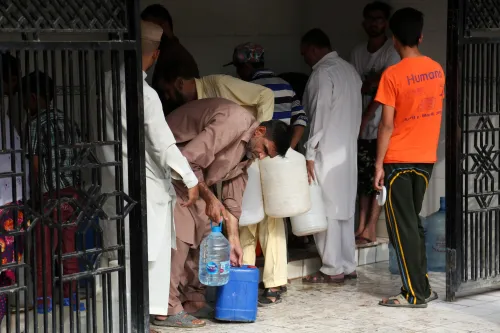
The fuel crunch in Quetta's police department does not exist in isolation. It comes against the backdrop of sweeping energy conservation measures announced by Pakistan's federal government on April 6, following the escalation of conflict in West Asia and its impact on petroleum product availability and pricing.
A high-level meeting chaired by Pakistan Prime Minister Shehbaz Sharif decided to enforce mandatory early closures of markets and commercial establishments across most provinces. Effective April 7, markets, shopping malls, departmental stores, and daily-use goods shops in Punjab, Khyber Pakhtunkhwa, Balochistan, Islamabad, Pakistan-occupied Gilgit Baltistan (PoGB), and Pakistan-occupied Kashmir (PoK) are required to shut by 8 pm. Sindh was exempted from this particular directive.
Under the same framework, markets in Khyber Pakhtunkhwa may remain open until 9 pm, while bakeries, restaurants, tandoors, food outlets, and marriage halls must close by 10 pm. Wedding celebrations at private properties and homes are restricted after 10 pm. Medical stores and pharmacies have been explicitly excluded from these restrictions.
Contradictions and Systemic Failures
The irony is difficult to ignore: a government implementing nationwide energy conservation measures ostensibly to manage a national resource crisis is simultaneously failing to ensure that its own frontline law enforcement agencies have enough fuel to perform their most basic constitutional duty — protecting citizens.
This points to a deeper structural problem in Balochistan's public administration. The province has historically received disproportionately low allocations of federal resources relative to its geographic size and security demands. Balochistan is Pakistan's largest province by area, yet consistently ranks lowest on public service delivery indices. The fuel shortage affecting Quetta police is, in many ways, a microcosm of this chronic underfunding.
Notably, this is not the first time operational constraints have hampered policing in Balochistan. Reports of inadequate equipment, understaffing, and resource shortfalls have surfaced repeatedly over the past several years, often during periods of heightened security stress. The current crisis, however, is particularly acute given that it is unfolding during a period when the federal government has itself acknowledged a national energy emergency.
What Happens Next
Unless Balochistan's provincial government or the federal administration intervenes with an emergency fuel allocation specifically earmarked for law enforcement, the patrolling vacuum in Quetta is likely to persist and potentially worsen. Civil society groups and opposition politicians in the province are expected to escalate pressure on the government to prioritise police fuel supplies as a non-negotiable public safety expenditure.
The broader energy situation in Pakistan will also depend heavily on developments in West Asia — any further escalation in that region could tighten petroleum supplies further, deepening the crisis. Residents and security analysts will be watching closely whether the government treats policing fuel as an essential service exempted from conservation cuts, or allows the current dangerous status quo to continue.
Point of View
While essential services quietly collapse. For ordinary Quetta residents, the absence of police patrols is not a policy statistic — it is a daily lived risk.
NationPress
16 Sept 2026
Frequently Asked Questions
Why has police patrolling stopped in Quetta?
Police patrolling in Quetta has been disrupted due to a severe fuel shortage, with each police station receiving only 70 litres of petrol and diesel per month. Officials say this quantity is insufficient to keep a patrol vehicle operational for even four days, leaving most vehicles parked for the rest of the month.
How much fuel are Quetta police stations getting per day?
Under the current daily allocation system, Quetta police stations are receiving just two litres of fuel per day for patrol duties. This is far below the operational requirement of any standard patrol vehicle, effectively making routine patrolling impossible.
What are Pakistan's energy conservation measures announced in April 2025?
On April 6, Pakistan's federal government under PM Shehbaz Sharif announced mandatory closure of markets and malls by 8 pm in Punjab, Khyber Pakhtunkhwa, Balochistan, Islamabad, PoGB, and PoK, effective April 7. Restaurants and food outlets must close by 10 pm, while medical stores are exempt.
What is the impact of the fuel shortage on public safety in Quetta?
The absence of regular police patrols leaves large parts of Quetta without police presence for most of the month, creating opportunities for criminal activity and significantly delaying emergency response times. Residents have raised concerns about rising crime and reduced personal safety.
Is the fuel shortage affecting police in other parts of Balochistan?
Reports specifically highlight police stations across Quetta, Balochistan's provincial capital, as being affected by inadequate fuel allocations. Given Balochistan's historically low resource allocations, similar constraints may exist in other districts, though current reports focus on Quetta.