Garo Hills gets first public NICU as Tura hospital expands to 150 beds

Synopsis
Garo Hills has long lacked critical neonatal infrastructure — that changes with the inauguration of Meghalaya's first public NICU at the expanded Tura District Maternity and Child Hospital. With maternal deaths in the state reportedly halved over five years and a new 50-bed wing now operational, the region's healthcare gap is narrowing in a concrete, measurable way.
Key Takeaways
Chief Minister Conrad K.
Sangma inaugurated the expanded District Maternity and Child Hospital in Tura on 21 September 2026 .
A new 50-bed wing brings the hospital's total capacity to 150 beds .
The expansion includes Garo Hills' first public NICU , an upgraded SNCU , a dedicated oxygen plant , and specialist residential quarters.
Meghalaya's maternal deaths have reportedly fallen from 244 to 107 over five years, a decline of more than half.
The facility is aligned with Mission 1,000 Days , the state's maternal and child health and nutrition initiative.
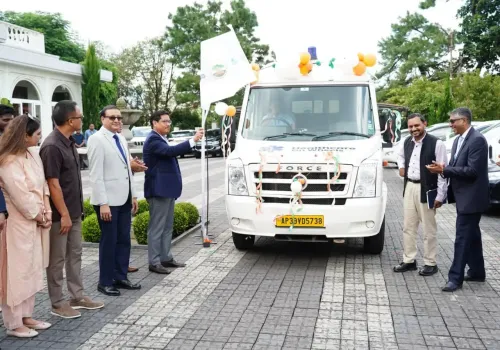
Meghalaya Chief Minister Conrad K. Sangma on Monday, 21 September 2026, inaugurated the expanded District Maternity and Child Hospital in Tura, adding a new 50-bed wing to bring the facility's total capacity to 150 beds. The expansion gives Garo Hills its first-ever public Neonatal Intensive Care Unit (NICU) — a milestone for a region that has long depended on out-of-area referrals for critical newborn care.
What the Expanded Facility Now Offers
The upgraded hospital includes an enhanced Special Newborn Care Unit (SNCU), a dedicated oxygen plant, and residential quarters for medical specialists — infrastructure designed to retain skilled clinicians within the region. The addition of on-site specialist accommodation addresses a persistent challenge in remote healthcare delivery, where recruitment is often undermined by the absence of adequate housing.
Maternal Health Progress in Meghalaya
Chief Minister Sangma used the occasion to highlight measurable gains in the state's maternal health record. Maternal deaths in Meghalaya have reportedly declined by more than half over five years, falling from 244 to 107, according to state government data. Sangma said the expanded Tura hospital would further accelerate this progress.
'The expansion of the Tura facility will strengthen our capacity to provide specialised care to mothers and newborns and ensure that people can access quality healthcare closer to home,' he stated at the inauguration.
Mission 1,000 Days and Broader Healthcare Push
The expanded facility has been aligned with the state government's Mission 1,000 Days, an initiative targeting maternal health, nutrition, and child development from pregnancy through the first two years of a child's life. Officials said the Tura hospital expansion complements ongoing state-level efforts to improve connectivity, infrastructure, livelihoods, and opportunities for residents across the Garo Hills region.
Why This Matters for Garo Hills
Garo Hills, a geographically distinct and historically underserved region of Meghalaya, has historically lacked tertiary maternal care infrastructure within its boundaries. Families requiring specialised neonatal support were routinely required to travel to Shillong or beyond, adding cost, time, and risk to already vulnerable situations. The commissioning of a public NICU changes that equation — at least for neonatal and maternal emergencies — and represents the most significant healthcare infrastructure addition to the region in recent years. Whether the new unit is adequately staffed and sustainably funded will determine its real-world impact.
Point of View
Equipment maintenance, and supply chain reliability in a geographically challenging area. The state's claim of halving maternal deaths deserves scrutiny: the absolute numbers are still high relative to India's national targets, and the data should be independently verified before being used as a headline achievement. Mission 1,000 Days is a well-designed framework, but its outcomes will hinge on last-mile implementation far from Shillong's administrative gaze.
NationPress
21 Sept 2026
Frequently Asked Questions
What is the new NICU inaugurated in Tura, Meghalaya?
The Neonatal Intensive Care Unit (NICU) at the District Maternity and Child Hospital in Tura is Garo Hills' first public NICU, inaugurated on 21 September 2026 by Chief Minister Conrad K. Sangma. It is part of a broader hospital expansion that added a 50-bed wing, taking total capacity to 150 beds.
How has Meghalaya's maternal health improved in recent years?
According to state government data, maternal deaths in Meghalaya have declined by more than half over five years, from 244 to 107. Chief Minister Sangma cited this progress at the Tura hospital inauguration as evidence of improving maternal healthcare outcomes across the state.
What is Mission 1,000 Days in Meghalaya?
Mission 1,000 Days is a Meghalaya government initiative focused on maternal health, nutrition, and child development from pregnancy through the first two years of a child's life. The expanded Tura facility has been aligned with this programme to strengthen frontline maternal and neonatal care in Garo Hills.
What other facilities does the expanded Tura hospital include?
Beyond the NICU, the expanded hospital features an upgraded Special Newborn Care Unit (SNCU), a dedicated oxygen plant, and residential quarters for medical specialists to support recruitment and retention of skilled clinicians within the Garo Hills region.
Why is a public NICU significant for Garo Hills?
Garo Hills previously lacked a public NICU, meaning families with critically ill newborns had to travel outside the region — often to Shillong — for specialised neonatal care. The new unit is intended to reduce that burden and improve survival outcomes for vulnerable newborns within the region.