CM Conrad Sangma Reviews Meghalaya Health Sector, Eyes 90% Institutional Deliveries
Synopsis
Meghalaya CM Conrad Sangma and Health Minister Wailadmiki S reviewed the state's health sector on July 16, 2026, citing NFHS-6 gains in maternal health and setting a target of over 90% institutional deliveries, while planning to expand the Community Caregiver Initiative and intensify NCD awareness.
Key Takeaways
CM Conrad Sangma and Health Minister Wailadmiki S conducted a state health sector review on July 16, 2026 .
The CM Safe Motherhood Scheme (CM-SMS) has driven a reduction in maternal deaths through transport support for institutional deliveries.
NFHS-6 data showed encouraging improvements in Meghalaya's maternal and child health indicators compared to NFHS-5 .
The state has set a target of over 90% institutional deliveries , up from current levels.
The review covered first-trimester registration, IFA supplementation, antenatal and postnatal care via ANMs, ASHA, and Anganwadi workers.
Expansion of the Community Caregiver Initiative with Village Organisations and SHGs , and intensified awareness on hypertension and NCDs , were also discussed.
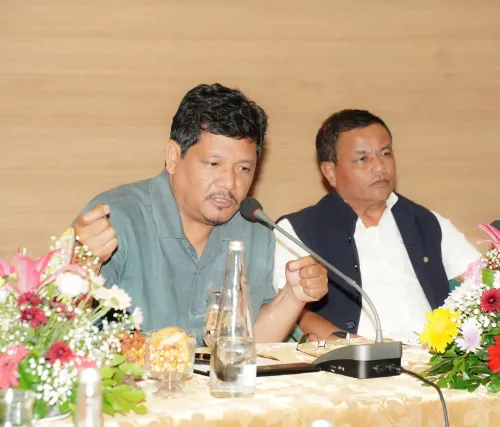
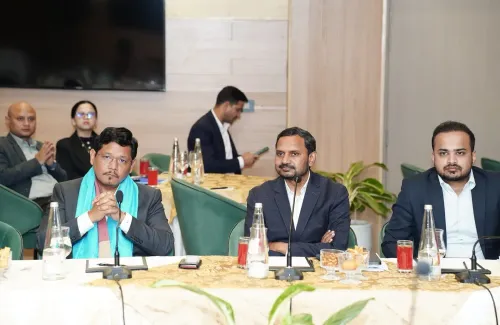
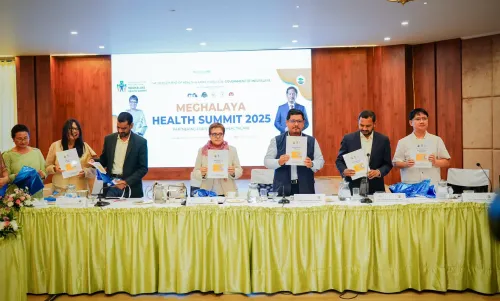
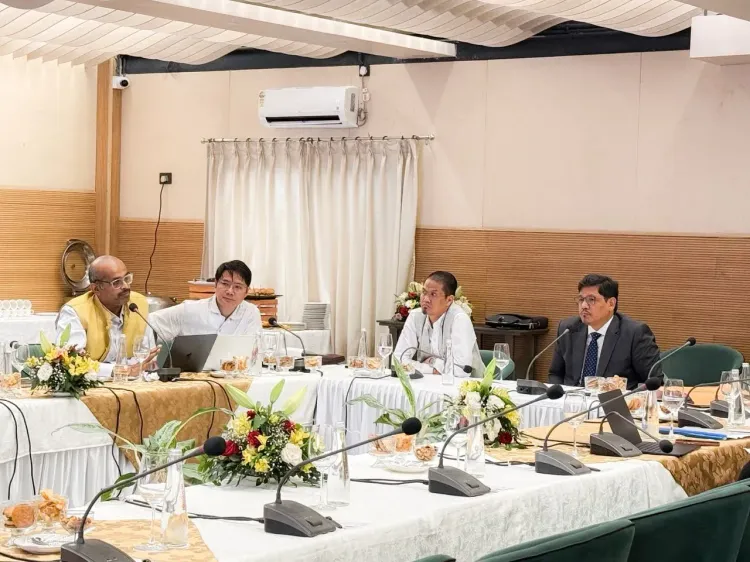
Meghalaya Chief Minister Conrad Sangma on Thursday, July 16, 2026, conducted a comprehensive review of the state's health sector alongside Health Minister Wailadmiki S, focusing on improving healthcare outcomes and strengthening service delivery across Meghalaya. The review assessed key health indicators under the Meghalaya Health Insurance Scheme (MHIS) and drew on encouraging data from the National Family Health Survey-6 (NFHS-6), which showed a reduction in maternal deaths driven by higher institutional deliveries.
Context
In his post, CM Sangma stated that the review 'focused on improving healthcare outcomes and strengthening service delivery across the State.' A central highlight was the progress recorded under the CM Safe Motherhood Scheme (CM-SMS), which provides transport support to pregnant women to encourage institutional deliveries. While the scheme has yielded significant improvements, CM Sangma set an ambitious target: 'Our goal is to increase this to over 90%.'
The review also addressed gaps in first-trimester registration, timely supply of iron and folic acid (IFA) supplementation for pregnant women, and the strengthening of antenatal and postnatal care through frontline workers including ANMs, ASHA workers, and Anganwadi workers.
Policy Backdrop
The CM Safe Motherhood Scheme is part of a broader push under the National Health Mission (NHM) framework, through which northeastern states have prioritised maternal and child health using targeted transport and community-worker interventions. NFHS-5 (2019-21) had recorded notable gaps in Meghalaya's institutional delivery rates and maternal health indicators, making the improvements reflected in NFHS-6 a significant policy milestone for the state.
The review also covered the Community Caregiver Initiative, which the state plans to expand with support from Village Organisations and Self-Help Groups (SHGs). This community-level architecture mirrors models promoted under the NHM to extend last-mile healthcare reach in hilly, remote terrain.
Stakeholders and Impact
The primary beneficiaries of these measures are pregnant women, newborns, and young children across Meghalaya. CM Sangma highlighted the promotion of exclusive breastfeeding for the first six months, adequate nutrition, and birth spacing as key child-nutrition priorities discussed during the review.
The review also flagged the growing burden of non-communicable diseases (NCDs), particularly hypertension, with a push for lifestyle-based and preventive healthcare awareness campaigns. Frontline workers — ANMs, ASHA workers, and Anganwadi workers — remain the backbone of delivery for all these interventions. The post was also addressed to JP Nadda, senior BJP leader and former Union Health Minister, signalling coordination with central health policy leadership.
What's Next
The state government is expected to pursue district-level refinements based on NFHS-6 findings, with particular attention to lagging pockets where first-trimester registration and IFA coverage remain low. Expansion of the Community Caregiver Initiative through Village Organisations and SHGs will be a key operational priority in the coming months.
With the 90% institutional delivery target now publicly stated, Meghalaya's health administration faces a clear benchmark. Progress on this goal — alongside NCD prevention outcomes — is likely to shape the state's health budget allocations and its performance under centrally-sponsored schemes in the near term.
Point of View
Addressed directly to JP Nadda, reads as a deliberate signal of alignment between Meghalaya's NPP-led government and the BJP-controlled Union health establishment — a pattern common among NDA allies seeking central scheme support. The 90% institutional delivery target is politically smart: it is ambitious enough to project momentum but tied to an existing scheme with a measurable baseline, insulating the government from charges of vagueness. The emphasis on community-level actors — SHGs, Village Organisations, ASHA workers — reflects a broader northeastern governance philosophy of using social capital to bridge the last mile where infrastructure is thin. However, the omission of specific NFHS-6 figures, while perhaps deliberate given data sensitivity, leaves the scale of improvement open to scrutiny.
NationPress
15 Oct 2026
Frequently Asked Questions
What is the CM Safe Motherhood Scheme in Meghalaya?
The CM Safe Motherhood Scheme (CM-SMS) is a Meghalaya government initiative that provides transport support to pregnant women to encourage institutional deliveries, helping reduce maternal mortality across the state.
What did NFHS-6 show about Meghalaya's health indicators?
NFHS-6 recorded encouraging improvements in Meghalaya's maternal and child health indicators, including a reduction in maternal deaths driven by higher rates of institutional deliveries, compared to the gaps identified in NFHS-5 (2019-21).
What is Meghalaya's target for institutional deliveries?
CM Conrad Sangma has set a target of over 90% institutional deliveries in Meghalaya, a significant increase from current levels, to further reduce maternal mortality in the state.
What is the Community Caregiver Initiative in Meghalaya?
The Community Caregiver Initiative is a Meghalaya health programme aimed at extending last-mile healthcare reach, which the state plans to expand with support from Village Organisations and Self-Help Groups (SHGs).
Why was JP Nadda tagged in CM Sangma's health review post?
CM Sangma tagged JP Nadda, senior BJP leader and former Union Health Minister, in his post, signalling coordination between Meghalaya's state health priorities and central government health policy leadership.