GeM launches AABHAR Collection to boost artisans, handicrafts on government platform

Synopsis
GeM has quietly built a dedicated marketplace within a marketplace — the AABHAR Collection brings 294 listings from 10 state and central emporiums onto a single government procurement storefront, turning official gifting into a direct revenue channel for India's artisans, weavers, and women-led rural enterprises.
Key Takeaways
Government e-Marketplace (GeM) launched 'The AABHAR Collection' on 26 October 2025 , a dedicated digital storefront for indigenous gifting products.
The collection features 294 product catalogue listings from 10 State and Central Handloom and Handicraft Emporiums .
Products include ODOP -linked items and those carrying Geographical Indication (GI) tags.
Seven additional emporiums are at an advanced stage of onboarding to expand the storefront.
The initiative supports artisans, weavers, rural entrepreneurs, and women-led enterprises by linking them to government procurement.
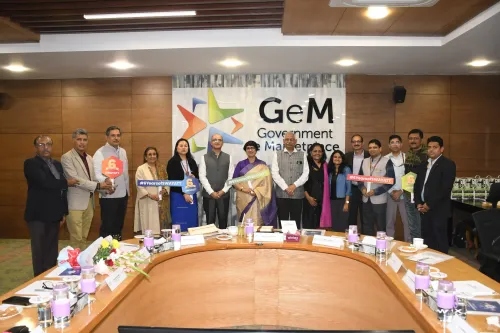
The Government e-Marketplace (GeM) has launched 'The AABHAR Collection', a dedicated digital storefront on its platform offering curated gift items and hampers that celebrate India's artisanal and cultural heritage. The initiative, announced on Monday, 26 October 2025, aims to integrate the country's artisanal ecosystem into public procurement, giving government buyers a structured channel for indigenous gifting while supporting local livelihoods.
What the AABHAR Collection Offers
The storefront features 294 product catalogue listings drawn from 10 State and Central Handloom and Handicraft Emporiums. The range spans handicrafts, handlooms, artisanal foods, pantry staples, and personal care items — all curated for use in official ceremonies, conferences, state events, foreign delegation receptions, employee recognition, retirement functions, and festive occasions.
Products associated with the One District, One Product (ODOP) initiative and items carrying Geographical Indication (GI) tags form a core part of the catalogue, offering government buyers direct access to regionally distinct, certified products.
Emporiums and Organisations on the Platform
The participating emporiums include COTTAGE from the Central Cottage Industries Emporium, KHADI INDIA from the Khadi and Village Industries Commission, Garvi Gurjari (Gujarat), Himcrafts (Himachal Pradesh), Jharcraft (Jharkhand), Cauvery (Karnataka), Mrignayani (Madhya Pradesh), Marhati (Maharashtra), Purbashree (North-East), and Poompuhar (Tamil Nadu), according to the Commerce Ministry.
An additional seven government emporiums and organisations are reportedly at an advanced stage of completing seller onboarding, which will expand the collection's product breadth further.
What Officials Said
Mihir Kumar, Chief Executive Officer of GeM, described the launch as 'an important milestone in enhancing visibility of indigenous arts and crafts, showcasing the rich tapestry of Indian heritage and culture, and empowering underserved seller groups through the network of Central and State Handicraft and Handloom Emporiums.'
Ajit B. Chavan, Additional Chief Executive Officer of GeM, said the intent was to 'provide an effective market linkage to the country's artisanal ecosystem by integrating them through this #VocalForLocal storefront on GeM with the country's public procurement landscape.'
Who Benefits and Why It Matters
The AABHAR Collection is designed to serve Ministries, Departments, public sector undertakings (PSUs), and other government entities that collectively represent one of the largest procurement pools in the country. By channelling even a portion of official gifting spend toward certified indigenous products, the initiative creates a demand-side push for artisans, weavers, rural entrepreneurs, and women-led enterprises who might otherwise struggle to access institutional buyers.
This comes amid a broader push by the Centre to align government procurement with domestic production goals, building on the Make in India and Vocal for Local frameworks that have shaped policy since 2014.
What Comes Next
With seven more emporiums in the pipeline for onboarding, the catalogue is expected to grow significantly in the coming weeks. The platform's integration with GeM's existing procurement infrastructure means government buyers can complete transactions without additional vendor empanelment, lowering the adoption barrier.
Point of View
It redirects existing government gifting spend toward certified artisanal products. The real test is scale: 294 listings across 10 emporiums is a starting point, not a market. If adoption by Ministries and PSUs remains voluntary and unmeasured, the storefront risks becoming a well-intentioned catalogue with thin transactional impact. The ODOP and GI linkages are the scheme's strongest structural element — they give buyers a quality signal without additional due diligence. The question is whether procurement officers will prioritise cultural heritage over convenience when deadline pressure mounts.
NationPress
26 Oct 2026
Frequently Asked Questions
What is the AABHAR Collection on GeM?
The AABHAR Collection is a dedicated digital storefront on the Government e-Marketplace (GeM) that offers curated handicrafts, handlooms, artisanal foods, and personal care products for official government gifting. It was launched on 26 October 2025 and features 294 product listings from 10 state and central emporiums.
Which emporiums are part of the AABHAR Collection?
The collection includes products from COTTAGE (Central Cottage Industries Emporium), KHADI INDIA (Khadi and Village Industries Commission), Garvi Gurjari (Gujarat), Himcrafts (Himachal Pradesh), Jharcraft (Jharkhand), Cauvery (Karnataka), Mrignayani (Madhya Pradesh), Marhati (Maharashtra), Purbashree (North-East), and Poompuhar (Tamil Nadu). Seven more emporiums are in the process of onboarding.
Who can buy from the AABHAR Collection?
Government buyers — including Ministries, Departments, public sector undertakings (PSUs), and other government entities — can purchase from the AABHAR Collection through the GeM platform for official ceremonies, conferences, state events, foreign delegations, employee recognition, and festive occasions.
How does the AABHAR Collection support artisans?
By integrating artisans, weavers, rural entrepreneurs, and women-led enterprises into the government's public procurement ecosystem, the collection provides a stable institutional demand channel. Products linked to the ODOP initiative and GI-tagged items receive particular prominence, giving regional craft clusters direct access to large-scale government buyers.
What is the connection between the AABHAR Collection and Vocal for Local?
The AABHAR Collection is positioned as a 'Vocal for Local' storefront on GeM, aligning with the Centre's broader policy of channelling government spending toward domestically produced, indigenous goods. It builds on the Make in India and Vocal for Local frameworks to make public procurement a driver of artisanal livelihoods.