How is the Girl Child Ratio Changing in Jesar Taluka of Bhavnagar District?

Synopsis
The latest data reveals a significant uplift in the girl child ratio in Jesar taluka, Bhavnagar district, thanks to focused government initiatives. This remarkable progress not only highlights the success of welfare schemes but also marks a transformative shift in societal attitudes towards daughters, showcasing their vital role in a progressive society.
Key Takeaways
The girl child ratio in Jesar taluka is now 1,075 per 1,000 boys.
Government initiatives are effectively changing societal perceptions regarding the birth of girls.
Awareness campaigns and financial incentives have contributed significantly to this success.
Monitoring of sonography centers is crucial to prevent gender bias.
The progress serves as a model for other regions aiming for gender equality.
Bhavnagar, Dec 18 (NationPress) Government initiatives focused on enhancing the birth, education, and empowerment of the girl child are making significant strides, particularly in Jesar taluka of Bhavnagar district, as reported by officials.
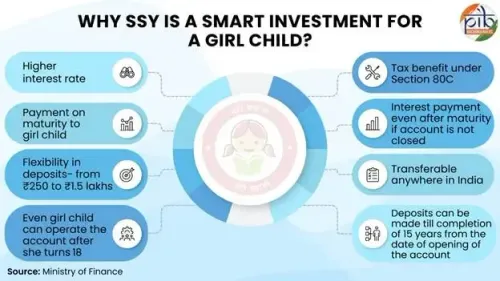
Key programs such as the Centre’s Beti Bachao, Beti Padhao scheme and state initiatives like Sukanya Samriddhi Yojana and Vahli Dikri Yojana have been instrumental in transforming social norms and bolstering support systems for girls.
Consequently, Jesar taluka has seen a remarkable increase in the number of female births. According to data published by the Health Department of the Bhavnagar District Panchayat, the girl child ratio in Jesar taluka for the period of 2024–25 has surged to 1,075.
This indicates that for every 1,000 boys born in the taluka, there were 1,075 girls born, a promising sign of positive demographic change.
Local women credit this success to persistent awareness campaigns and welfare-driven governance under Chief Minister Bhupendra Patel's leadership.
They believe that government actions supporting the upbringing, education, and future security of daughters have enabled families to overcome long-standing prejudices and embrace the birth of girls.
Officials attribute this growth to ongoing efforts by the state administration and local governance.
In addition to awareness programs aimed at eradicating gender bias, rigorous monitoring of sonography centers is being implemented to curb illegal prenatal sex determination.
Health authorities emphasize that comprehensive support—from financial incentives at birth to educational assistance and career guidance—has collectively fostered this improvement.
The advancements made in Jesar taluka illustrate how effective policy intervention and community involvement can lead to substantial social change.
The increasing girl child ratio in Jesar taluka sends a strong message: daughters are a treasure, not a burden, and are essential components of a balanced and progressive society.
Point of View
Our commitment remains with Nation and its progress. The notable rise in the girl child ratio in Jesar taluka reflects the effectiveness of government policies and initiatives aimed at promoting gender equality. This success story not only celebrates the value of daughters but also serves as a model for other regions to adopt similar strategies for social transformation.
NationPress
2 Sept 2026
Frequently Asked Questions
What is the current girl child ratio in Jesar taluka?
The girl child ratio in Jesar taluka has reached 1,075 girls for every 1,000 boys born.
Which government schemes have contributed to this improvement?
Key schemes include the Beti Bachao, Beti Padhao, Sukanya Samriddhi Yojana, and Vahli Dikri Yojana.
What factors have led to the increased birth of girls?
Sustained awareness drives, government support, and community involvement have all played crucial roles.
How is the government monitoring gender discrimination?
The government is implementing strict monitoring of sonography centers to prevent illegal prenatal sex determination.
What does the rise in girl child ratio signify?
It signifies a positive demographic change and a shift in societal attitudes towards the value of daughters.