Beti Bachao Beti Padhao lifts Sex Ratio at Birth to 929 in 2025-26
Synopsis
India's Sex Ratio at Birth has climbed 11 points — from 918 to 929 — over a decade under the Beti Bachao Beti Padhao scheme, with girl enrolment at secondary level crossing 83% nationally. The numbers suggest behavioural interventions are working, but Delhi's SRB of 915 still trails the national average, underscoring uneven progress.
Key Takeaways
India's Sex Ratio at Birth (SRB) rose from 918 in 2014-15 to 929 in 2025-26 (provisional), per HMIS data.
Beti Bachao Beti Padhao (BBBP) has been expanded to cover all districts under the SAMBAL vertical of Mission Shakti in the 15th Finance Commission period.
Delhi's SRB improved from 901 to 915 between 2014-15 and 2025-26 (provisional), still below the national average.
Girls' gross enrolment ratio at secondary level rose from 75.51% to 83.4% nationally over the same period.
Delhi's girls' secondary enrolment ratio surged from 99.13% to 108.3% in 2025-26.
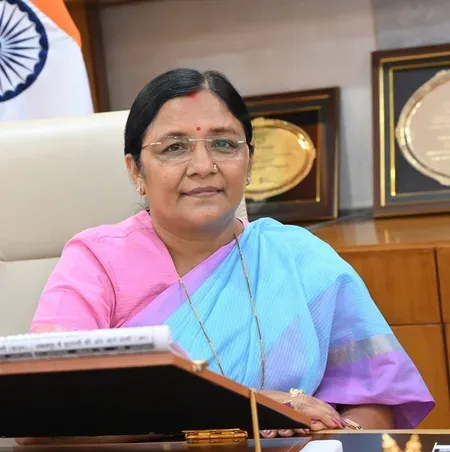
Minister Savitri Thakur shared the data in a written reply to the Lok Sabha on 31 July .
Union Minister of State for Women and Child Development Savitri Thakur informed the Lok Sabha on 31 July that the Beti Bachao Beti Padhao (BBBP) scheme has made measurable progress in addressing the Child Sex Ratio (CSR) across India. Citing the latest data from the Health Management Information System (HMIS) of the Ministry of Health and Family Welfare (MoHFW), she said the Sex Ratio at Birth (SRB) at the national level has risen from 918 in 2014-15 to 929 in 2025-26 (provisional).
What the BBBP Scheme Does
The BBBP scheme, according to Thakur, works to create mindset and behavioural changes in how the girl child is perceived — by informing, influencing, motivating, engaging, and empowering stakeholders across society. She noted that the scheme has evolved from a policy initiative into what the government describes as a national movement, mobilising government agencies, media, civil society, and the general public.
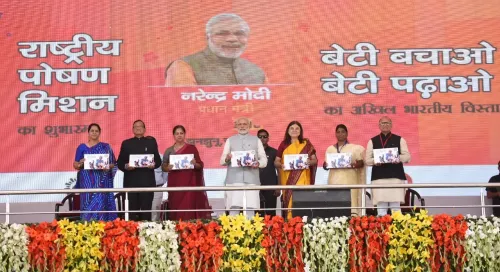
Under the 15th Finance Commission period, BBBP has been integrated as a component under the SAMBAL vertical of Mission Shakti, expanding its coverage to all districts of the country through multi-sectoral interventions. The restructured framework is designed to encourage greater spending on activities with demonstrable on-ground impact.
Delhi's Progress on Sex Ratio
Sharing district-level data, Thakur highlighted that in the Union Territory of Delhi, the Sex Ratio at Birth has improved from 901 in 2014-15 to 915 in 2025-26 (provisional) — a gain of 14 points over a decade. While the improvement is notable, Delhi's SRB still trails the national average of 929, indicating room for further progress.
Girl Enrolment Ratios Rise Nationally and in Delhi
On the education front, Thakur cited UDISE data from the Ministry of Education, showing that the gross enrolment ratio (GER) of girls at the secondary school level nationally has climbed from 75.51% in 2014-15 to 83.4% in 2025-26. In Delhi specifically, the GER for girls at the secondary level has risen sharply from 99.13% in 2014-15 to 108.3% in 2025-26 — a figure above 100%, which typically reflects enrolment of over-age or repeating students alongside the standard cohort.
Broader Significance
This comes amid sustained concern over gender-biased sex selection in several Indian states, where SRB figures have historically lagged national averages. The BBBP scheme, launched in 2015, was specifically designed to counter declining child sex ratios recorded in the 2011 Census. The upward national SRB trend, if sustained in the final 2025-26 data, would mark an 11-point improvement over a decade — a signal that behavioural interventions, when paired with legislative enforcement of the Pre-Conception and Pre-Natal Diagnostic Techniques (PCPNDT) Act, can shift long-entrenched patterns. The government is expected to release final 2025-26 SRB figures once the provisional data is validated.
Point of View
But it should not obscure the baseline problem: at 929, India's SRB remains below the biologically normal range of 943-952. Delhi at 915 is a reminder that urban, educated populations are not automatically immune to gender-biased sex selection. The BBBP's expansion to all districts under Mission Shakti is structurally sound, but the scheme's own data — provisional figures that may be revised downward — needs independent validation. The girl enrolment numbers above 100% in Delhi also warrant scrutiny: they reflect statistical artefacts of the GER formula, not a genuine surplus of enrolled girls. Policymakers should be careful not to let headline numbers substitute for granular, district-level accountability.
NationPress
15 Sept 2026
Frequently Asked Questions
What is the Beti Bachao Beti Padhao (BBBP) scheme?
Beti Bachao Beti Padhao is a Government of India scheme launched in 2015 to address declining Child Sex Ratios and promote the welfare and education of the girl child. It operates through multi-sectoral interventions involving the ministries of Women and Child Development, Health, and Education, and has since been integrated under the SAMBAL vertical of Mission Shakti.
How much has India's Sex Ratio at Birth improved under BBBP?
India's Sex Ratio at Birth has risen from 918 in 2014-15 to 929 in 2025-26 (provisional), an improvement of 11 points over a decade, according to HMIS data cited by Minister Savitri Thakur in the Lok Sabha on 31 July.
What is the current Sex Ratio at Birth in Delhi?
Delhi's Sex Ratio at Birth has improved from 901 in 2014-15 to 915 in 2025-26 (provisional). While the trend is positive, Delhi's SRB still falls below the national average of 929.
How has girls' school enrolment changed since BBBP was launched?
The gross enrolment ratio of girls at the secondary school level has risen from 75.51% in 2014-15 to 83.4% in 2025-26 nationally, per UDISE data from the Ministry of Education. In Delhi, the ratio has increased from 99.13% to 108.3% over the same period.
What is the SAMBAL vertical under Mission Shakti?
SAMBAL is one of the two verticals of Mission Shakti, the Government of India's umbrella programme for women's safety, security, and empowerment. Under the 15th Finance Commission period, BBBP was restructured as a component of SAMBAL, extending its reach to all districts in the country.