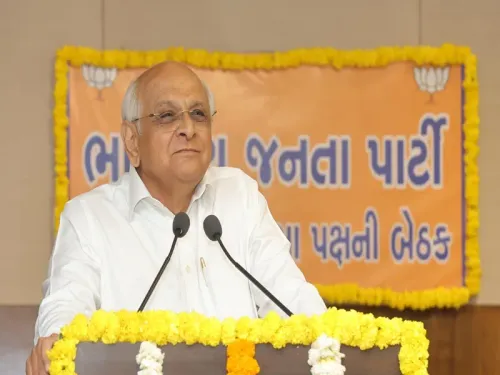
GPSC launches 'Avasar' module for 18,000-plus unselected Class I, II candidates

Synopsis
Gujarat's public service commission has quietly built a talent pipeline that most states ignore: the 18,000-plus candidates who cleared GPSC's toughest filters but narrowly missed the final cut. The 'Avasar' module turns that near-miss pool into a pre-vetted talent database for PSUs and private firms — a model that could redefine how India handles qualified-but-unplaced government exam aspirants.
Key Takeaways
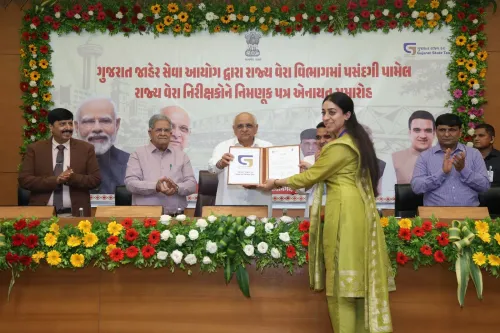
The Gujarat Public Service Commission (GPSC) launched the 'Avasar' digital module on 17 July 2025 in Gandhinagar .
The platform targets more than 18,000 candidates from over 415 Class I and Class II recruitment results declared in the last five years .
Participation is voluntary ; candidates must give online consent via the GPSC-OJAS portal , verified through OTP .
Employers — PSUs, cooperative institutions, and recognised private firms — must sign an undertaking to use candidate data solely for employment purposes.
GPSC Secretary Sudhir Patel clarified that the Commission bears no legal responsibility for placements, salary, or disputes arising from the platform.
Candidates in future GPSC recruitments can opt in at the application stage itself through the GPSC-OJAS portal.
The Gujarat Public Service Commission (GPSC) has launched a new digital platform called 'Avasar', designed to connect more than 18,000 candidates who reached the interview stage of Class I and Class II recruitment processes — but were not selected in the final merit list or remained on waiting lists — with employment opportunities in public sector undertakings, cooperative institutions, and recognised private organisations. The initiative was announced in Gandhinagar on Friday, 17 July.
What the Avasar Module Does
GPSC Secretary Sudhir Patel described the Commission's role as that of a bridge between qualified candidates and potential employers. He emphasised that GPSC would function solely as a facilitator and would bear no legal or official responsibility for recruitment decisions, employment terms, salary, or disputes arising from placements made through the platform.
The module covers candidates from more than 415 Class I and Class II recruitment results declared over the last five years and completed before 1 July 2026. Candidates appearing in future GPSC recruitments will also be able to opt into the initiative at the time of submitting their application forms through the GPSC-OJAS portal.
Why GPSC Believes These Candidates Deserve a Second Path
Patel explained the rationale: candidates who reach the interview stage have already cleared both the Preliminary and Main examinations, demonstrating a level of competence that the Commission believes should not go to waste simply because final merit lists have limited vacancies.
'Candidates who reach the interview stage in the GPSC recruitment process have already cleared both the Preliminary and Main examinations. While they may not have been selected in the final result, they have already proven their competence by reaching the interview stage. GPSC has developed the Avasar module to help such candidates access employment opportunities,' Patel said.
The Commission has categorised its database into administrative, medical, educational, and technical cadres to help organisations identify candidates aligned with their specific requirements.
How Candidates Can Participate
Participation is entirely voluntary. Candidates wishing to make their details available to employers must provide prior online consent through the GPSC-OJAS portal. Those from previous recruitment cycles must enter their advertisement number and confirmation number to submit consent. A retrieval facility is available for candidates who have forgotten their confirmation number.
Consent is completed only after OTP-based verification through the candidate's registered mobile number and email address — a security measure designed to prevent unauthorised sharing of another candidate's information. The information shared will be limited to the candidate's name, mobile number, email address, and educational qualifications.
Data Protection and Employer Obligations
Patel stressed that data protection is central to the initiative. Organisations receiving candidate data must provide an undertaking that the information will be used exclusively for employment-related purposes and will not be shared with third parties or used for any other purpose.
'Organisations receiving candidates' data will be permitted to use it solely for employment-related purposes and not for any other purpose. The complete responsibility for safeguarding the data will rest with the respective organisation,' he said.
Access to the database will be restricted to legally established government departments, public sector undertakings, and private companies recognised by the Commission. After receiving candidate information, organisations will conduct their own shortlisting and selection processes independently of GPSC.
What Comes Next
The Commission has advised eligible candidates to monitor the GPSC's official website and the GPSC-OJAS portal regularly for updates. GPSC has also reserved the authority to amend the rules governing the Avasar initiative at any time. If the module gains traction, it could serve as a replicable model for other state public service commissions grappling with large pools of qualified but unplaced candidates.
Point of View
GPSC is doing something sensible — but the Commission's explicit disclaimer of any responsibility for employment terms raises questions about candidate protection. If an employer misuses data or offers exploitative conditions, candidates have no institutional recourse. The initiative needs a grievance redressal layer, not just an undertaking on paper, to be more than a well-intentioned data-sharing exercise.
NationPress
16 Oct 2026
Frequently Asked Questions
What is the GPSC Avasar module?
The Avasar module is a digital platform launched by the Gujarat Public Service Commission (GPSC) to connect candidates who cleared the interview stage of Class I and Class II recruitments — but were not selected in the final merit list — with employment opportunities in PSUs, cooperative institutions, and recognised private firms. It was announced in Gandhinagar on 17 July 2025.
Who is eligible to register on the Avasar platform?
Candidates from more than 415 Class I and Class II recruitment results declared by GPSC in the last five years and completed before 1 July 2026 are eligible. This covers more than 18,000 candidates who reached the interview stage but were not selected or remained on waiting lists. Future GPSC applicants can also opt in while submitting their application forms.
How does a candidate give consent to share their data on Avasar?
Candidates must log on to the GPSC-OJAS portal and provide online consent. They are required to enter their advertisement number and confirmation number, and consent is finalised only after OTP verification through their registered mobile number and email address.
What data will be shared with employers through Avasar?
Only essential details will be shared: the candidate's name, mobile number, email address, and educational qualifications. Employers must sign an undertaking to use this data exclusively for employment-related purposes and are prohibited from sharing it with third parties.
Is GPSC responsible for jobs secured through the Avasar platform?
No. GPSC Secretary Sudhir Patel explicitly stated that the Commission will function only as a facilitator and will bear no official or legal responsibility for employment terms, salary, or any disputes arising from jobs secured through the platform. Selection decisions rest entirely with the participating organisations.