Rahul Gandhi Demands Overhaul of India's Exam System After Paper Leaks

Synopsis
Congress leader Rahul Gandhi on 17 July 2026 pinned a post demanding a root-and-branch overhaul of India's examination system, citing 152 paper leaks in a decade, zero convictions, and the devastated futures of 7.5 crore young aspirants, and calling for a new independent testing authority.
Key Takeaways
Rahul Gandhi on 17 July 2026 called for dismantling India's current examination system and replacing it with an independent, accountable 21st-century testing authority.
Gandhi cited 152 paper leaks in 10 years and zero convictions as evidence of systemic corruption — these figures form part of his political framing and are unverified.
He highlighted an average family expenditure of ₹9 lakh per aspirant and 5 years of daily 10-hour preparation as the human cost of the broken system.
Gandhi claimed the futures of 7.5 crore young people have been ruined by examination fraud and corruption.
The National Testing Agency (NTA) , set up in 2017, has faced persistent criticism over examination security failures, particularly around NEET and JEE.
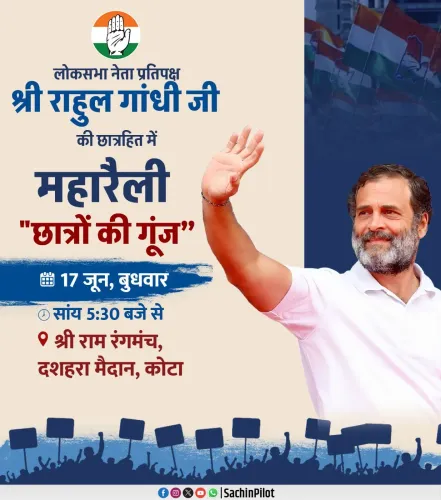
The post was pinned and tagged #ChhatronKiGoonj , signalling a sustained Congress campaign on student and examination reform issues.
Congress leader and Leader of the Opposition Rahul Gandhi on Friday, 17 July 2026 called for a root-and-branch overhaul of India's examination system, citing what he described as a decade of paper leaks, corruption, and the destruction of the futures of crores of young aspirants. Posting under the hashtag #ChhatronKiGoonj (Students' Echo), Gandhi framed the crisis as a systemic failure demanding a new, independent, and accountable testing authority built for the 21st century.
What Gandhi Said
In his pinned post, Gandhi drew a sharp contrast between the effort students invest and the system that fails them. He wrote that students spend five years preparing at an average of 10 hours a day, with families spending an average of ₹9 lakh per aspirant. Against that sacrifice, he cited 152 paper leaks in 10 years, a 'seat and job rate card' implying open corruption, zero convictions, and the ruined futures of 7.5 crore young people.
Gandhi demanded that this 'corrupt education system' be changed from the roots, calling for a 21st-century examination framework backed by an independent and accountable institution that guarantees full security to students. The figures cited by Gandhi — including the 152 leaks and the 7.5 crore affected youth — are part of his political framing and have not been independently verified.
Context: A Decade of Exam Scandals
India's high-stakes entrance examination landscape has been rocked by repeated paper-leak controversies over the past decade. The National Testing Agency (NTA), set up in 2017 under the Ministry of Education to centralise and standardise major national entrance tests including NEET and JEE, has faced sustained criticism over lapses in examination security. Student protests, court interventions, and public outcry have followed multiple alleged leaks, particularly around medical and engineering entrance tests.
The intense competition for a limited number of seats in professional courses and government jobs amplifies the consequences of every breach. A single leaked paper can invalidate years of preparation for lakhs of aspirants and their families, who bear enormous financial and emotional costs.
Policy Backdrop
The National Education Policy 2020 had already flagged the need to move away from rote-learning-based assessments toward competency-based examinations, and recommended structural reforms to the testing ecosystem. However, critics argue that implementation has remained incremental, with no fully independent statutory examination regulator established in the years since. Successive governments have responded to individual scandals with inquiries and procedural tweaks rather than structural legislative change.
Gandhi's call for a new independent body directly echoes long-standing demands from student unions, educators, and civil society groups who argue that the NTA, being under the administrative control of the Ministry of Education, lacks the arm's-length independence needed to guarantee credibility.
Stakeholders and Impact
The primary stakeholders are the millions of students — and their families — who invest years and substantial resources in preparing for competitive examinations. The average household expenditure of ₹9 lakh cited by Gandhi underscores that examination preparation has become a major financial burden, particularly for middle-class and lower-income families. Any systemic failure disproportionately harms aspirants from smaller towns and rural areas who have fewer alternative pathways.
Beyond students, the credibility of India's professional workforce pipeline — especially in medicine and engineering — depends on the integrity of entrance examinations. Employers, universities, and the broader public have a stake in ensuring that merit, not money or access to leaked papers, determines selection.
What's Next
Gandhi's post, pinned to his profile and amplified under #ChhatronKiGoonj, signals that the Congress party intends to keep examination reform at the centre of its political agenda. All eyes will be on the next session of Parliament, where legislative proposals for restructuring the NTA or creating a new statutory testing authority could be introduced or demanded by the Opposition. Whether the ruling dispensation responds with substantive structural reform — or another round of procedural fixes — will determine whether India's crore-strong student population finally gets the secure, credible examination system it has long been promised.
Point of View
He humanises an otherwise technocratic policy debate and broadens its electoral resonance beyond urban youth. The call for an 'independent and accountable' testing body is a pointed critique of the NTA's structural subordination to the Ministry of Education, echoing a reform demand that has cross-party support but little legislative momentum. Whether this translates into a concrete Opposition bill or remains campaign rhetoric will be the real test of the Congress party's seriousness on education governance.
NationPress
18 Jul 2026
Frequently Asked Questions
What did Rahul Gandhi say about India's examination system?
Rahul Gandhi on 17 July 2026 called for a complete overhaul of India's examination system, citing 152 paper leaks in 10 years, zero convictions, and the ruined futures of 7.5 crore young people, and demanded a new independent and accountable testing authority.
What is the NTA and why is it controversial?
The National Testing Agency (NTA) is an autonomous body set up in 2017 under the Ministry of Education to conduct major national entrance examinations including NEET and JEE. It has faced repeated criticism over paper leaks and examination security failures, leading to demands for structural reform.
How much do Indian families spend on competitive exam preparation?
Rahul Gandhi cited an average expenditure of ₹9 lakh per aspirant on competitive examination preparation, in addition to five years of daily 10-hour study, as the human and financial cost borne by students and their families.
What is #ChhatronKiGoonj?
'ChhatronKiGoonj' translates to 'Students' Echo' in English. It is the hashtag used by Rahul Gandhi and the Congress party to amplify their campaign around student issues, examination reform, and the failures of the current testing system.
Has India's government proposed any reform to examination bodies like NTA?
As of mid-2026, no comprehensive legislative restructuring of the NTA has been enacted. The National Education Policy 2020 recommended moving toward competency-based assessments, but critics say implementation has remained incremental without establishing a fully independent statutory examination regulator.