How is the Gujarat Assembly Showcasing Traditional Arts Before the Budget Session?
Synopsis
The Gujarat Legislative Assembly is now a vibrant showcase of traditional arts, featuring installations by skilled artisans ahead of the Budget Session. This initiative is a celebration of Gujarat's rich cultural heritage and offers artisans a platform to shine during a vital legislative period.
Key Takeaways
The Gujarat Assembly has transformed into a showcase of traditional arts.
Artisans from across the state contributed to the installations.
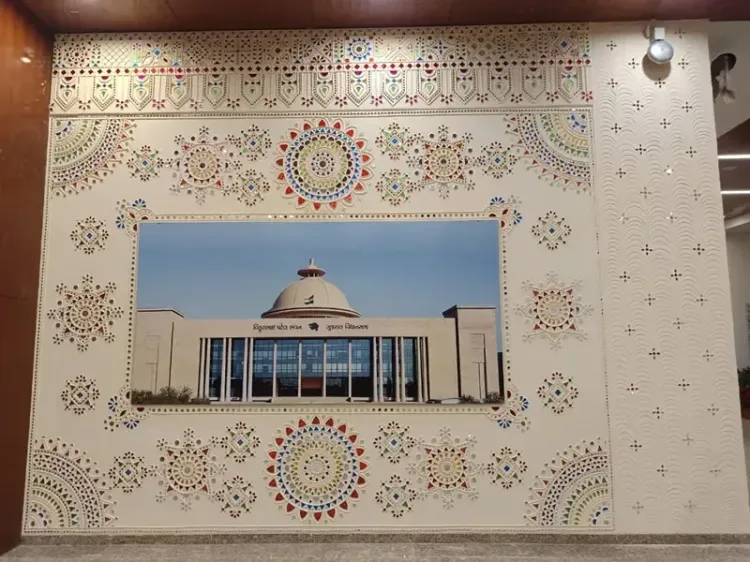
Featured art forms include mud mirror work, Warli art, and Mata ni Pachedi.
The initiative emphasizes cultural heritage within a public institution.
It enhances the visibility of Gujarat's folk traditions.
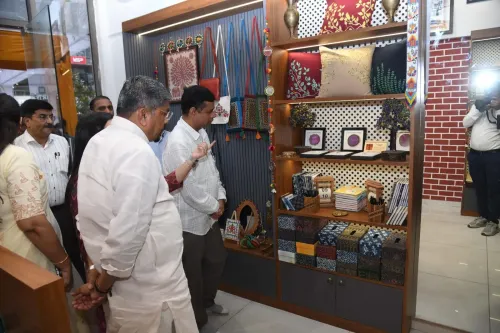
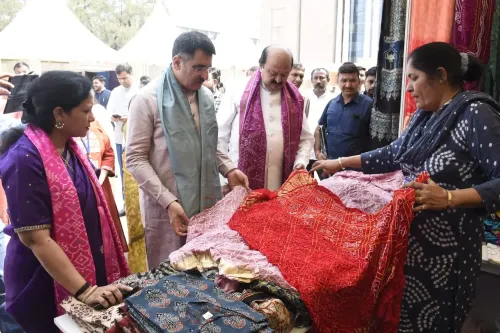
Gandhinagar, Feb 14 (NationPress) The Gujarat Legislative Assembly has been transformed into a vibrant exhibition of the state's traditional arts as it prepares for the upcoming Budget Session starting on February 16. Skilled artisans from various regions have been commissioned to create and install remarkable works within the Assembly premises.
This initiative, in collaboration with the state-run Gujarat State Handloom and Handicrafts Development Corporation Ltd (Garvi Gurjari), features three significant art forms: mud mirror work from Kutch, Warli art from Chhota Udepur, and Mata ni Pachedi, a traditional Kalamkari painting style from Ahmedabad.
The stunning artworks now embellish numerous walls and sections of the complex, making them visible to legislators, officials, and visitors attending the session.
Officials stated that this effort aims to present Gujarat's rich cultural heritage within a prominent public institution that symbolizes the voice of the state's people.
The project was launched under the auspices of Assembly Speaker Shankar Chaudhary, aligning with Prime Minister Narendra Modi's broader vision of integrating development with heritage preservation.
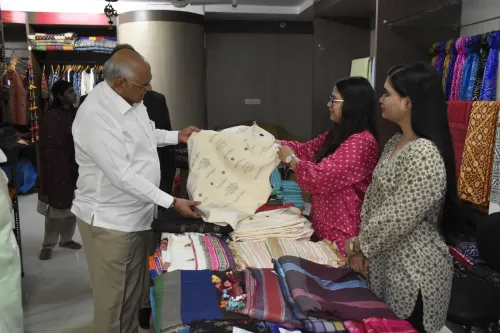
The state government, led by Chief Minister Bhupendra Patel, continues to advocate for the handicrafts and handloom sectors through robust institutional support.
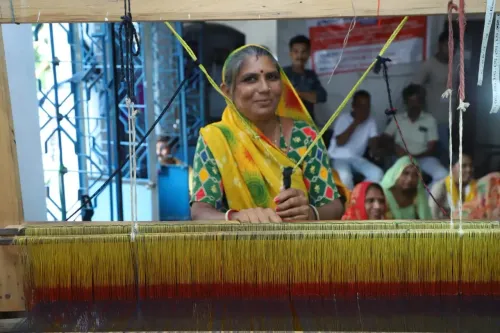
Garvi Gurjari played a crucial role in selecting skilled artisans by evaluating their work presentations and craftsmanship before finalizing the installations.
According to officials from the corporation, the aim was to ensure the selected art forms reflect both the diversity and enduring legacy of Gujarat's folk traditions.
Among the showcased pieces is Warli art that illustrates the evolution of governance from ancient royal assemblies to the modern legislature, alongside visual narratives of the transition from rural to urban development.
The Warli installation was created by Archana Rathwa, an artisan from Chhota Udepur, who has been associated with Garvi Gurjari for eight years and was honored with a state award in 2022.
She expressed that the chance to contribute to a project at the Assembly represented a significant professional milestone. The mud mirror work, traditionally found in the circular bhunga houses of Kutch and crafted from Multani clay and colored glass pieces, was executed by artisan Girish Parmar.
Having previously participated in public installations and represented Gujarat at the Republic Day tableau parade, Parmar stated that showcasing the craft in the Assembly complex, frequented by visitors from across the country, is a matter of great pride.
The Mata ni Pachedi installation was carried out by the Chitara family of Ahmedabad, renowned for preserving the age-old Kalamkari tradition associated with temple backdrops dedicated to the goddess.
National award-winning artist Chandrakantbhai Chitara and his daughter Mittal Chitara contributed to this project. Mittal noted that the feedback from visitors observing the work in progress has been overwhelmingly positive.
With these installations, the Assembly complex now serves not only as the administrative hub of the state legislature but also as a venue that celebrates Gujarat's living craft traditions.
Officials remarked that this initiative opens doors for artisans to engage in high-profile public projects while highlighting the state's cultural legacy during a significant legislative session.
Point of View
The Gujarat Assembly's initiative to incorporate traditional arts reflects a commendable effort to merge cultural heritage with modern governance. It emphasizes the importance of recognizing and preserving regional crafts while also enhancing the aesthetic experience of a significant public institution. This approach resonates with national values of preserving diversity and fostering inclusivity.
NationPress
30 Sept 2026
Frequently Asked Questions
What types of traditional arts are being showcased in the Gujarat Assembly?
The Gujarat Assembly features mud mirror work from Kutch, Warli art from Chhota Udepur, and Mata ni Pachedi, a traditional Kalamkari painting style from Ahmedabad.
Who initiated this art installation project?
The project was initiated under the guidance of Assembly Speaker Shankar Chaudhary, in collaboration with Garvi Gurjari.
Why is this initiative important?
This initiative aims to highlight Gujarat's rich cultural heritage within a key public institution, showcasing the state's diverse folk traditions and supporting local artisans.
How does the project support artisans?
The project provides artisans with opportunities to participate in high-profile public installations, helping to promote their crafts and cultural legacy.
What is the significance of the Warli art installation?
The Warli art installation depicts the evolution of governance from ancient times to the present, illustrating the transition from rural to urban development.